Plumbing Library
The plumbing library: answers before you call
Short, practical guides on the problems we see most in southeast Houston houses, written so you know what you are looking at and what a plumber will check first.
- We answer 24/7 if the problem cannot wait
- 10 guides written for southeast Houston homes
- Edited by Greta Wilburn, Plumbing Library Editor
About these guides
Plain answers before you pick up the phone
Most plumbing questions come up at a bad moment: water on the floor, a red tag on the gas meter, a foundation report asking for a hydrostatic test. These guides walk through what each problem looks like, what causes it in houses like ours, and the choices you will face, like repair or replace, tank or tankless, spot repair or reroute.
They lean on public sources where the details matter: the city's water quality report for hardness and chloramine, weather records for the 2021 freeze, and utility rules for gas restoration. Read one while you wait for a plumber, or before you decide on a bigger job. If a guide doesn't answer your question, call us and ask.
Read more about the company behind the guides on our About page.
All guides
Guides for southeast Houston homes
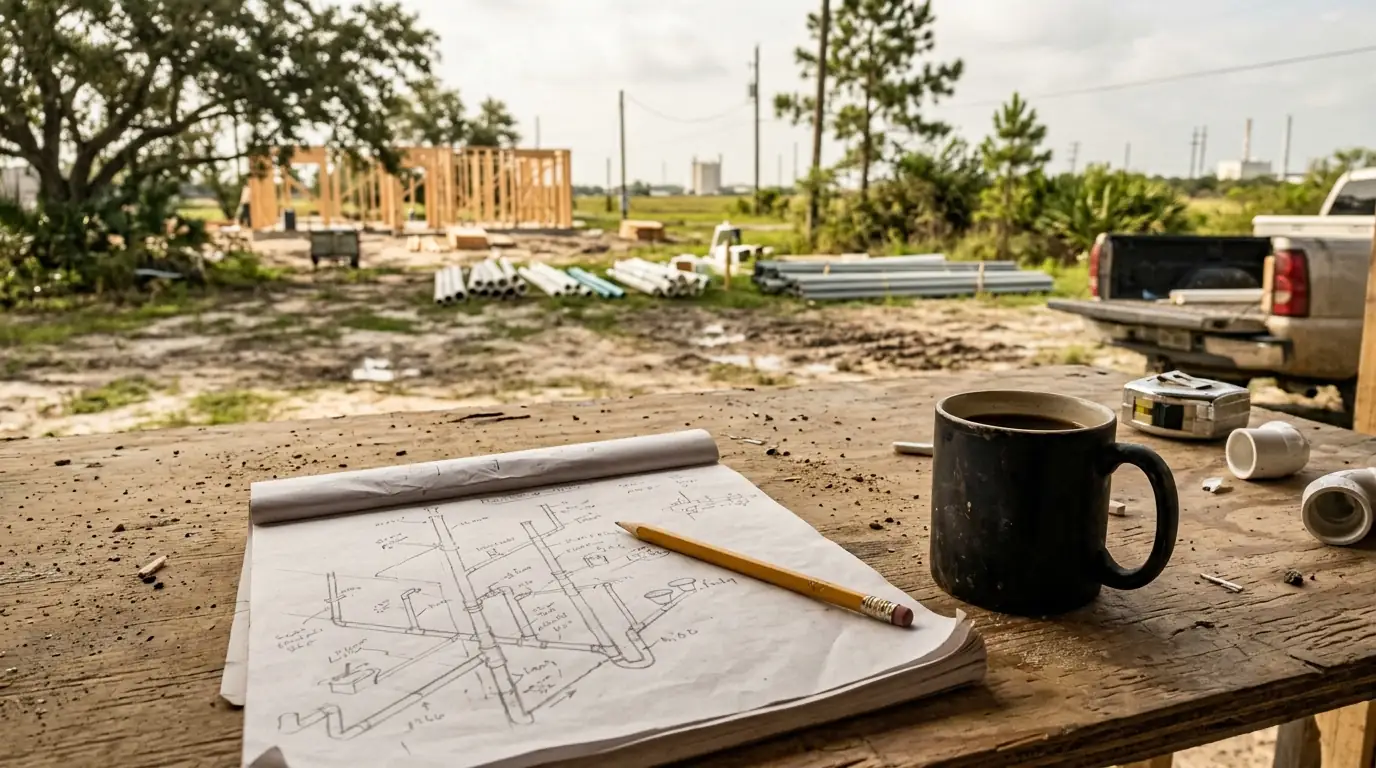
Slab leak signs in a Houston house: what to check
Most slab leaks announce themselves quietly: a patch of floor that feels warm, a bill that makes no sense, a faint hiss at night. Here is how to read those clues before anyone cuts concrete.
By Greta Wilburn · Updated October 2026
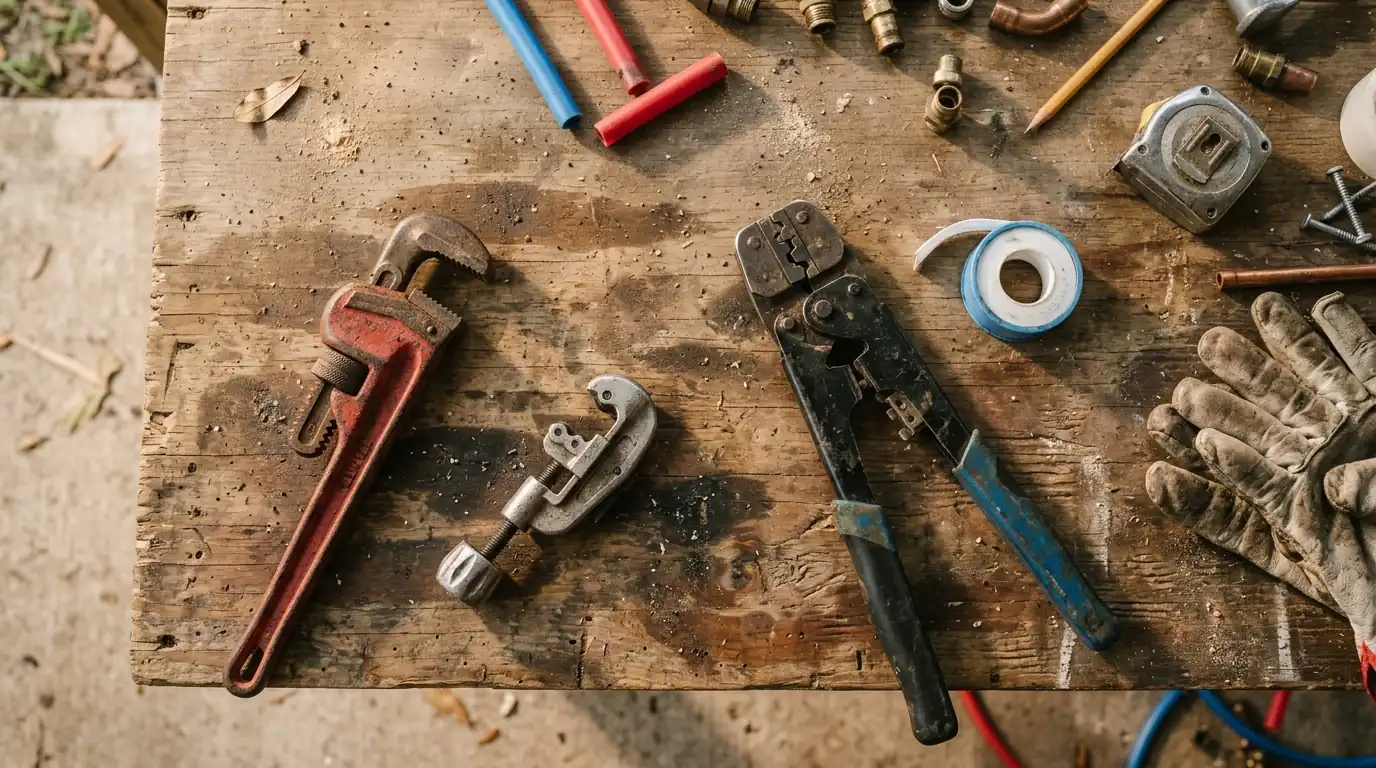
Repair or replace a water heater in Houston?
A cold shower does not automatically mean a new heater. Many failures are a single part. Others mean the tank itself is done. Here is how to tell which one you are looking at.
By Greta Wilburn · Updated October 2026
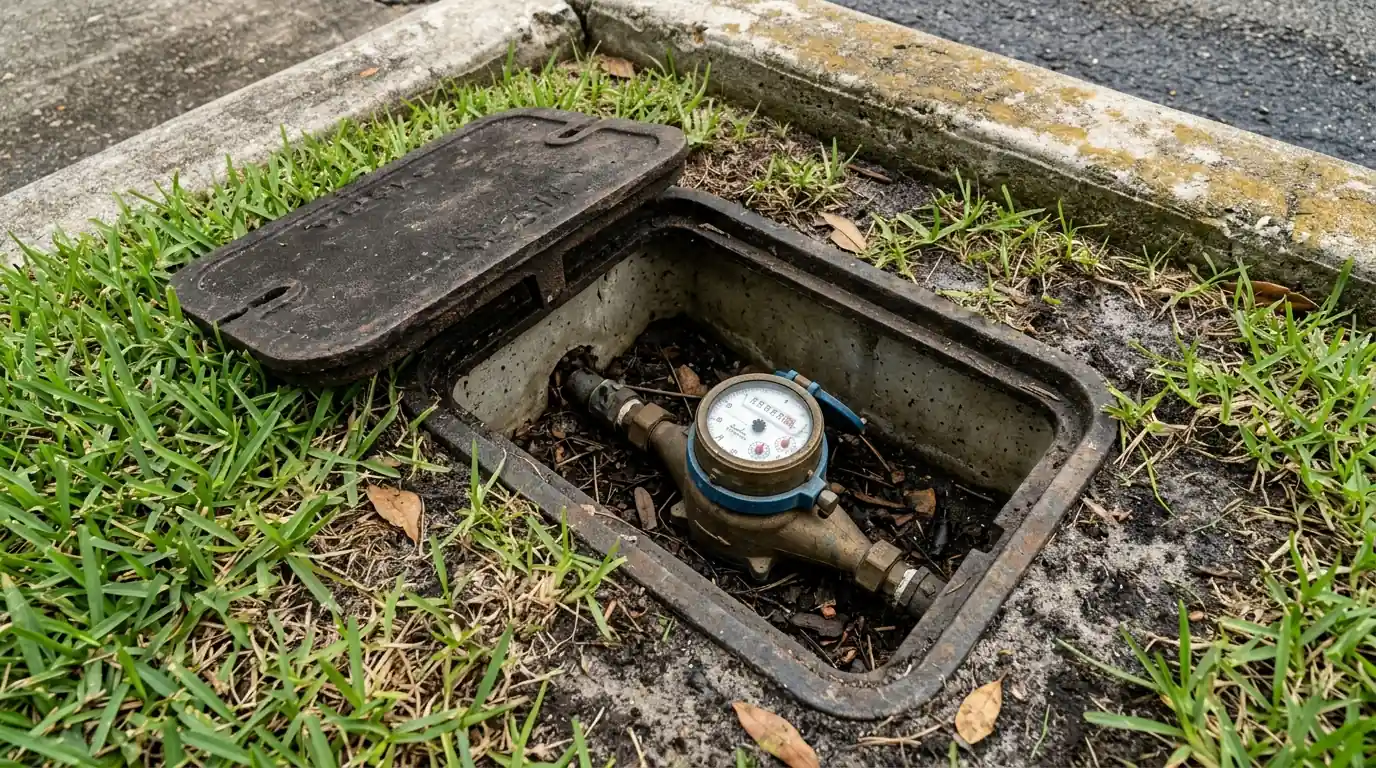
Tankless vs tank water heaters in Houston homes
Tankless heaters get a lot of attention, and for some homes they are the right call. For others, a well-sized tank is simpler and does the job. The difference comes down to gas supply, venting, water and habits.
By Greta Wilburn · Updated October 2026
What a hydrostatic plumbing test tells you
Foundation repair estimates and home purchase contracts often call for a hydrostatic test. It sounds technical, but the idea is simple: fill the drains under the slab with water and see whether they hold it.
By Greta Wilburn · Updated October 2026
Polybutylene pipe in Houston homes: how to spot it
If your house was built in the late 1970s through the mid-1990s, there is a fair chance some of its water lines are polybutylene. Here is how to check, what to watch, and what the replacement choices look like.
By Greta Wilburn · Updated October 2026
Hard water and chloramine in southeast Houston
White crust on the shower head, a water heater that pops and rumbles, a faint pool smell from the tap. Here is what is actually in the water and which treatment fixes which problem.
By Greta Wilburn · Updated October 2026
Protecting Houston pipes from a hard freeze
Most winters bring a cold night or two and nothing breaks. Then a storm parks over the city for days. These are the steps that keep a house on slab with attic plumbing from flooding when it thaws.
By Greta Wilburn · Updated October 2026
Sewer backing up? What to do first
Dirty water rising in the shower when someone flushes is one of the worst things a house can do. A few minutes of the right moves limits the mess, and the pattern of the backup tells you a lot about the cause.
By Greta Wilburn · Updated October 2026
Repiping a Houston home: what to expect
A third leak in two years, rusty water in the morning, or gray plastic pipe in the attic. At some point patching stops making sense. This is how a whole-house repipe actually goes, start to finish.
By Greta Wilburn · Updated October 2026
Gas leak or red tag: getting gas back on
Maybe you smelled gas and the utility shut it off, or a tag showed up on the meter after an outage. Either way the stove and water heater are dead until the piping is cleared. Here is the order things happen in.
By Greta Wilburn · Updated October 2026
Questions
Questions about the Plumbing Library
No. They explain what to look for and what the usual fixes are. Every house is different, and the real answer comes from testing the pipes, which is the first thing a plumber does on site.
Some small steps are safe, like closing the main, draining a water heater for a flush or clearing a trap. Anything involving gas, a slab or a sewer main is work for a plumber, and the guides say where that line falls.
Hardness, chloramine and freeze figures come from city and weather service records, and each guide names its source. Any cost ranges are planning figures from public sources, not quotes for your house.
We revisit them when the city publishes a new water report, when utility rules change, or when we keep getting the same question on the phone that a guide should have answered.
If you suspect a leak you can't see, start with the slab leak guide. If hot water is the trouble, start with repair or replace. If a drain is backing up right now, read the sewer backup guide first.
Would rather talk to a plumber?
Call any hour. Reading is optional.