New gas runs, sized right
Gas line installation for Houston kitchens, dryers and generators
You picked a gas range, a standby generator or a grill island for the back patio. Now the house needs a gas line that reaches it, carries enough volume and passes inspection.
- We answer 24/7 for scheduling and questions
- Running jobs out of South Belt, by Ellington
- Line sized to the total load, not just one appliance
Updated October 2026

Short answer
Gas line installation in Houston means running new piping from your meter or an existing line to a range, dryer, tankless heater, generator or outdoor kitchen, sized for every appliance on the system. The work needs a city plumbing permit and a pressure test, and the pipe route usually goes through the attic or underground.
The job
Sizing a gas line for everything it feeds, not just the new appliance
Every gas appliance has a BTU rating, and the meter, the main run and each branch have to carry the total at once. A tankless water heater alone can draw several times what a tank heater did, and adding a range and a generator to a line sized decades ago is how burners starve and generators stall under load. Before we quote, we add up the loads, measure the length of the run and pick the pipe size from that, not from what happens to be there already.
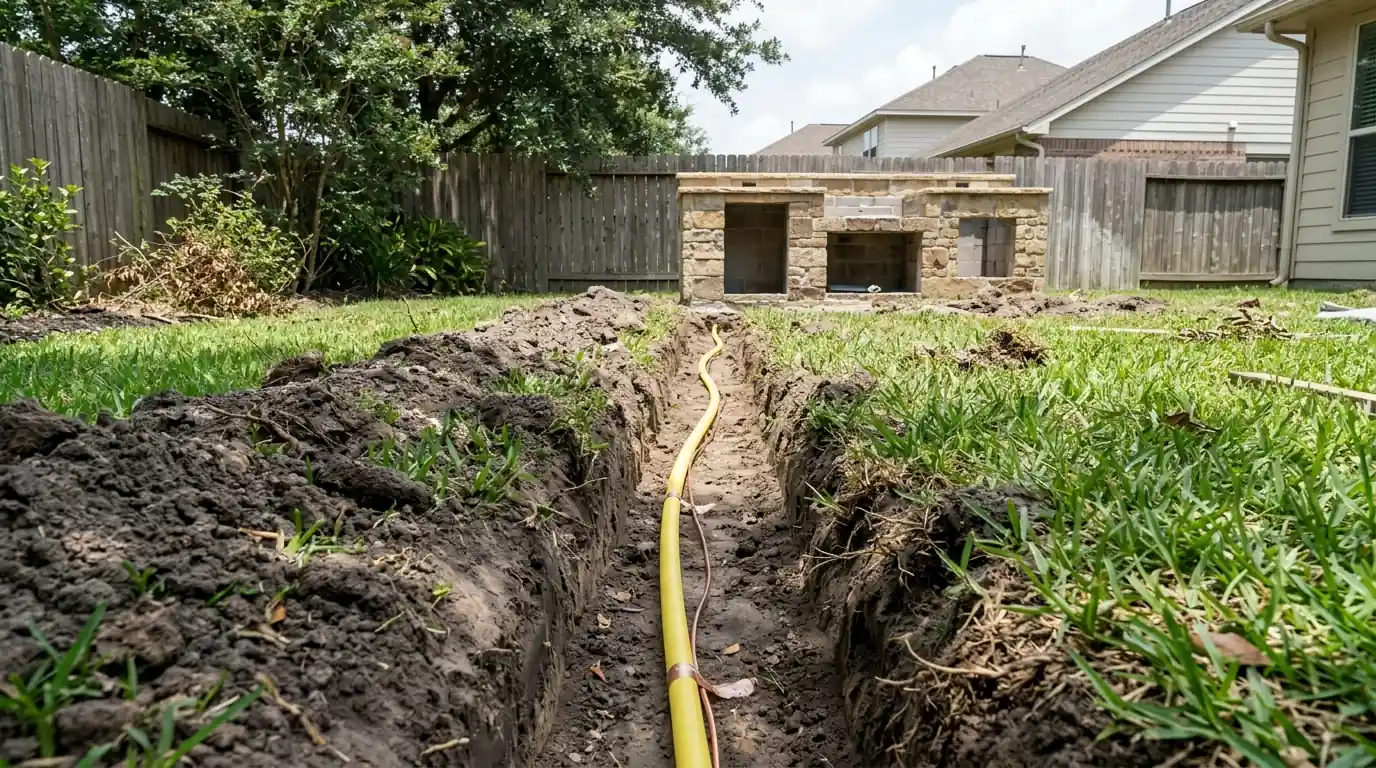
Most new lines in slab homes run through the attic and drop down a wall to the appliance, using black iron or coated CSST with a bonding wire where the code calls for it. Outdoor runs go underground in coated pipe or polyethylene with a tracer wire. A new tankless water heater often needs a larger branch, and we check that at the same visit.
Pricing
What sets the price of a new gas line
The length of the run, the pipe size the load demands and how the route reaches the appliance matter more than the appliance itself.
Length of the run
A short drop from attic piping costs less than a long run across the house or yard.
Pipe size
Larger loads like generators and tankless heaters need larger, costlier pipe and fittings.
Route
Attic and wall runs, underground trenching and crossing a driveway each take different labor.
Meter capacity
If the meter is too small for the new total, the utility may need to upsize it first.
Permit and inspection
City permit fees and the inspection visit are part of every new line.
Typical planning range: $256 - $809 for gas line installation in Houston, TX, per Angi (Upda). Use it for budgeting; the real number depends on what we find on site.
The versions we see most
Range and dryer gas lines
Converting a kitchen from electric to gas, or moving a range to an island, is the most common reason for a new line inside the house. We bring a branch off the nearest adequate pipe, drop it inside the wall or up through the cabinet base, and finish with a shut-off valve placed where you can reach it behind the appliance. Dryers follow the same pattern in the laundry room. If you are replacing the appliance too, we can make the final connection as part of the appliance hookup, with a new coated connector and a leak test.
Generator gas hookups
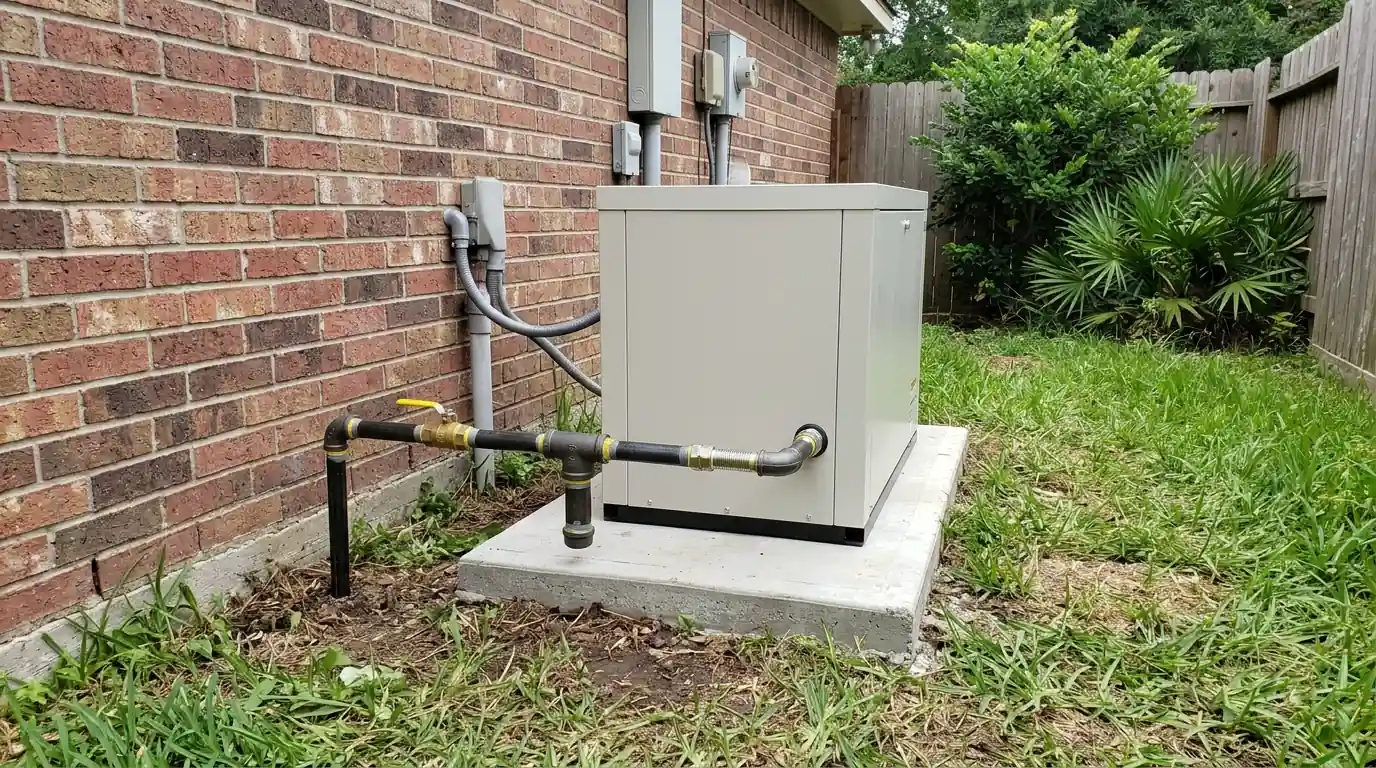
A standby generator draws a lot of gas for as long as the power is out, so the line feeding it has to be sized for full output with everything else in the house running. Undersized lines are the most common reason a generator starts fine and then stumbles once the air conditioner kicks on. We confirm meter capacity, sometimes asking the utility for a larger meter, then run a dedicated line to the generator pad with a sediment trap, a shut-off and a flexible connection that tolerates vibration.
Outdoor kitchen and fire pit lines
Grills, burners, fire pits and patio heaters all run cleaner on a fixed gas line than on swapped propane tanks. These lines usually go underground from a tee near the meter or where the house piping exits a wall. We trench to the depth the code requires, lay coated pipe or yellow polyethylene with a tracer wire, rise out of the ground with a steel riser, and finish at each appliance with its own shut-off. Planning the route before the pavers go down saves cutting them up later.
Scope of the work
What a new gas line job includes
- Load calculation for all gas appliances on the system
- Pipe size picked from the total load and run length
- City plumbing permit pulled and closed
- Black iron, coated CSST or underground polyethylene as the route requires
- Bonding of CSST where required
- Accessible shut-off valve at each new appliance
- Sediment trap where the appliance calls for one
- Pressure test on a gauge before anything is connected
- Final connection and leak check when the appliance is on site
Local to southeast Houston
Houston permits and CenterPoint rules for new gas work
New gas piping in Houston goes through the city. The Houston Permitting Center requires a plumbing permit for the point of connection to any fuel gas appliance, and that permit must be obtained by a master plumber registered with the City of Houston. CenterPoint Energy also expects customer-owned piping to be inspected and in order before it restores or upgrades service. We pull the permit, run the line, pressure test it and schedule the inspection.
Talk to a plumber now
Any hour, any day. Tell us what you see.
Step by step
From load calculation to a passed inspection
Add up the loads
BTU ratings of every gas appliance, current and planned.
Plan the route
Shortest practical path from adequate pipe to the new appliance.
Pull the permit
Filed with the city before the line goes in.
Install the line
Pipe run, supported and capped with a shut-off at each appliance.
Test and inspect
Pressure test held on a gauge, then the city inspection.
Timing
How long a gas line installation usually takes
A short indoor branch for a range or dryer is often done in half a day. A generator line or an outdoor kitchen run with trenching usually takes a full day, sometimes two if the route crosses hardscape or the run is long.
Gas to the house may be off for part of the work while we tie into the existing piping. Inspection timing depends on the city's schedule, and the new line stays capped until it passes, though existing appliances are usually back on the same day.
Common questions
Gas Line Installation questions from Houston homeowners
Sometimes. It depends on the total BTU load, the pipe size and the length of the run. We add up every appliance before deciding whether to tee into the existing line or run a new one.
Yes. In Houston a new gas connection needs a plumbing permit from a master plumber registered with the city, and the line has to pass a pressure test and inspection.
Both meet code when installed correctly. Black iron is rigid and durable; CSST bends around obstacles with fewer joints but needs proper bonding. We choose based on the route.
Yes. Outdoor appliances get an underground line from near the meter or the house, with a riser and a shut-off at each one.
If the new total load exceeds what the meter can supply, CenterPoint may need to install a larger meter. We check the meter rating during the load calculation.
Same system, different job
Related plumbing services
- Gas Line Pressure TestPressure testing that gets gas service restored after a leak or a shut-off.
- Gas Leak RepairGas smell, hissing fittings or a red-tagged meter handled the right way.
- Appliance Plumbing HookupsDishwashers, ice makers and washing machines connected without a slow leak.
- Tankless Water Heater InstallationGas tankless units sized for the house, with the gas line and venting to match.
Ready to talk it through?
Call any hour. We look first, explain the choices, and price them before work starts.