Less scale, longer-lasting fixtures
Water softener installation for Houston hard water
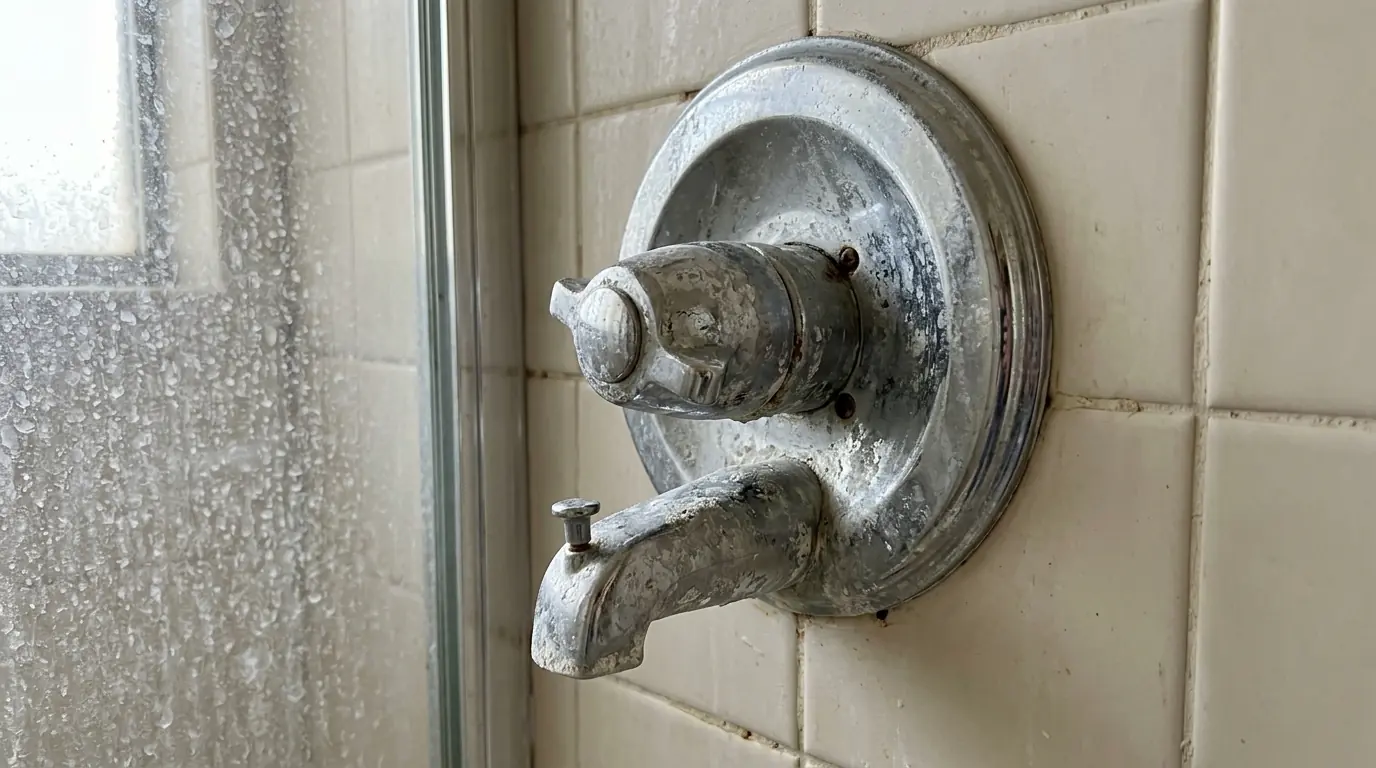
White spots on the glass shower door, crusty aerators and a water heater that rumbles are all signs of hard water. A softener at the main removes the minerals before they reach any fixture in the house.
- Calls answered around the clock, 24/7
- South Belt based, right off Beltway 8
- Plumbed with a bypass loop and an air-gapped drain
Updated October 2026

Short answer
Water softener installation in Houston means cutting a loop into the main line, usually in the garage, so all water passes through a resin tank that trades hardness minerals for sodium. City water averaged 135.5 ppm of hardness in the 2025 report. A proper install includes a bypass valve, a drain with an air gap and a loop that leaves outdoor taps unsoftened.
The job
Where a softener goes and how it is plumbed
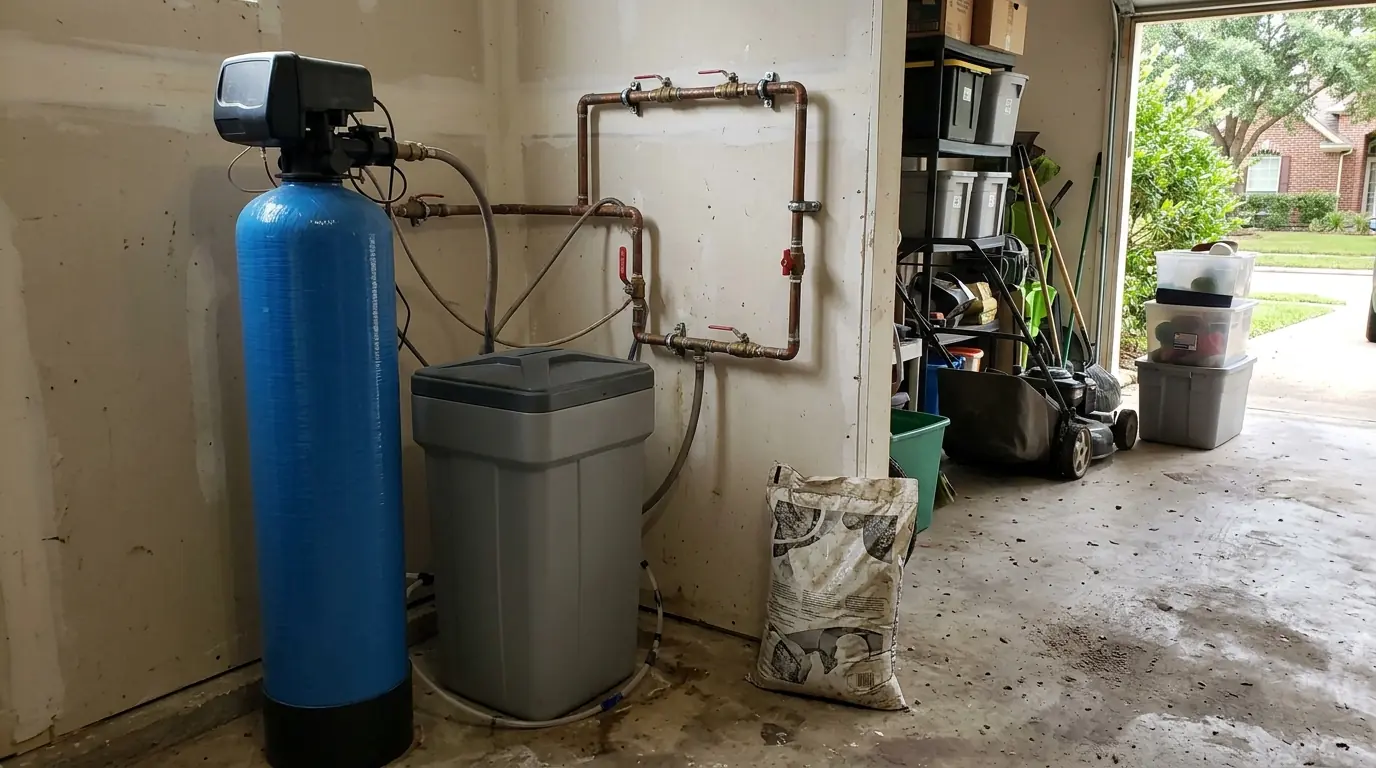
Most houses here have the main line entering through the garage wall or near the water heater, and that is where a softener usually sits. We cut into the main after the shut-off, run the line through a bypass valve to the softener, and return it to the house. The outdoor hose bibs are usually left on hard water, since softening water for the lawn wastes salt. A small drain line carries regeneration water to a laundry standpipe or another approved drain, with an air gap so nothing can siphon back.
The softener needs a level spot, a nearby outlet for the control head and room to lift a bag of salt into the brine tank. If your water heater has already been fighting scale for years, a tank flush after the softener goes in clears out the sediment that built up before. If taste and the chloramine smell bother you more than spots, carbon filtration solves a different problem, and the two often pair well.
Your options
Softener or carbon filter: which fixes what
| Compare | Salt-based softener | Carbon filter |
|---|---|---|
| Removes hardness | Yes, calcium and magnesium | No |
| Reduces chloramine taste and smell | No | Yes, with catalytic carbon |
| Needs a drain | Yes, for regeneration | Only backwashing models |
| Ongoing upkeep | Salt refills | Media or cartridge changes |
| Protects water heaters from scale | Yes | No |
If spots and scale are the complaint, a softener is the tool. If taste and smell bother you, a carbon filter is. Many homes run both, with the filter placed first.
Pricing
What goes into the price of a softener install
The unit itself is one part. How the house is plumbed at the main, and where the drain goes, decide the rest.
Softener size
Larger households and harder water need more resin capacity.
Control head type
Metered heads cost more than timers but use less salt.
Loop already in place
An existing loop saves cutting into the main; no loop means building one.
Drain distance
A long run to a laundry standpipe adds pipe and labor.
Carbon filter added
Pairing a filter for chloramine adds a second tank.
Typical planning range: $197 - $5,916 for water softener system installation in Houston, TX, per Angi (Upda). That is a published range, not a quote. Your price comes after we look.
The versions we see most
Salt-based softeners
A salt-based softener is a tall tank of resin beads and a shorter brine tank. Hard water flows through the beads, which grab calcium and magnesium and release sodium. When the beads are full, the control head runs a regeneration cycle: brine flushes the minerals out to the drain and the resin is ready again. Metered heads regenerate based on gallons used, which saves salt compared with timer-only models. Size matters. Too small and it regenerates constantly; too large and the resin can sit idle long enough to channel.
Bypass valve and drain setup
The bypass valve lets you take the softener offline in seconds, during a repair, when filling a pool, or if the unit ever leaks. We install it right at the control head and a second shut-off on the line so the house keeps water either way. The drain is where many installs go wrong. Regeneration water has to reach a proper drain through an air gap, never a hose shoved into a sewer pipe, and the brine tank overflow needs its own line. We set both before the first regeneration runs.
Softener replacement
Older softeners usually fail at the control head or the resin. Signs include salt that never seems to go down, a brine tank full of water, or hard-water spots coming back even with salt in the tank. Sometimes a new valve head or fresh resin is enough. When the tank is old and the head is obsolete, we swap the whole unit and reuse the existing loop if it was plumbed right. If the loop leaks or lacks a bypass, we rebuild it while the old softener is out.
Scope of the work
What a softener installation includes
- Hardness test at the tap before sizing
- New softener and brine tank set level
- Loop cut into the main after the shut-off
- Bypass valve and an isolation valve
- Outdoor hose bibs kept on hard water where practical
- Drain and overflow lines with an air gap
- Control head set to your hardness and household size
- First regeneration run and a softened-water test
Talk to a plumber now
Any hour, any day. Tell us what you see.
Local to southeast Houston
How hard the water is in Houston and nearby cities
The 2025 Houston water quality report shows hardness on the Main system ranging from 43.5 to 229 ppm, averaging 135.5. On the USGS scale, 121 to 180 mg/L counts as hard and above 180 as very hard. Supply varies by source, which is why some neighbors notice spots more than others. League City and Pearland take water from the Southeast Water Purification Plant near Ellington, alongside their own sources, so results there can shift through the year as well. A quick test strip before sizing tells us what your tap actually delivers.
Step by step
Installing a softener in one visit
Test the water
A hardness reading at the tap sizes the unit and sets the control head.
Plan the spot
We pick a level place near the main, an outlet and a drain.
Cut in the loop
The main is opened, a bypass valve installed and outdoor taps kept on hard water.
Connect the drain
Regeneration and overflow lines run to a proper drain with an air gap.
Start it up
Salt goes in, the first regeneration runs, and we test softened water at a tap.
Brands we service and install
We install and service softeners and the valves around them from brands such as Rheem, A. O. Smith and Watts, plumbed with Uponor PEX where the loop needs new pipe.
- Rheem
- A. O. Smith
- Bradford White
- Navien
- Rinnai
- Noritz
- Kohler
- Moen
- Delta
- American Standard
- Pfister
- InSinkErator
- Uponor
- Watts
Common questions
Water Softener Installation questions from Houston homeowners
Most households refill every one to two months, depending on hardness, water use and the size of the brine tank. Keep the salt a few inches above the water line inside the tank.
Yes, slightly. Soap rinses off differently and some people describe the water as slick. That is normal and goes away from your notice after a week or two.
Softening adds a small amount of sodium. If you are watching sodium, many people soften the house and add a reverse osmosis system at the kitchen sink for drinking.
No. A softener only removes hardness. For the chloramine taste and smell, add a catalytic carbon filter ahead of the softener.
To a drain inside or beside the house, such as the laundry standpipe, with an air gap so wastewater can never flow back into the softener.
Same system, different job
Related plumbing services
- Whole-House Water FiltrationCarbon filtration at the main to take the chloramine taste out of every tap.
- Reverse Osmosis SystemUnder-sink drinking water filtration with its own faucet and ice maker line.
- Water Heater Flush & MaintenanceSediment flushed, anode checked and the relief valve tested before trouble starts.
- Tankless Water Heater RepairError codes, cold-water sandwiches and scaled heat exchangers diagnosed and fixed.
Want a straight answer before you decide?
Call and tell us what you are seeing. We will explain the options and what each one involves.