Gas smell, hiss or red tag
Gas leak repair for Houston homes and red-tagged meters
A rotten egg smell by the range, a hiss behind the dryer, or a red tag hanging on the meter after the gas company's visit. The gas is off, and getting it back on starts with finding the leak.
- We answer 24/7, including red-tag calls
- Leaving from South Belt, near Beltway 8
- Leak found with a meter and soap test, then fixed
Updated October 2026

Short answer
Gas leak repair in Houston begins after the utility or fire department has made the house safe: we find the leak on your piping or appliance connectors, replace the failed fitting, valve or line, and pressure test the system. If CenterPoint red-tagged the meter, the repair must pass a permitted test before service comes back.
What to watch for
Signs of a gas leak around the house
Rotten egg or sulfur smell
The odorant added to natural gas so leaks can be noticed.
Hissing near a meter, line or appliance
Gas escaping under pressure from a fitting or crack.
Bubbles in standing water over a buried line
Gas rising through wet soil from an outdoor leak.
Dead patch of grass along the gas route
Gas in the soil starving roots in one strip.
Yellow or floppy burner flames
Often a burner or air mix problem; worth checking with the connector.
The job
Smell gas right now? Leave first, then call
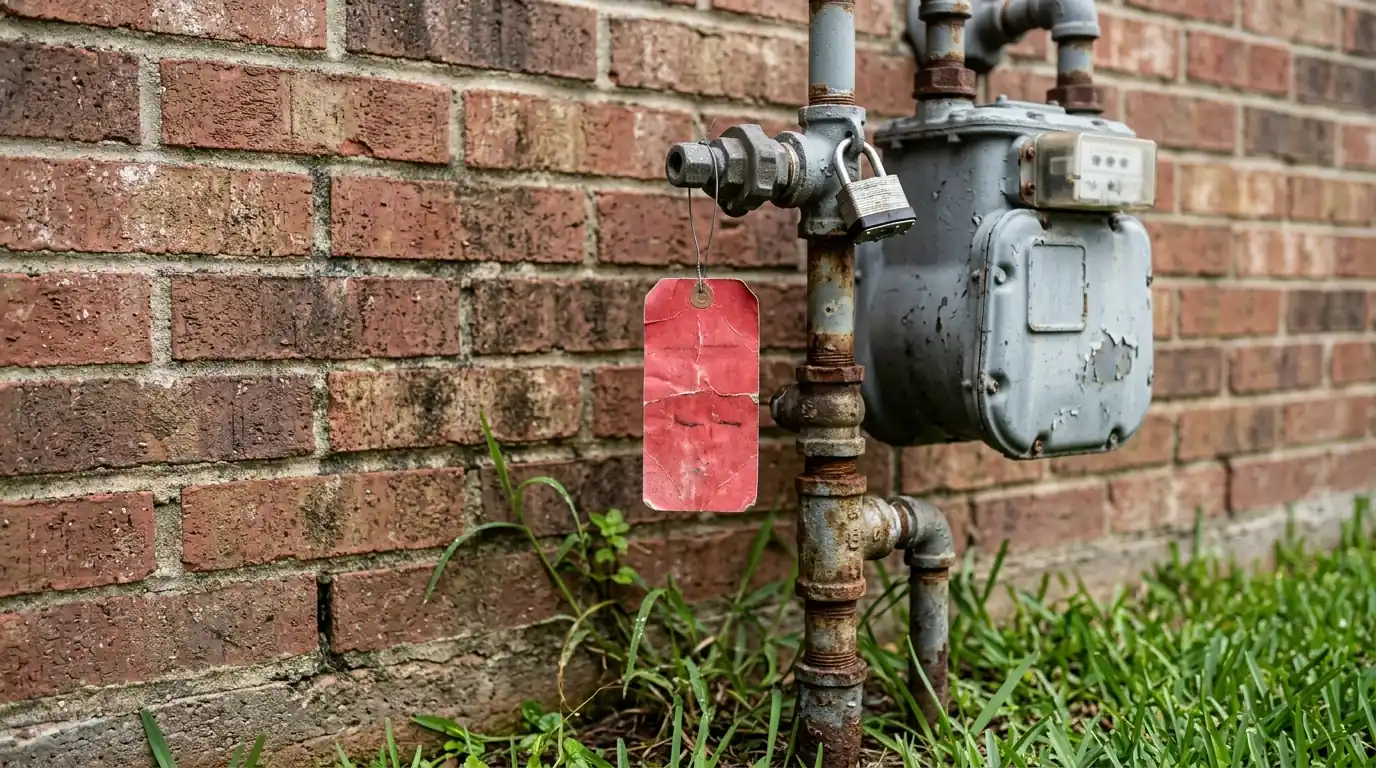
If the smell is strong or you hear hissing, don't flip switches, don't start a car in the garage and don't try to find the leak yourself. Get everyone outside and call CenterPoint's emergency line or 911 from a distance. They shut the gas at the meter and, if they find a leak on your side, lock or tag the meter off. That tag is their way of saying the customer's piping needs repair before they can turn gas back on.
That is where we come in. We pressure the system with air, watch a gauge for any drop, and use an electronic sniffer and bubble solution on each joint, valve and connector to find the leak. The fix may be a new flex connector, a cracked union, a corroded section of black iron or a failed appliance valve. After the repair, the whole system goes through a gas pressure test so the utility can restore service.
The versions we see most
Gas smell inside the house
A faint smell that comes and goes is still worth a call. Common indoor sources are a range connector that got kinked when the stove was pulled out, a loose union at the water heater, or a valve stem leaking at a fireplace key. Natural gas carries an added odorant that smells like sulfur, and people often notice it most when the furnace or heater fires up. We check each appliance connection, the shut-off valves and accessible piping with a sniffer and bubbles, then repair what we find and retest. If the smell came from a burner, we tell you whether it needs an appliance tech.
Leaking appliance connectors
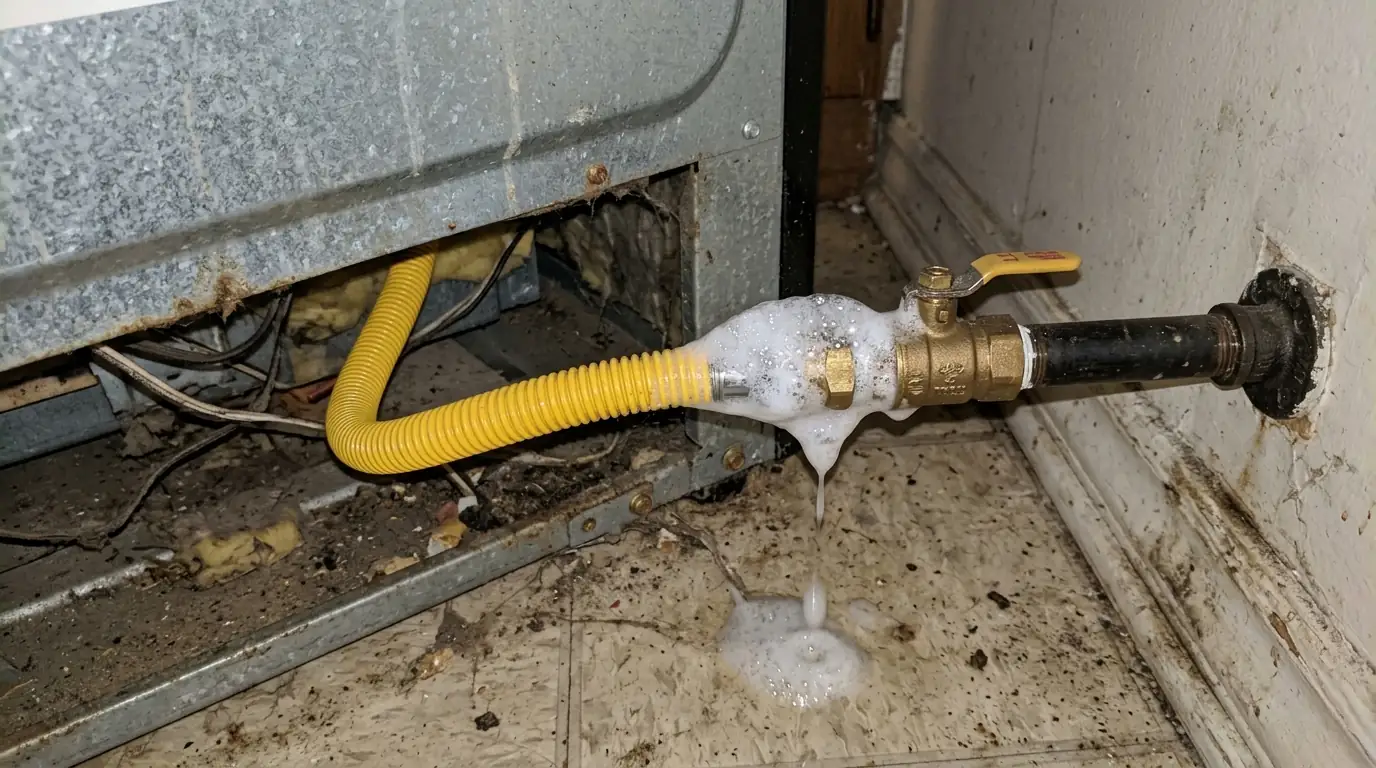
Flexible connectors feed most ranges, dryers and water heaters. Older uncoated brass ones were never meant to last decades, and any connector can crack where it bends behind an appliance that gets moved for cleaning. We replace leaking or outdated connectors with new coated ones sized for the appliance, add or replace the shut-off valve, and test every joint. If you are swapping appliances at the same time, the new hookup is often part of connecting the new appliance, and a longer reroute becomes a new gas line run.
Red-tagged meter repairs
A red tag means the gas company found a hazard on the customer side and turned service off until it is fixed. It is not a fine, and you can't clear it by calling them back. A plumber has to repair the piping or appliance connection, pull a permit, and run a pressure test that holds before the utility will restore gas. We handle that whole sequence. Bring the tag or a photo of it if you can, since it often notes where the problem was found.
Step by step
From a red tag to gas back on
Make it safe
The utility shuts gas at the meter; we start only after that.
Pressure the system
Air pressure on the piping and a gauge watched for any drop.
Find the leak
Sniffer and bubble solution on every joint, valve and connector.
Repair
Failed connector, valve, union or pipe section replaced.
Permit and test
The system holds pressure, the permit is closed and the utility can restore service.
Local to southeast Houston
How Houston gets gas service back after a red tag
Getting gas back on in Houston follows a set path. The Houston Permitting Center requires a plumbing permit for work at the point of connection to a gas appliance, obtained by a master plumber registered with the city. CenterPoint Energy states that customer-owned piping and appliances must be inspected and repaired by the customer's plumber before it can fully restore service after an outage. In practice, that means the repair, the permit and a passing test all come before the meter is turned back on.
Call before it gets worse
We answer 24/7 from South Belt.
Before you call
What to do, and what not to do, around a gas leak
| Situation | What you can safely do | When to call us |
|---|---|---|
| Strong smell or hissing | Leave the house, leave the door open, call CenterPoint or 911 from outside. | After the utility has shut it off, for the repair. |
| Faint smell near one appliance | Close that appliance's shut-off valve and open windows. | Same day, so the connection can be tested. |
| Red tag on the meter | Leave the meter and valves alone and keep the tag. | Right away to schedule the repair, permit and test. |
| Pilot out after an outage | Wait until the utility confirms service is on before relighting. | If it will not stay lit or you smell gas when it lights. |
Pricing
What goes into the cost of a gas leak repair
Most gas leak repairs are small parts with careful testing around them. The size of the system and where the leak hides decide the time.
Leak location
A connector behind the range is quick; a leak in attic or wall piping takes longer to reach.
Number of appliances
Each connection on the system is checked, so more appliances means more joints to test.
Parts replaced
A connector and valve cost less than replacing a corroded run of black iron.
Permit and test
Red-tag repairs include the permit and a pressure test before service returns.
After-hours timing
Night and holiday calls carry a higher rate.
Typical planning range: $150 - $3,500+ for gas leak repair, depending on location, per HomeGuide (Febr). A guide figure, not our price; your quote follows the inspection.
Common questions
Gas Leak Repair questions from Houston homeowners
Get everyone out, leave the door open, and avoid switches, phones or flames inside. Call CenterPoint's emergency number or 911 from outside. Once they have shut the gas off, call us for the repair.
A red tag means they found a leak or hazard on your side of the meter, in the house piping or at an appliance. Service stays off until the problem is repaired, permitted and pressure tested.
It is not a good idea. Gas connections need the right fittings, thread sealant and a leak test, and a red-tagged system needs a permit and pressure test that a homeowner cannot pull in Houston.
Simple connector repairs can be fixed and tested the same day, and then the utility schedules the restore. Larger repiping or permit timing can add a day or more.
A brief whiff near the meter right after service work can happen, but a steady smell is not normal. Call the utility and have the piping checked.
Same system, different job
Related plumbing services
- Gas Line Pressure TestPressure testing that gets gas service restored after a leak or a shut-off.
- Gas Line InstallationNew gas runs for ranges, dryers, tankless heaters, generators and outdoor kitchens.
- Appliance Plumbing HookupsDishwashers, ice makers and washing machines connected without a slow leak.
- Emergency PlumberBurst lines, sewage backups and no water at 2 a.m. get a call back fast.
Do not wait on a leak
Every hour of running water adds to the repair. Call now, any hour.