Cleaning the whole pipe wall
Hydro jetting for Houston drain and sewer lines
A cable opens a hole through a clog. If the pipe wall is still coated in grease or scale, the line closes up again. Jetting cleans the wall itself, which is why it suits drains that keep coming back.
- We answer 24/7, nights and weekends included
- Out of South Belt, off Beltway 8 near Ellington
- Camera check before jetting older or fragile pipe
Updated October 2026

Short answer
Hydro jetting in Houston drain lines uses water at several thousand psi, driven through a nozzle with rear-facing jets, to scour grease, scale and root hair off the full circumference of the pipe. It is a planned cleaning, not a first response to a stopped drain, and older pipe should be checked on camera before we jet it.
The job
How a jetting nozzle cleans a pipe that a cable only pokes through
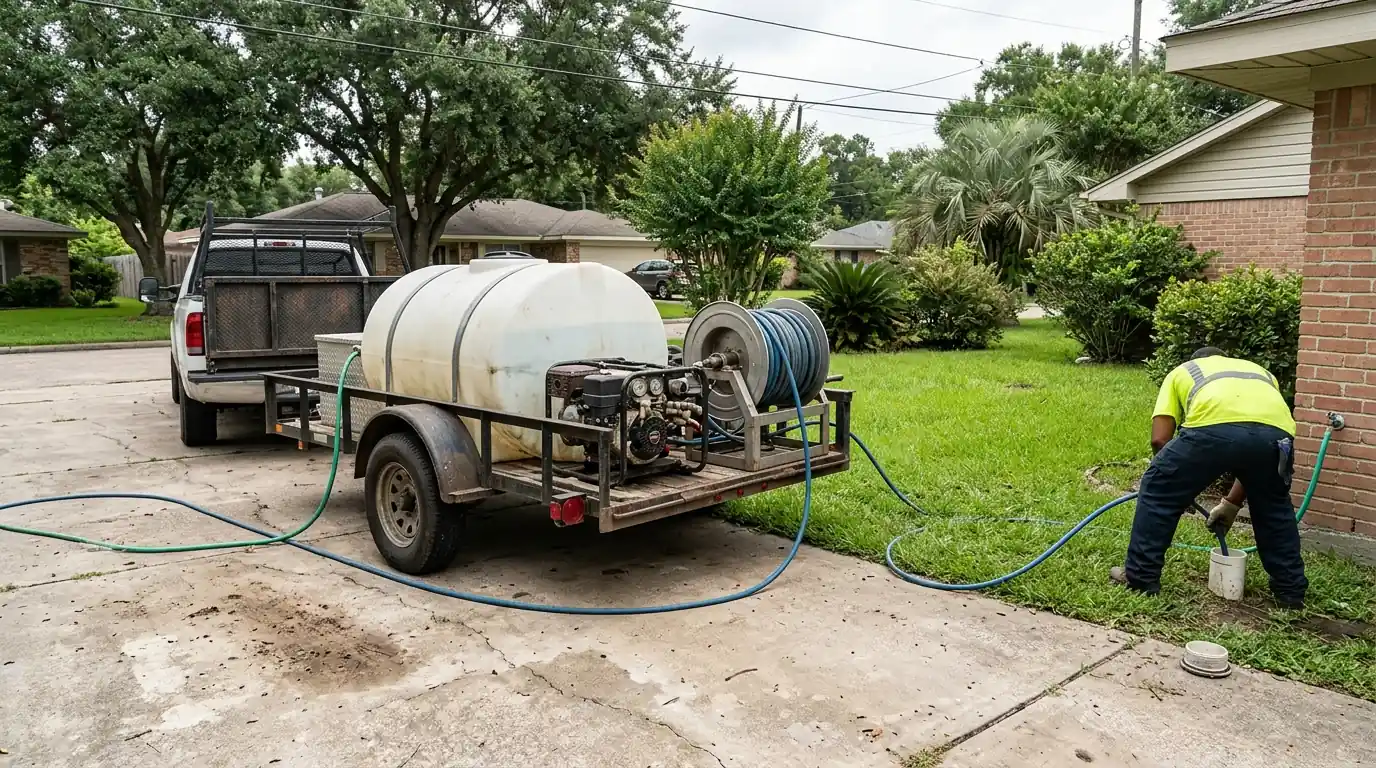
The jetter is a high pressure pump feeding a flexible hose with a nozzle on the end. Rear-facing jets pull the hose up the line while they blast the pipe wall behind it, and a forward jet breaks up whatever is ahead. As we draw the hose back, the loosened grease and scale wash down to the sewer. The result is a pipe that is close to its original inside diameter, not one with a 2 inch tunnel through a 4 inch line.
Jetting is not the right first call for a fully stopped drain, because water has nowhere to go until the line opens. We usually clear a stoppage with a cable or the main line machine first, then come back with the jetter. On cast iron and clay, a camera inspection beforehand tells us whether the pipe is sound enough to take the pressure.
Your options
Hydro jetting or descaling with a chain cutter
| Compare | Hydro jetting | Mechanical descaling |
|---|---|---|
| What it removes | Grease, sludge, root hair and lighter scale | Hard scale, tubercles and heavy rust crust |
| Suited pipe | PVC, sound cast iron and clay | Cast iron with thick buildup but solid walls |
| How it works | Water pressure through a jet nozzle | A spinning chain head on a cable machine |
| Risk to weak pipe | Low on sound pipe, higher where the wall is thin | Can break through badly corroded spots |
| Often paired with | Root cutting on main lines | A jetting flush afterward to carry debris out |
Grease and roots respond well to water. Thick iron scale often needs the chain first and a jetting flush after, and the camera tells us which line needs which.
Pricing
What goes into the price of a jetting job
Jetting takes heavier equipment and more time on site than a cable call. The pipe, its length and its condition set most of the cost.
Length and size of the line
A short kitchen branch is a smaller job than a full main to the city tap.
Type of buildup
Soft grease moves fast. Hard scale or heavy roots need slower passes and different nozzles.
Camera inspection
Checking older pipe first is a separate step that protects the line.
Access points
Jetting runs from a proper cleanout. Missing access can mean adding one.
Residential or commercial
Restaurant lines and long commercial runs need more water and time.
Typical planning range: $600 - $1,400 for hydro jetting on average, per HomeGuide (July). Use it for budgeting; the real number depends on what we find on site.
The versions we see most
Grease buildup in kitchen lines
Grease is the classic reason a kitchen drain clogs again a month after it was cabled. Fats cool and stick to the top and sides of the pipe, narrowing it a little more each week. A cable cuts through the soft center and leaves the rest. We jet from the cleanout nearest the kitchen, working the nozzle up the branch and back down until the water at the outlet runs clear. For homes that cook a lot or restaurants, jetting on a schedule keeps the line open. Commercial kitchens usually pair it with grease trap service.
Scale in old cast iron
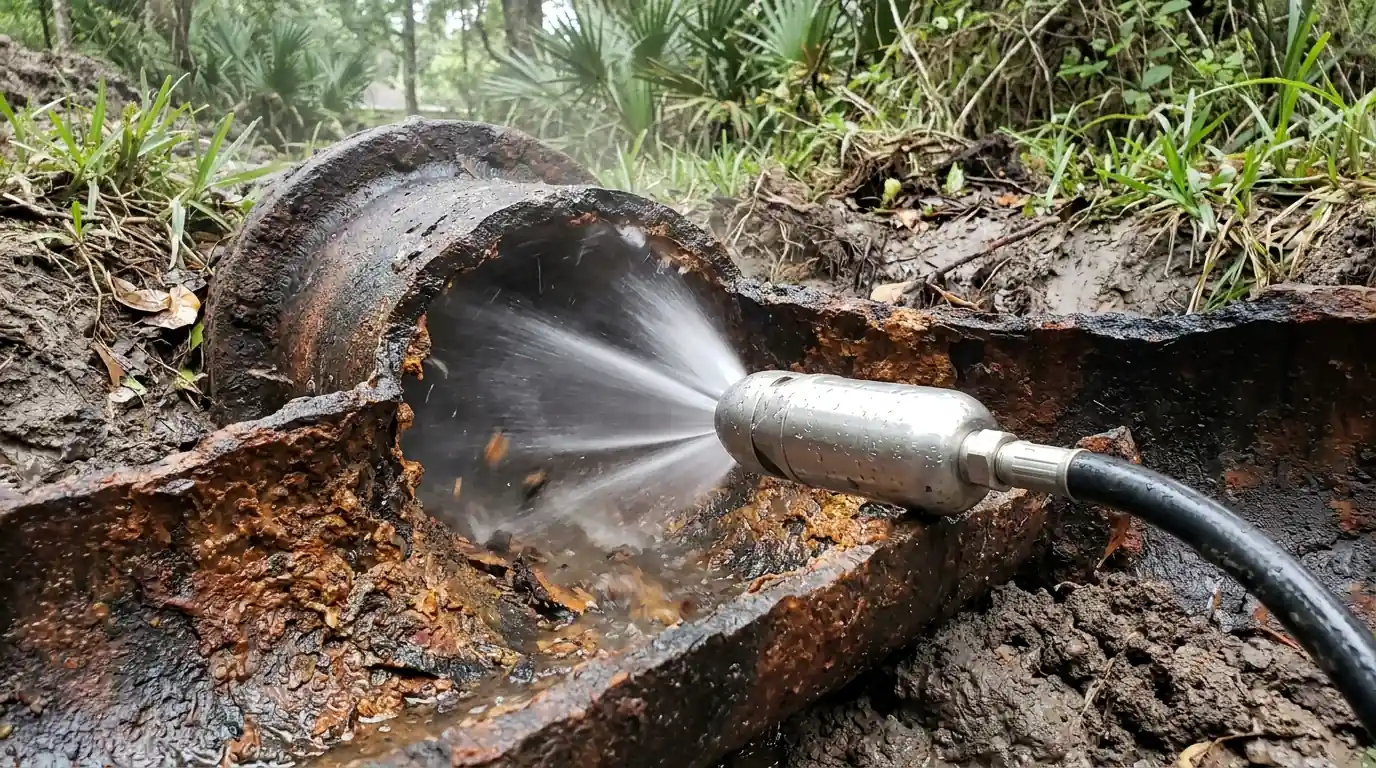
Cast iron drains corrode from the inside, building a rough crust of rust and mineral scale. That crust catches paper and grease, so older houses clog more often even with careful use. A descaling nozzle, or a jetting head with a chain cutter on very heavy buildup, strips the crust back toward the metal. The pipe has to have enough wall left to take it, which is why we look first. Where the camera shows holes or channels worn through the bottom of the pipe, cleaning will not help, and the honest next step is repair or replacement.
Jetting after root cutting
Cutting roots in a main line removes the mass but leaves fine root hair along the joints and inside cracks. Those hairs regrow quickly and catch debris again. Jetting after the cut flushes the cuttings to the street and scours the joints clean, which usually buys more time between cleanings. It does not seal the joint. If roots keep returning every year, the long term fix is a spot sewer line repair at the bad joint or a liner through the whole run.
Scope of the work
What a jetting visit includes
- A check that the line is open enough to drain the jetting water
- A camera look at older cast iron or clay before pressure goes in
- A nozzle chosen for grease, scale or root hair
- Jetting from the cleanout up the branch or out to the city tap
- Protection around the cleanout and drains during the work
- A flow test at the fixtures afterward
- A plain explanation of what came out and what we saw in the pipe
- Advice on how often the line is likely to need it again
Call before it gets worse
We answer 24/7 from South Belt.
Local to southeast Houston
Hard water scale and aging iron in Houston drains
Houston water isn't soft. The city's 2025 water quality report put average hardness for the main system at 135.5 ppm, and the USGS calls anything from 121 to 180 hard, noting that hard water moving through pipe over the years can leave scale. Pair that with cast iron drains, which stopped going into new houses by the mid-1980s and can start to deteriorate around 40 years into use, and you get rough, crusted lines that clog more easily. That combination is where jetting does its most useful work.
Step by step
The steps of a hydro jetting visit
Confirm the line drains
A stopped line is opened first so the jetting water can flow away.
Look at the pipe
On older pipe we run a camera to check the wall can take the pressure.
Choose the nozzle
Grease, scale and roots each get a different jet pattern.
Jet and pull back
The hose climbs the line and scours the wall as we draw it back.
Recheck the flow
We run water and, when useful, camera the cleaned pipe so you see the result.
Common questions
Hydro Jetting questions from Houston homeowners
On sound pipe, yes. On cast iron or clay with thin walls or open cracks, high pressure can make things worse. That's why we camera older lines before jetting them.
A household kitchen line may go a few years. A restaurant line or a main with known roots may need it every six to twelve months until it is repaired.
No. It clears roots and root hair from the pipe, but roots return through the same open joint. Sealing that joint with a repair or a liner is the lasting fix.
Not usually. The water goes down the drain to the sewer. We work from a cleanout and protect the area around it.
Cabling is quicker and costs less for a sudden stoppage, but it leaves buildup on the wall. If you are cabling the same drain repeatedly, jetting tends to cost less over time.
Same system, different job
Related plumbing services
- Drain CleaningKitchen, bathroom and laundry drains cleared with the right cable for the pipe.
- Main Sewer Line CleaningBackups in more than one fixture cleared at the cleanout, roots included.
- Sewer Camera InspectionA recorded camera run that shows breaks, bellies and roots before anyone digs.
- Grease Trap Installation & RepairUnder-sink and in-ground grease traps installed, repaired and kept draining.
Ready to talk it through?
Call any hour. We look first, explain the choices, and price them before work starts.