Yearly tank care
Water heater flush and maintenance in Houston
Nothing is broken yet, but the tank pops when it heats, the hot water runs out a little sooner, or you can't remember the last time anyone looked at it. A yearly service catches the slow problems early.
- We answer 24/7, nights and weekends included
- Out of South Belt, off Beltway 8
- Flush, anode pull and valve test in one visit
Updated October 2026

Short answer
Water heater maintenance in Houston means three things: flushing the sediment that hard water leaves at the bottom of the tank, pulling the anode rod to see how much is left, and testing the temperature and pressure relief valve. On most tanks it takes about an hour, and it's a simple way to stretch the life of the heater you have.
The job
Why a tank heater needs a yearly checkup
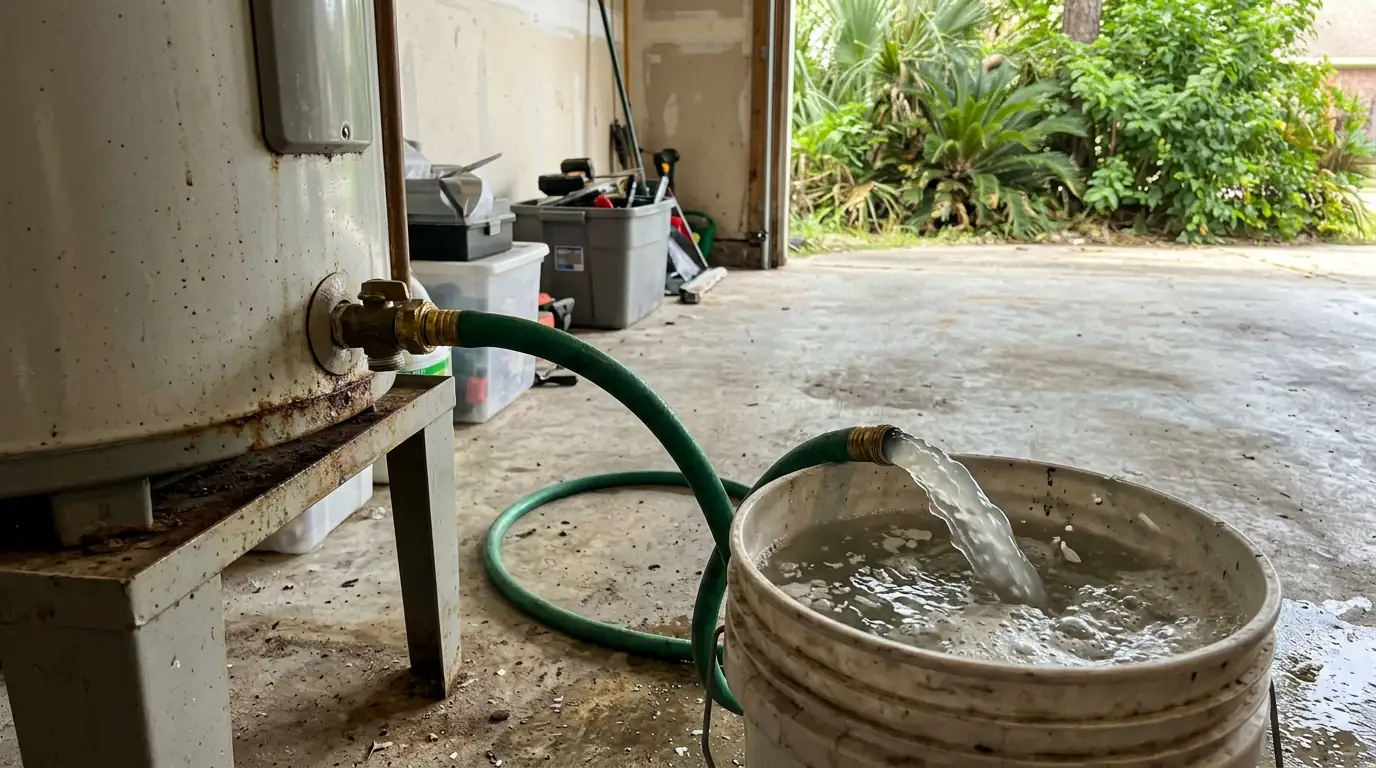
A tank water heater wears out from the inside, slowly and out of sight. Minerals drop out of the water as it heats and settle on the bottom. The anode rod, a metal rod screwed into the top, corrodes on purpose so the steel tank doesn't. And the relief valve sits unused for years until the one day it needs to open. Maintenance deals with all three before they turn into a leak or a failure.
This is preventive work, not a fix for a heater that's already down. If your tank has no hot water, a dead pilot or a leaking valve, that's a repair visit instead. And if the tank is already weeping from the jacket, flushing won't save it; you're looking at a new tank. For tankless units, the equivalent service is descaling the heat exchanger, covered under tankless repair.
Scope of the work
What a water heater flush and checkup covers
- Full drain and flush of sediment from the tank bottom
- Drain valve check, with a brass valve if the old one fails
- Anode rod removal, inspection and measurement
- Temperature and pressure relief valve test
- Discharge pipe check for size, slope and termination
- Street water pressure reading at a hose bib
- Burner and flue check on gas units
- Element and thermostat check on electric units
- A note on tank condition and what to watch for
The versions we see most
Tank flush and sediment removal
Sediment is the reason a tank starts to pop and rumble. Water gets trapped under the mineral layer, boils in small bursts, and the noise is the steam escaping. On gas units, that layer also insulates the burner from the water, so more heat goes up the flue. On electric units, it can bury the lower element. We shut off gas or power, connect a hose to the drain valve, and drain the tank while cycling the cold supply to stir up the bottom. We repeat until the water runs clear. A brass drain valve sometimes replaces a plastic one that's clogged or won't reseal.
Anode rod inspection
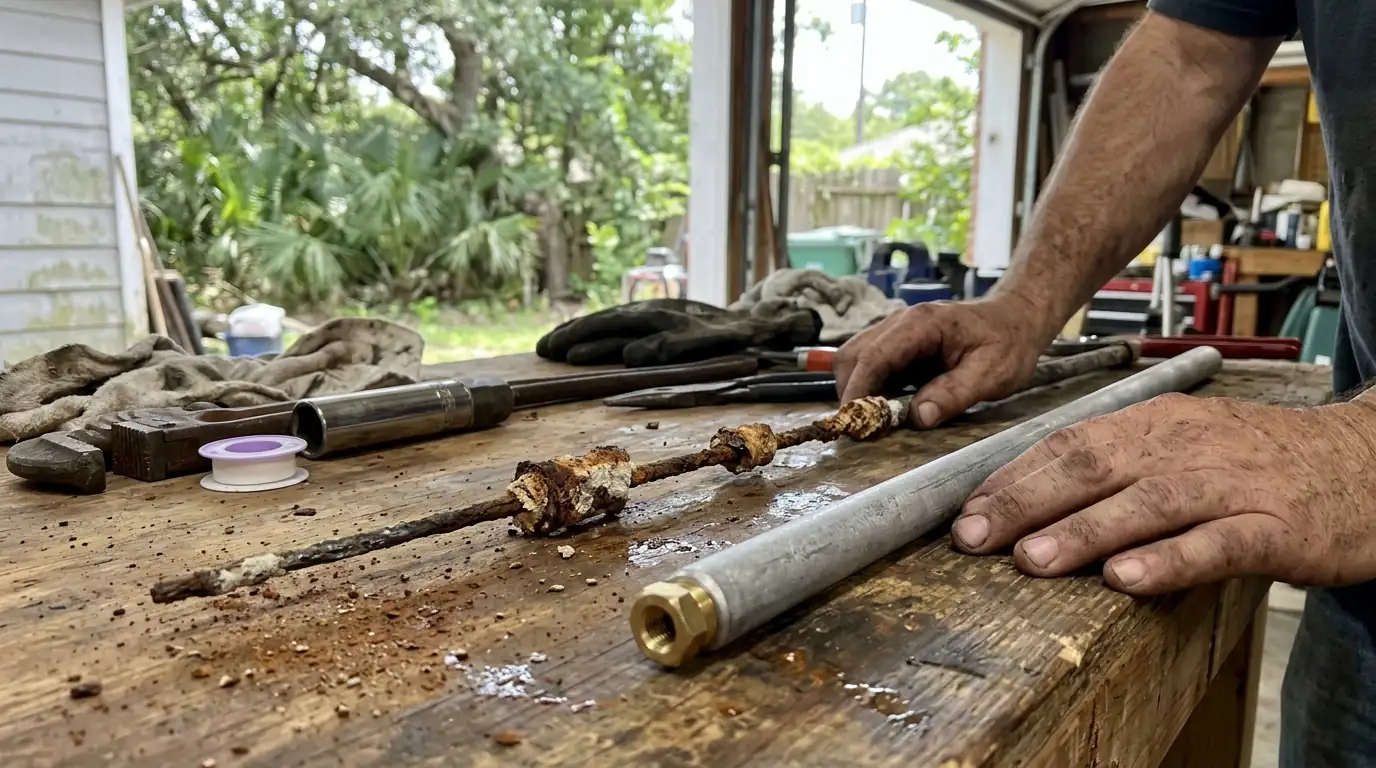
The anode rod is the part most homeowners have never heard of, and it decides how long the tank lasts. It's a magnesium or aluminum rod that corrodes in place of the steel. Once it's eaten down to the core wire, the tank itself starts to rust. We shut off the water, relieve pressure, and break the rod loose at the top of the tank to look at it. If more than about half of it is gone, or the core wire is showing, we replace it. In tight spaces we use a segmented rod that bends to fit. A rotten egg smell in the hot water can also be fixed by switching the rod type.
Relief valve testing
The temperature and pressure relief valve is the heater's last line of defense, and it often sits untouched for a decade. We lift the test lever to make sure water flows freely out the discharge pipe and that the valve snaps shut and stops dripping afterward. A valve that won't open, or keeps weeping after the test, gets replaced. We also check that the discharge pipe is the right size, runs downhill, and ends where hot water won't hurt anyone. While we're at it, we read street pressure at a hose bib, because pressure over the normal range is a common reason relief valves start to drip.
Local to southeast Houston
What Houston water leaves behind in your tank
Houston's Main system averaged 135.5 ppm of hardness in the 2025 water quality report, with readings up to 229. The USGS puts 121 to 180 ppm in the hard range and anything above 180 in the very hard range, so a tank here collects sediment steadily. The same report lists chloramines as the disinfectant across the Main system, and treated water like that is part of why anode rods get used up. In a lot of the tanks we open for a first flush, the rod is already worn down to bare wire.
Step by step
What happens during a maintenance visit
Shut down safely
Gas set to pilot or off, or power cut at the breaker, and the cold supply closed.
Drain and flush
We drain through a hose and cycle fresh water until it runs clear.
Pull the anode
The rod comes out, gets measured, and is replaced if it's worn.
Test the relief valve
We lift the lever, check flow and reseal, and read the street pressure.
Refill and restart
The tank fills completely before gas or power returns, then we check for leaks.
Call before it gets worse
We answer 24/7 from South Belt.
Pricing
What affects the price of a water heater service
A basic flush and inspection is a short visit. Parts that need replacing, and how long since the last service, are what move the price.
Sediment load
A tank never flushed may take several drain cycles, and a clogged drain valve may need replacing.
Anode replacement
A new rod, or a segmented rod for low ceilings, adds a part to the visit.
Relief valve condition
A valve that sticks or keeps dripping after testing gets replaced.
Heater location
Attic and closet units take more time to drain safely than a garage tank.
Number of heaters
Homes with two tanks can have both serviced in the same trip.
Typical planning range: $75 - $150 for flush a standard tank water heater (tankless flush $150 - $350), per HomeGuide (May ). Treat it as a planning number only. We price your job after we see it.
Before you call
Upkeep you can do between visits
| Situation | What you can safely do | When to call us |
|---|---|---|
| Quick sediment drain | Close the cold valve, open the drain valve into a bucket for a minute, then close it | If the drain valve leaks after closing or nothing flows |
| Check the area around the tank | Look for rust at the base, damp spots or water in the drain pan | If you find water or rust at the jacket seams |
| Listen while it heats | Note any popping or rumbling when the burner or elements run | If the noise gets louder, it's time for a full flush |
| Clear around a gas heater | Keep storage, paint cans and lint away from the burner area | If the pilot keeps going out after clearing |
Common questions
Water Heater Flush & Maintenance questions from Houston homeowners
Once a year suits most homes on Houston water. Larger households, or homes where the tank already pops and rumbles, may benefit from a flush more often.
Often it quiets it down, especially if the sediment is still loose. If the layer has hardened after years without a flush, some of it won't come out, and the noise may only improve partway.
It varies with water and use. In hard, treated water like Houston's, many rods are heavily worn within a few years. Checking it is the only way to know.
You can lift the lever briefly with a bucket under the discharge pipe, but the water is scalding. If the valve won't reseal and keeps dripping afterward, it needs replacing.
If a tank has never been flushed in many years, flushing can disturb sediment that's sealing a weak spot. We look at the tank first and tell you if a flush is worth the risk.
Same system, different job
Related plumbing services
- Water Heater RepairNo hot water, pilot trouble or a leaking valve fixed on tank heaters, gas or electric.
- Water Heater ReplacementA worn-out tank swapped for a new gas or electric unit, hauled away the same visit.
- Tankless Water Heater RepairError codes, cold-water sandwiches and scaled heat exchangers diagnosed and fixed.
- Water Softener InstallationA softener plumbed with a bypass and drain so hard water stops scaling fixtures.
Better to catch it early
Phone us and we will check it before it becomes a repair.