See the pipe before digging
Sewer camera inspection for Houston homes and buyers
You can't see a sewer line from the yard, and guessing is expensive. A camera run shows the inside of the pipe joint by joint, so a repair is planned from footage instead of from a hunch.
- We answer 24/7, nights and weekends included
- Based in South Belt, near Beltway 8 and I-45
- Recorded footage with defects located from the surface
Updated October 2026

Short answer
A sewer camera inspection in Houston sends a waterproof camera on a push cable through the cleanout to the city tap, recording every joint on the way. A locator above ground marks where and how deep any break, sag or root intrusion sits. You get the footage and our notes, and nothing is dug until the problem is on video.
The job
What the camera shows that a backup alone cannot tell you
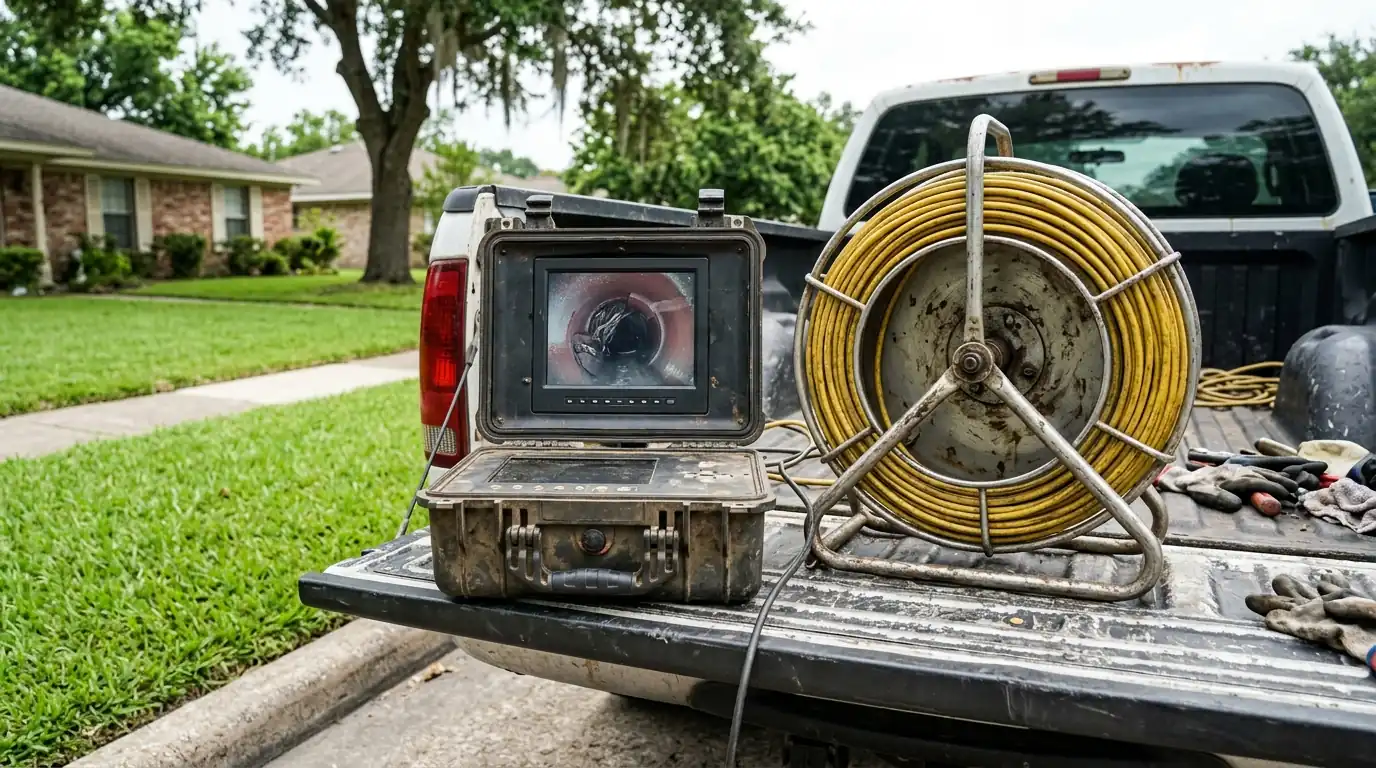
A clog tells you the line stopped working. It does not say whether the cause is a wad of wipes, a root mass at a cracked joint, a sag where the soil settled, or a section that has collapsed. Those problems lead to very different fixes, from a single cleaning to a full replacement. The camera is how we tell them apart.
The camera head carries lights and a small transmitter called a sonde. As it travels, the screen shows a footage counter, and a handheld locator on the surface picks up the sonde signal to give the position and depth. We mark defects on the ground with paint or flags. The video goes to you, so you can share it with a seller, a second plumber or the crew doing a sewer repair. If the line is too full to see through, we clear it first with main line cleaning.
Scope of the work
What comes with a sewer camera run
- Camera inspection from the cleanout or a fixture to the city tap
- Recorded video with the footage counter on screen
- Pipe material noted, such as cast iron, clay, Orangeburg or PVC
- Defects located from the surface and marked with depth
- Notes on roots, offsets, bellies, cracks and buildup
- A walk-through of the footage with you on site
- Repair options for anything that needs attention
- A copy of the video you can share with a buyer, seller or other plumber
The versions we see most
Pre-purchase sewer scope
A general home inspection usually runs water at the fixtures and stops there. It does not look inside the buried line, and that line is one of the costlier things to replace. If the house you are buying has cast iron or clay drains, large trees in the front yard, or a history of backups, a scope before closing is worth arranging. We run the line from the cleanout, record it, and give you a plain summary: what the pipe is made of, where any defects are, and whether they need attention now or can be watched. Buyers often use the footage in repair negotiations.
Locating a break for repair
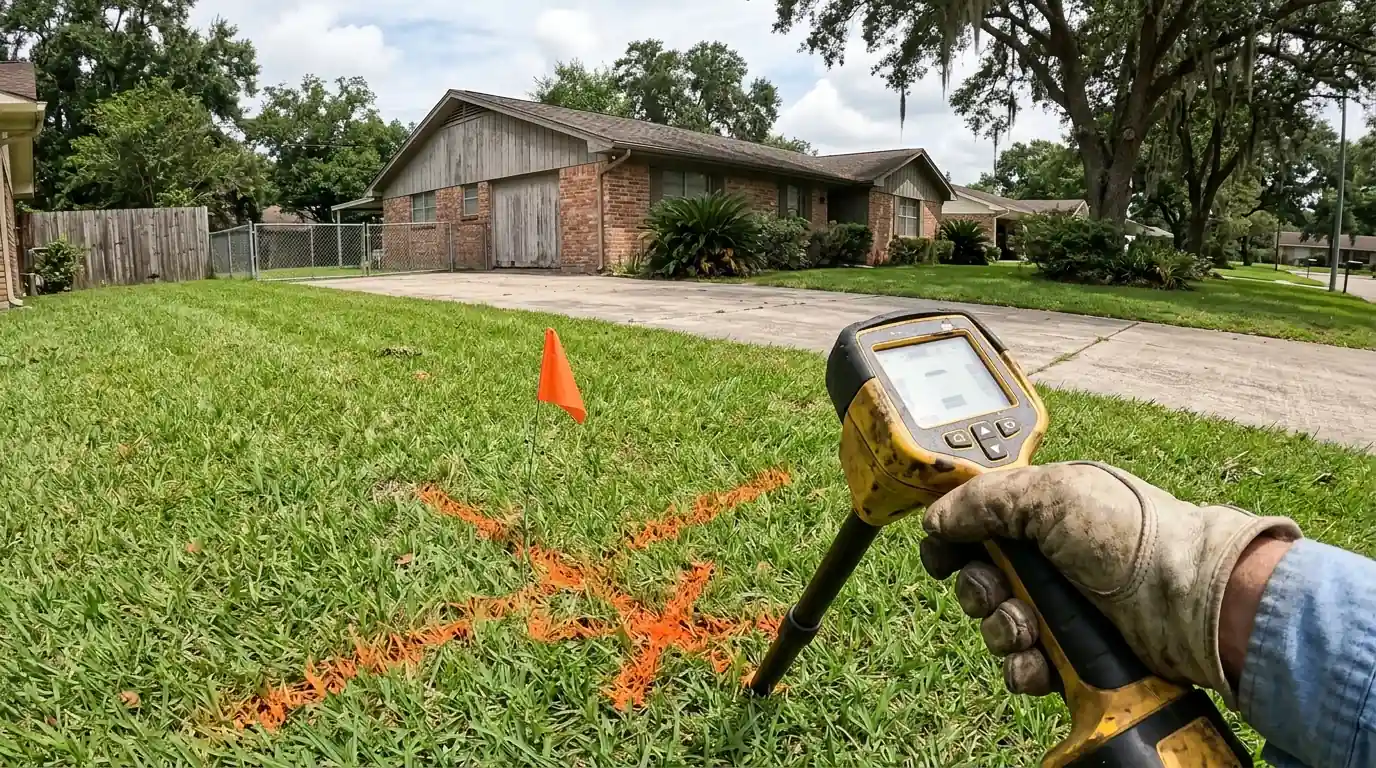
When a line keeps backing up or the yard has a soft, wet spot that smells of sewage, the camera turns a guess into a mark on the ground. We push to the defect, read the footage counter, and use the locator to find the exact spot and depth. That decides the size of the dig or whether a trenchless repair is possible. A break under a driveway, a patio or a large tree changes the plan, and knowing that before the shovel comes out saves the most money.
Video after a backup
After a main line backup is cleared, many people just want to move on. The trouble is that the cause is still in the pipe. A camera run right after cleaning, while the line is clean and open, shows whether roots came through a joint, whether a belly is holding water, or whether the pipe is simply old and rough. If the footage looks clean, you have an answer and can stop worrying. If it doesn't, you can plan a repair on your schedule instead of waiting for the next backup on a holiday weekend.
Local to southeast Houston
Where camera inspections pay off in southeast Houston
Housing age matters more than anything else for buried drain lines. In Golfcrest/Bellfort/Reveille, about 6,000 homes were built between 1940 and 1959, and Meadowbrook/Allendale has more than 3,600 from that same era. Cast iron left new construction by the mid-1980s and tends to deteriorate after about 40 years, and many of these older lines are well past that point. For a buyer in one of these areas, or an owner seeing the first backups, a recorded run is a sensible first step.
Step by step
From cleanout to recorded footage
Open the access point
We use the outdoor cleanout when there is one, or pull a toilet if there is not.
Run the camera
The head travels the whole line to the tap while it records.
Locate from above
Anything that needs fixing is found with the locator and marked with its depth.
Review it with you
We go over the footage and explain each finding in plain terms.
Send the recording
You get the video and our notes to keep or share.
Talk to a plumber now
Any hour, any day. Tell us what you see.
Pricing
What affects the price of a sewer camera inspection
A camera run is a fixed amount of setup plus however long the line and the findings take. These factors change it the most.
Access to the line
A clean outdoor cleanout is quick. Going through a toilet or a roof vent takes longer.
Whether the line must be cleared first
A backed up line needs cleaning before the camera can see anything.
Length of the run
Long lines to a back lot tap or across a large lot take more time.
Locating and marking
Marking each defect on the surface with depth adds time but makes repair quotes accurate.
Written report
A buyer's report with notes and footage takes more preparation than a quick look.
Typical planning range: $125 - $500 for sewer camera inspection, per HomeGuide (Dece). That is a published range, not a quote. Your price comes after we look.
Timing
How long a camera inspection usually takes
Most residential camera runs take about an hour on site, including setup, the run itself and locating defects. A line that has to be cleared first, or a long run with several problem spots, can stretch that to two or three hours. Plumbing stays usable during an inspection on a clear line, but we ask you not to run water while the camera is in the pipe, since it fogs the view.
Common questions
Sewer Camera Inspection questions from Houston homeowners
Yes. We send you the recording and our notes so you can review them or share them with a seller, an insurer or another plumber.
It can show cracks, separations and holes in drain lines under the slab. Water supply leaks are found a different way, with pressure and acoustic tests.
If it stops at a blockage, we clear the line and try again. If it stops at a collapse, that point itself is the finding, and we mark it on the surface.
Newer PVC lines fail less often, but sags and construction debris do show up. It is most worth it for older homes, large trees or any history of backups.
No. The camera goes in through an existing cleanout or a fixture opening. If we pull a toilet for access, we reset it with a new wax ring.
Same system, different job
Related plumbing services
- Main Sewer Line CleaningBackups in more than one fixture cleared at the cleanout, roots included.
- Sewer Line RepairOne cracked, offset or root-broken section dug and replaced, not the whole run.
- Trenchless Sewer RepairPipe lining or bursting through small access pits instead of a long trench.
- Hydrostatic Plumbing TestUnder-slab drain testing for foundation repair, home sales and suspected drain leaks.
- Plumbing InspectionA full check of supply, drains, gas and the water heater for buyers and owners.
Not sure it is time yet?
Call and describe the setup. We will tell you plainly whether it can wait.