League City and Friendswood side
Plumbing for north Galveston County homes
Our part of Galveston County is the north end, up the I-45 side toward Houston, where League City and Friendswood hold most of the homes we visit. Flooding history shapes a lot of the plumbing work there.
- We answer 24/7, nights and weekends included
- Plumbers driving out of South Belt, off Beltway 8
- Common here: water heater replacement and water heater repair

Short answer
We serve north Galveston County 24/7, sending plumbers from our office in South Belt. Timing depends on the hour and what calls are already booked, and we will tell you that straight. Water heater repair and replacement is the leading job here, followed by general plumbing repairs: leaking supply lines, slow drains and fixtures that drip or run.
Plumbing in Galveston County
Two cities with a lot of homeowners and a lot of flood history
The 2020 Census put Galveston County at 350,682 people, and 67.6% of its occupied homes are owner-occupied. The two cities closest to us run higher still. League City counted 114,392 residents and a 74.7% owner rate, and Friendswood counted 41,213 residents at 77.2%.
Both took heavy water in Harvey. Early estimates put damaged properties in the county above 19,000, including about 6,000 League City houses flooded to some degree and about 6,625 Dickinson homes with water damage. Officials estimated about 3,000 Friendswood homes were inundated, with 500-year flood events along Clear Creek reaching into League City. Flood repairs tend to replace heaters and short runs of pipe, so it pays to check where repair-era work meets the original lines.
What we run into
Where north Galveston County water comes from
League City gets most of its water, about 22.5 million gallons a day, from the Southeast Water Purification Plant near Ellington Airport in Houston, the same area our office sits in. That plant draws Trinity River water through the Lynchburg Pumping Station. Houston's treated water carries chloramine as its disinfectant and averages 135.5 ppm hardness.
Hardness at that level leaves scale in water heaters, and chloramine is harder on some rubber parts like flapper seals and supply hoses than plain chlorine. If your toilet flapper or heater keeps needing attention, the water is part of the reason. A whole-house filter or a softener can cut both.
Worth knowing
Hurricane season prep for heaters and drains
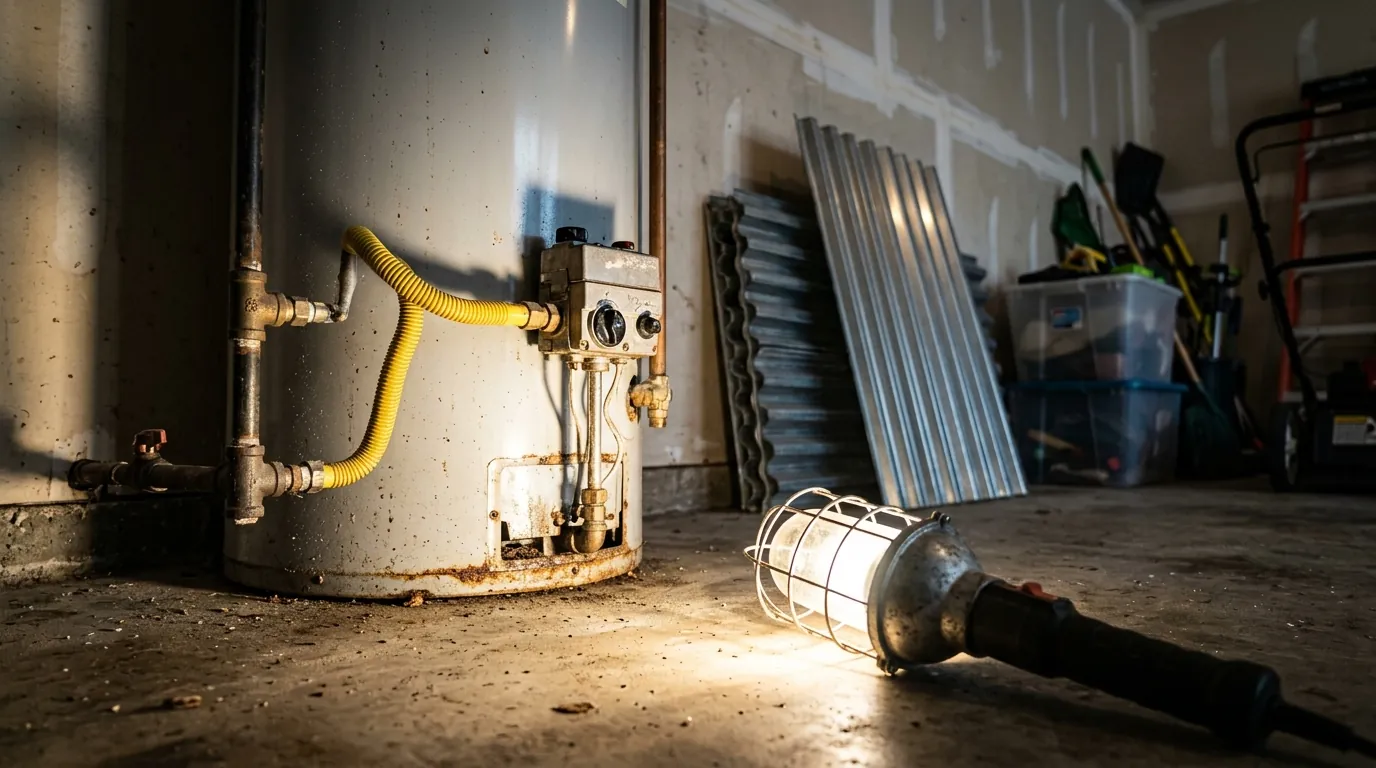
The Atlantic season runs June 1 to November 30 and peaks around September 10. Before it opens, check three things: that your water heater sits high enough to stay out of shallow floodwater, that the outdoor sewer cleanout cap is in place and not cracked, and that you know where the main water shut-off is. After a storm, call before relighting a gas heater that took on water, and have the main sewer checked if drains run slow, since floodwater often leaves silt in the line.
Most-called jobs
What Galveston County homes call us for most
- Water Heater ReplacementGalveston County saw more than 19,000 properties damaged in Harvey, and heaters that sat in floodwater had to be replaced.
- Water Heater RepairHard Houston-area water leaves scale that wears out elements and burners, so repair calls keep coming.
- Toilet RepairChloramine-treated water wears rubber flappers and seals, which leads to running toilets.
- Drain CleaningSlow kitchen and bath drains are steady calls, and floodwater can leave silt in lines afterward.
- Whole-House Water FiltrationA filter at the main reduces chloramine and sediment before it reaches heaters and fixtures.
- Leak DetectionHomes repaired after Harvey often mix newer and older pipe, and leaks show up at those joints.
Water where it should not be in Galveston County?
Ring us day or night. We start with the shut-off and a plain plan.
Questions
Plumbing questions from Galveston County
Our regular routes run through the north end, League City, Friendswood and the streets around them. Calls closer to the island depend on the day's schedule, so give us the address and we will say yes or no on the spot.
Houston-area water is treated with chloramine, which breaks down some rubber parts faster than chlorine alone. Swapping in a chloramine-resistant flapper usually fixes the problem for longer.
If the repairs replaced the heater and some pipe, the newer work is usually fine. Watch the joints where new pipe meets old, and have the main sewer line cameraed if drains have been slow since the flood.
Make sure it sits on a stand high enough for your garage, has a drain pan, and that the relief valve line runs to a safe spot. Know where the gas valve and water shut-off are in case you need to evacuate.