Water and drain connections
Appliance plumbing hookups in Houston: dishwashers, ice makers, washers
The delivery crew dropped off the appliance but won't connect the water, or they did and now there's a drip behind it. Appliance lines fail slowly and out of sight, so they're worth doing carefully.
- We answer 24/7, nights and weekends included
- Based in South Belt, close to Beltway 8
- Shutoff valve, supply line and drain checked on every connection
Updated October 2026

Short answer
Appliance hookups in Houston cover the water and drain side of dishwashers, refrigerator ice makers and washing machines: a dedicated shutoff, a braided or PEX supply, and a drain with an air gap or high loop so dirty water can't siphon back. We leave the electrical and gas connections as they are and move the appliance back only after the lines run dry.
The job
Why the line behind the appliance deserves attention
Most appliance leaks don't burst; they drip. A dishwasher supply that weeps at the compression nut, a fridge line kinked when the unit was pushed back, or a washer hose that swells over the years can soak a subfloor or cabinet base for months before anyone sees a stain. The hookup is where that's prevented.
We start at the shutoff. Every appliance should have its own valve you can reach, not just the main. Then we choose the line: braided stainless for dishwashers and washers, copper or PEX for ice makers in place of the old plastic tubing. Drains get a proper high loop or air gap so sink water can't flow back into a clean dishwasher. If the water pressure in the house is above what appliance valves are made for, we'll mention checking the pressure regulator, because high pressure shortens every one of those hoses.
Pricing
What decides the cost of an appliance hookup
Connecting an appliance where the valves and drain already work is quick. The price climbs when the old setup needs updating first.
Existing valves
Seized or saddle valves are replaced with proper quarter-turn stops.
Line length and route
A fridge across the kitchen from the sink needs a longer run through cabinets or walls.
Washer box condition
Swapping old exposed valves for a recessed box means opening drywall.
Drain setup
Adding an air gap, standpipe or new trap adds parts and time.
Number of appliances
Doing several hookups in one visit costs less than separate trips.
Typical planning range: $200 - $500 for dishwasher replacement with existing connections, per HomeGuide (Dece). Use it for budgeting; the real number depends on what we find on site.
The versions we see most
Dishwasher installation
A dishwasher needs three things under the sink: a hot water supply with its own stop, a drain hose routed through an air gap or looped high under the counter, and power. We handle the first two and reconnect the power cord or whip that's already there. The supply line connects to a brass elbow on the dishwasher's inlet valve, which is a common source of drips if it isn't sealed right. The drain usually ties into the disposal or a branch tailpiece. If a disposal was just replaced, we confirm the knockout plug is gone, since a plugged inlet is why many new dishwashers won't drain. Then we level the unit, secure it to the counter and run a full cycle.
Ice maker and fridge lines
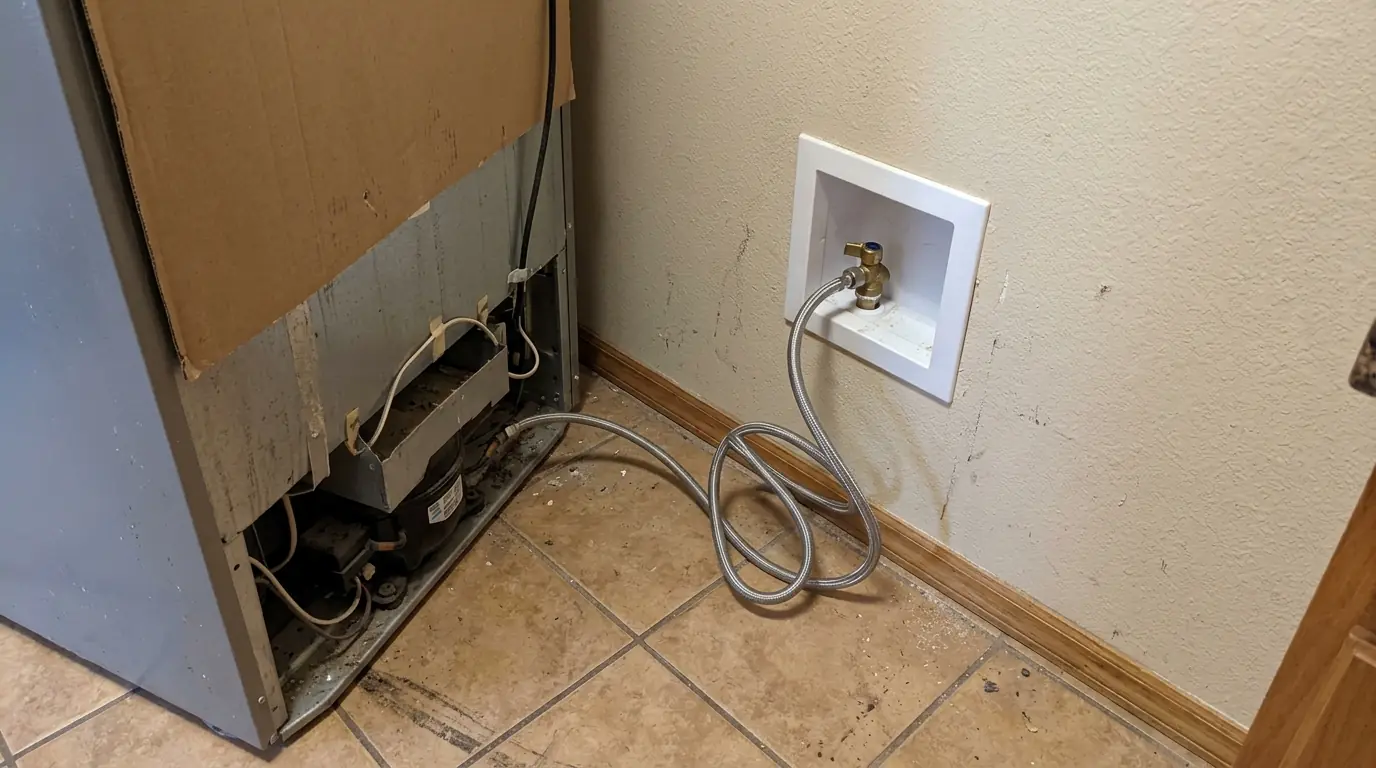
Refrigerators with ice makers and dispensers need a cold water line run to the back of the unit. Older homes often have thin plastic tubing pinched into a saddle valve, which tends to crack or leak. We replace saddle valves with a proper stop on a tee and run copper or a braided line with enough slack to pull the fridge out without kinking it. A recessed ice maker box in the wall keeps the valve accessible and the fridge closer to the wall. If you drink from the dispenser, the line can run through an inline filter or tie into an existing reverse osmosis system under the sink.
Washing machine boxes and valves
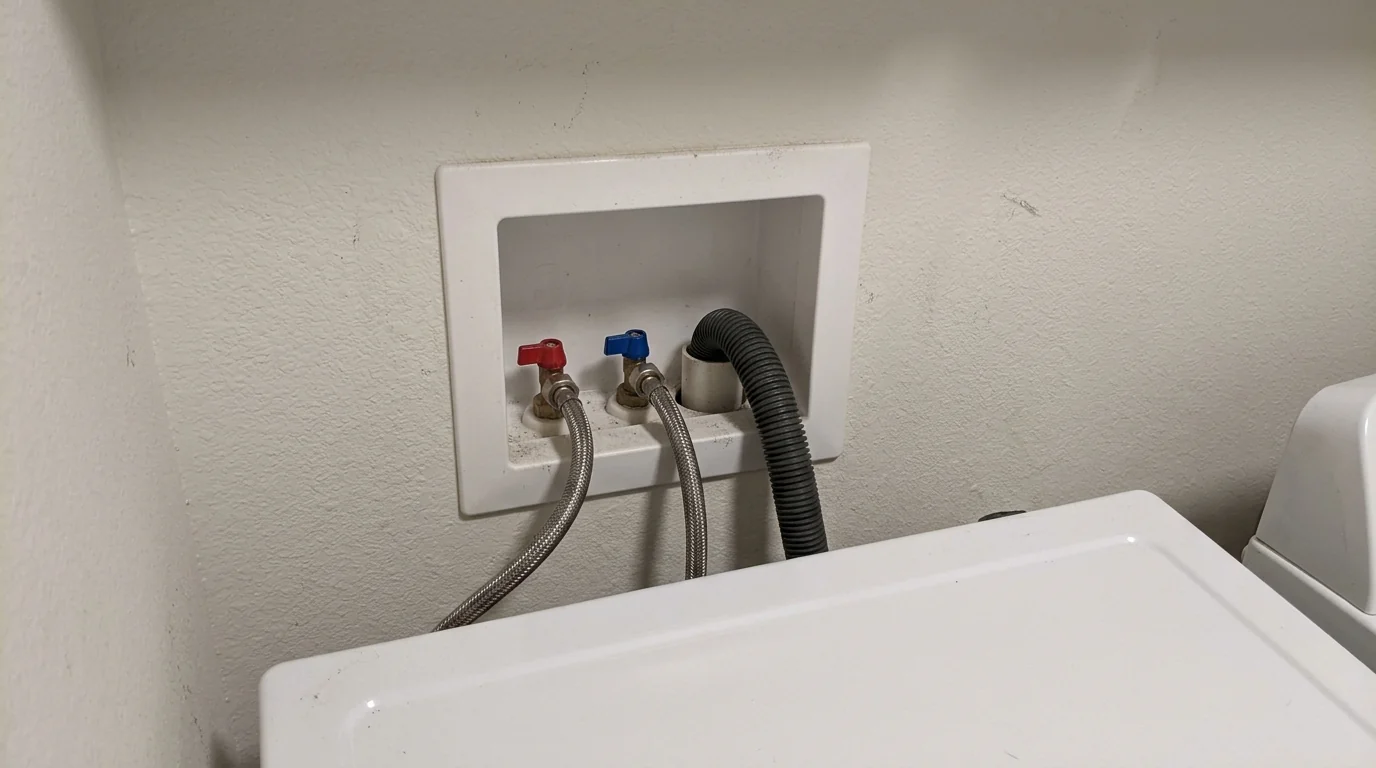
Washer valves are often the oldest valves in the house, and they're turned the least. Many seize open or drip when someone finally closes them. A recessed washer box puts the hot and cold valves and the drain standpipe in one panel in the wall, and a single-lever valve lets you shut both lines with one motion when the washer is away. We replace rubber fill hoses with braided ones, check the standpipe height and trap so the washer drains without siphoning, and look for signs of past overflow. A pan with a drain under a washer upstairs or over finished floors is simple protection we often add.
Scope of the work
What an appliance hookup visit covers
- Test of the existing shutoff valve
- Replacement of saddle or seized valves with quarter-turn stops
- New braided stainless or copper supply line
- Drain connection with a high loop or air gap
- Disposal knockout check when a dishwasher drains through it
- Inlet screen check for scale on new appliances
- Full fill-and-drain cycle with every joint watched
- Appliance pushed back and lines checked for kinks
Before you call
Simple checks you can do behind your appliances
| Situation | What you can safely do | When to call us |
|---|---|---|
| Water on the floor in front of the dishwasher | Shut the stop under the sink and remove the toe kick to look with a flashlight | Water is at the inlet elbow, drain hose or the tub itself |
| Ice maker not filling | Make sure the fridge's ice arm is down and the stop behind it is open | The line is kinked, frozen or the saddle valve has clogged |
| Rubber washer hoses | Look for bulges or cracks near the ends | Any bulge, or the valves won't close fully |
| Washer drain overflows | Stop the cycle and check that the hose isn't pushed too far into the standpipe | It overflows again, which points to a clogged standpipe or trap |
Talk to a plumber now
Any hour, any day. Tell us what you see.
Local to southeast Houston
Hard water and the valves on your appliances
Water in Houston's main system averages about 135 ppm of hardness and reached 229 ppm in some samples in the latest city report. The USGS classes those levels as hard to very hard and notes that scale builds up wherever hard water flows. Appliance inlet valves have small screens and solenoids that clog with that scale, which shows up as slow fills, weak ice production or a dishwasher that stops partway. When we hook up a new appliance, we clean or check the inlet screen and flush the line first.
Step by step
How we connect an appliance and confirm it stays dry
Check what's there
We test the shutoff, inspect the drain and measure the space.
Update the valves
Old or saddle valves are replaced with stops you can reach.
Connect water and drain
New braided or copper lines, and a drain routed with a loop or air gap.
Run a full cycle
The appliance fills, runs and drains while we watch every fitting.
Slide it home
We push it back without kinking lines and check again after a few minutes.
Brands we service and install
We hook up appliances with Watts valves and washer boxes, and tie dishwashers into sinks and disposals from InSinkErator, Moen and Kohler.
- Rheem
- A. O. Smith
- Bradford White
- Navien
- Rinnai
- Noritz
- Kohler
- Moen
- Delta
- American Standard
- Pfister
- InSinkErator
- Uponor
- Watts
Common questions
Appliance Plumbing Hookups questions from Houston homeowners
Some delivery crews will, but many skip the water connection if the stop or drain isn't up to their checklist. We handle that part and update whatever is out of date.
A small fitting on top of the sink or counter that breaks the drain line, so dirty sink water can't siphon back into the dishwasher. Where local code allows a high loop instead, the hose is fastened high under the counter.
Yes, if they're more than a few years old. Braided stainless hoses hold up far better and cost little. It's one of the simplest ways to avoid a laundry room flood.
Usually, through the cabinets, the attic or the wall. We pick the shortest route that keeps the line out of the cold and accessible.
Gas appliance connections are handled as part of our gas line work, which follows a different process, including a permit and a pressure check before the appliance is lit.
Same system, different job
Related plumbing services
- Garbage Disposal Repair & InstallationJammed, humming or leaking disposals freed, repaired or replaced.
- Sink InstallationKitchen, bathroom and utility sinks set, plumbed and leak-tested.
- Reverse Osmosis SystemUnder-sink drinking water filtration with its own faucet and ice maker line.
- Water Pressure RepairLow or banging-high pressure fixed at the regulator, the main or the fixture.
Ready to talk it through?
Call any hour. We look first, explain the choices, and price them before work starts.