The drain test under your slab
Hydrostatic drain testing for Houston slab homes
A foundation repair company wants it before they lift the house, or a buyer's inspector flagged the slab. Either way, someone needs to know if the drains under the concrete hold water.
- We answer 24/7 and can usually schedule around an option period
- Based in South Belt, serving southeast Houston
- Line plugged at the cleanout, filled, timed and measured
Updated October 2026

Short answer
A hydrostatic plumbing test in Houston checks whether the drain lines under a slab foundation leak. We plug the main at the cleanout, fill the drain system with water up to floor level and watch whether the level holds. If it drops, the test isolates which section is leaking, and a camera usually shows where.
The job
How a drain test under the slab actually works
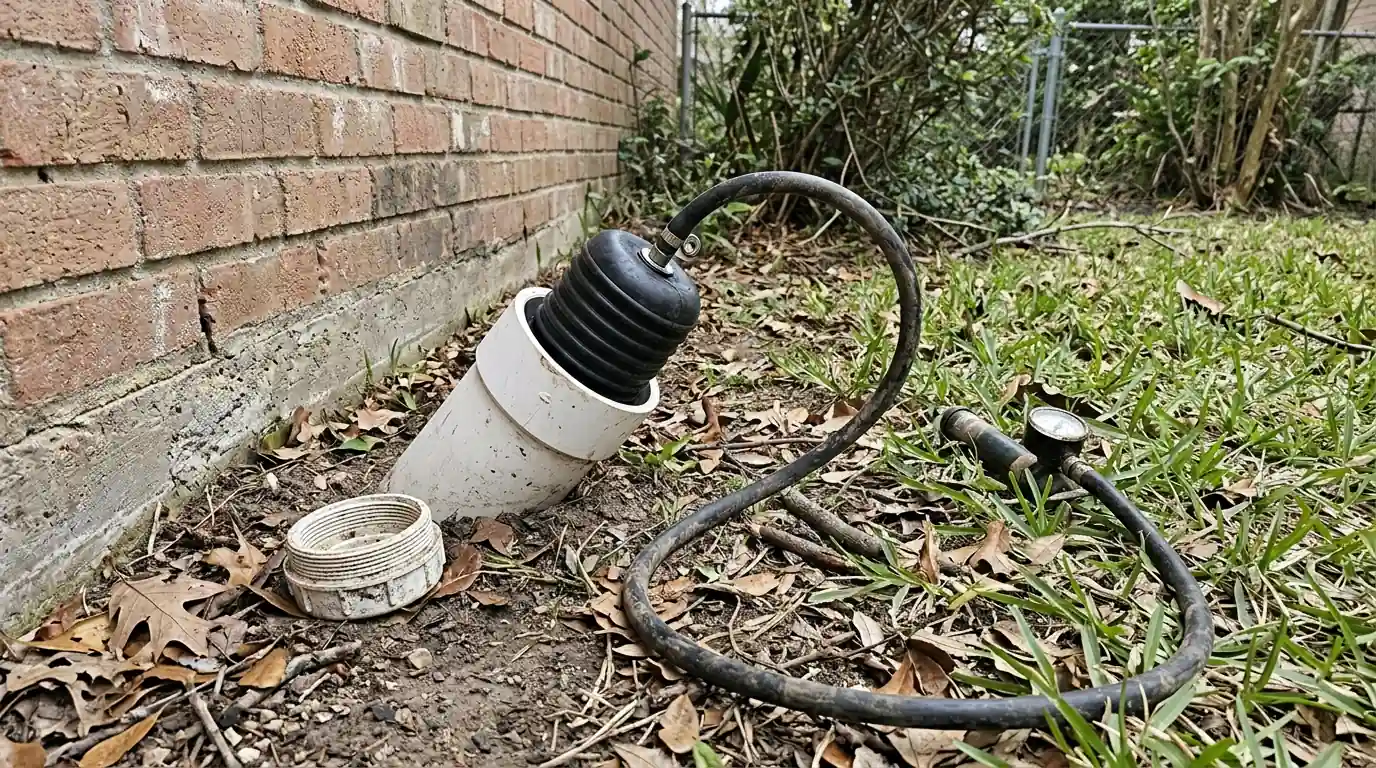
The drain pipes in a slab home sit below the concrete, carrying everything from the toilets, tubs, sinks and washer out to the main sewer. Normally they only carry water downhill and never hold it. A hydrostatic test turns the system into a closed container. We open the cleanout where the main leaves the house, push an inflatable test ball into the pipe and inflate it so nothing passes. Then we fill the drains from inside, usually through a toilet flange, until water stands at floor level.
Now we wait and watch. A sound system holds that level with little or no drop over the test period. A leaking system loses water into the soil, and the level drops. How fast it drops tells us something about the size of the break. If it fails, we split the system with more plugs to narrow the leak to a branch, then run a camera through that section to find the cracked fitting, separated joint or broken pipe.
Scope of the work
What a hydrostatic test visit includes
- Locating and opening the main sewer cleanout
- Setting an inflatable test plug in the main
- Pulling a toilet to fill the system through the flange
- Filling the drains to floor level and timing the hold
- Measuring and recording any drop in water level
- Isolation testing by branch when the system fails
- Resetting the toilet with a new wax ring
- A written result you can share with a foundation company or buyer
The versions we see most
Pre-foundation-repair tests
Foundation repair companies in the Houston area commonly ask for a hydrostatic test before they level a house. There are two reasons. A leaking drain can soak the clay under the slab and be part of why the foundation moved in the first place, so fixing the foundation without fixing the leak invites the problem back. And lifting a slab puts stress on the drain lines underneath, so a baseline test before the work shows what condition the pipes were in. We send the results in writing so the foundation company and you have the same record. If the test fails, the repair, often tunneling under the slab, is usually done before the leveling.
Real estate drain tests
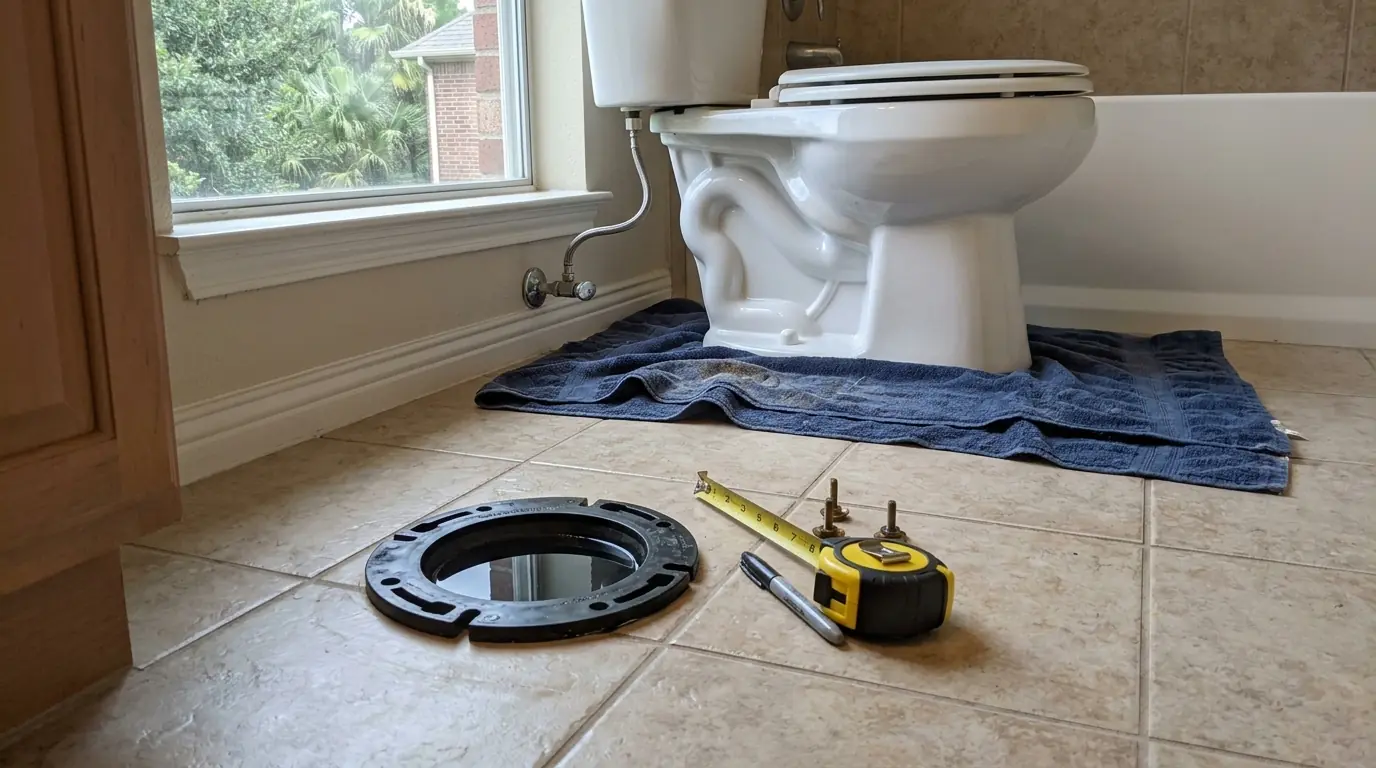
Buyers ask for this test when the inspection notes foundation cracks, sloping floors, past foundation repair or an older home with cast iron drains. Sellers sometimes run it first to have the results ready for buyers. The test is the same, but timing matters because option periods are short. We need the water on, a reachable cleanout and the house unoccupied for the test window, since nobody can use a sink or toilet while the drains are full. The result is a pass or fail with the amount of drop measured, which buyers can take back to the negotiation. A failed test often leads to a camera run to price the repair before closing.
Post-repair retests
After a leak under the slab has been repaired, or after the house has been leveled, a retest confirms the drain system holds. This is the step that closes the loop for the foundation company, the buyer or your records. We run the same test as before, plugged at the same point and filled to the same height, so the results compare directly. If the earlier failure was on one branch, we may test that branch on its own first. A pass here is the point at which tunnels get backfilled and floors get put back. If the line still drops, we isolate again, because a second leak sometimes hides behind the first.
Local to southeast Houston
Why Houston foundations and drain tests go together
Southeast Texas sits on Lake Charles clay, which cracks wide and deep when dry and swells when wet. Local reporting tells homeowners on expansive clay, basically anyone south of Interstate 10, to watch for foundation movement. A slab that moves pulls on the drain lines under it, and a drain that leaks keeps the clay wet in one spot. In South Belt/Ellington, 5,929 homes were built from 1960 to 1979, so many still have original drains under slabs that have moved for decades.
Step by step
Step by step through a slab drain test
Find and open the cleanout
We locate the main cleanout outside the foundation and open it.
Plug the line
An inflatable test ball is set in the main to block water from leaving the house.
Fill to floor level
Water is added through a toilet flange until the drains are full up to the floor.
Watch the level
We mark the water level and measure any drop over the test period.
Isolate if it fails
More plugs split the system into branches, and a camera finds the break.
Report the result
You get a written pass or fail with the measured drop and any locations found.
Call before it gets worse
We answer 24/7 from South Belt.
Pricing
What affects the cost of a hydrostatic test
Most of the cost is time on site: getting the line plugged, filling it, waiting and isolating if it fails. These things change how long that takes.
Cleanout access
A working cleanout near the foundation is quick. No cleanout means pulling a toilet or adding one.
Size of the drain system
More bathrooms and branches mean more pipe to fill and more places to isolate.
Pass or fail
A passing test ends there. A failing test leads to isolation testing to narrow down the leak.
Camera follow-up
Running a camera to find the exact break adds time and equipment.
Retest after repair
A second test after repair or leveling is a separate visit.
Typical planning range: $250 - $500 for hydrostatic plumbing test in Houston, TX, per My Best Foundation Repair (June). That is a published range, not a quote. Your price comes after we look.
Timing
How long the test takes and what is out of use
A straightforward test on a single-family slab home usually takes two to four hours, including setup, fill time, the hold period and resetting the toilet. A failed test with isolation and a camera run can take most of a day.
While the drains are full, nobody can use any sink, toilet, tub, shower, dishwasher or washer in the house, because water would just add to the test column. Supply water can stay on for other uses outside, but plan to be out of the house or keep fixtures off for the whole window.
Common questions
Hydrostatic Plumbing Test questions from Houston homeowners
They want to know if a drain leak is soaking the soil under the slab before they level it, and to have a baseline in case the lift affects the pipes. Fixing a leak first helps the repair last.
It means water is escaping from the drain system under the slab. The next step is isolation testing and a camera run to find where, followed by a repair, usually by tunneling under the slab.
A pass means the system held water for the test period. It does not show scale, roots or a low spot that holds waste. A camera run covers those.
The test fills drains with clean water at the same height they see when a tub drains slowly. On a sound system that is no stress. On a broken one, it shows the leak that was already there.
Yes. Some sellers run it to have results ready for buyers, especially on older homes or houses with past foundation work.
No. A hydrostatic test checks drains under the slab with water. A gas line pressure test checks gas piping with air pressure and a gauge.
Same system, different job
Related plumbing services
- Under-Slab Drain RepairBroken drains under the foundation reached by tunneling or a targeted floor cut.
- Sewer Camera InspectionA recorded camera run that shows breaks, bellies and roots before anyone digs.
- Plumbing InspectionA full check of supply, drains, gas and the water heater for buyers and owners.
- Slab Leak RepairHot spots in the floor and a meter that never stops, located and repaired.
Not sure it is time yet?
Call and describe the setup. We will tell you plainly whether it can wait.