The right assembly for the hazard
Backflow preventer installation in Houston
Adding sprinklers, opening a restaurant or replacing a device that keeps failing its test all lead to the same job. The right assembly gets installed on the line, set at the right height, and tested before it goes into service.
- We take calls 24/7 to schedule installs
- Working out of South Belt, near Ellington
- Device chosen by hazard level, then tested at install
Updated October 2026

Short answer
Backflow preventer installation in Houston means choosing an assembly that matches the hazard on that line, such as a pressure vacuum breaker for most home sprinklers or an RPZ for higher-risk commercial lines. We install it at the right height with shut-offs and test cocks, then run the initial test the code requires at installation.
The job
Which backflow device fits your line
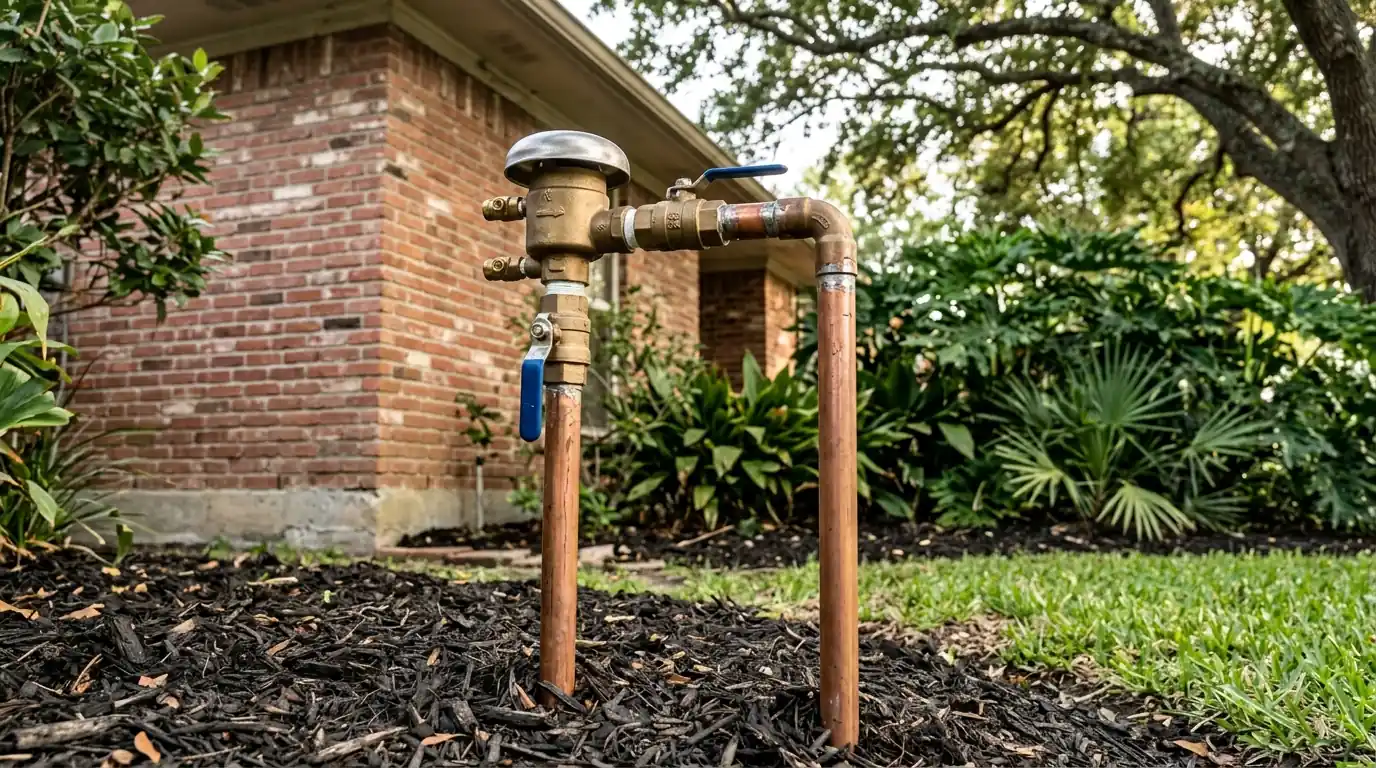
The device depends on what could flow backward and how harmful it would be. A home sprinkler line usually gets a pressure vacuum breaker, mounted above the highest sprinkler head so it can pull in air if pressure drops. Lines with a higher hazard, such as a fertilizer injector, a boiler, a car wash or a medical office, call for a reduced pressure zone assembly, which can dump water through its relief port rather than let anything back in.
Placement matters as much as the device. Vacuum breakers need clearance above the yard, RPZ assemblies need a spot where relief water can drain without flooding anything, and every assembly needs room for a tester to reach the test cocks. If you are replacing a device that keeps failing its yearly test, we look at why before choosing the new one. For business properties, this work often ties in with other commercial plumbing on site.
Your options
PVB, double check or RPZ: how they differ
| Compare | Pressure vacuum breaker | Reduced pressure zone |
|---|---|---|
| Typical use | Home sprinkler systems | Restaurants, medical offices, chemical feeds |
| Hazard level | Lower hazard lines | Higher hazard lines |
| Mounting | Above the highest sprinkler head | Above ground with room to drain |
| Discharge | May spit a little water at startup | Relief valve can dump water when a check fails |
| Testing | Check valve and air inlet | Two checks plus the relief valve |
A double check assembly sits between the two and suits some irrigation and fire lines where a vacuum breaker cannot go high enough. The hazard on the line decides the device, not price.
Pricing
What sets the price of a new backflow assembly
The type and size of the device drive most of the cost. Where it has to go, and what protects it, account for most of the rest.
Assembly type
A pressure vacuum breaker costs less than a double check or an RPZ.
Line size
Larger commercial lines need larger, heavier assemblies.
Location and height
Raising a device above grade or adding a ground box adds work.
Freeze protection
Insulated covers or enclosures help protect exposed devices.
Relief drainage
RPZ assemblies need a safe path for relief discharge.
Typical planning range: $200 - $1,000 for backflow preventer with installation, per HomeGuide (Sept). Treat it as a planning number only. We price your job after we see it.
The versions we see most
Irrigation backflow preventers
A new in-ground sprinkler system needs a backflow device where the irrigation line tees off the main, before any valve zones. For most houses that is a pressure vacuum breaker set above grade and above the highest head, with a ball valve on each side. If height is a problem, such as a sloped yard or heads on a raised bed, a double check in a ground box can be the right answer, depending on what the water provider allows. We set the device, run the line to the valve manifold and test it before the system comes on.
Reduced pressure zone assemblies
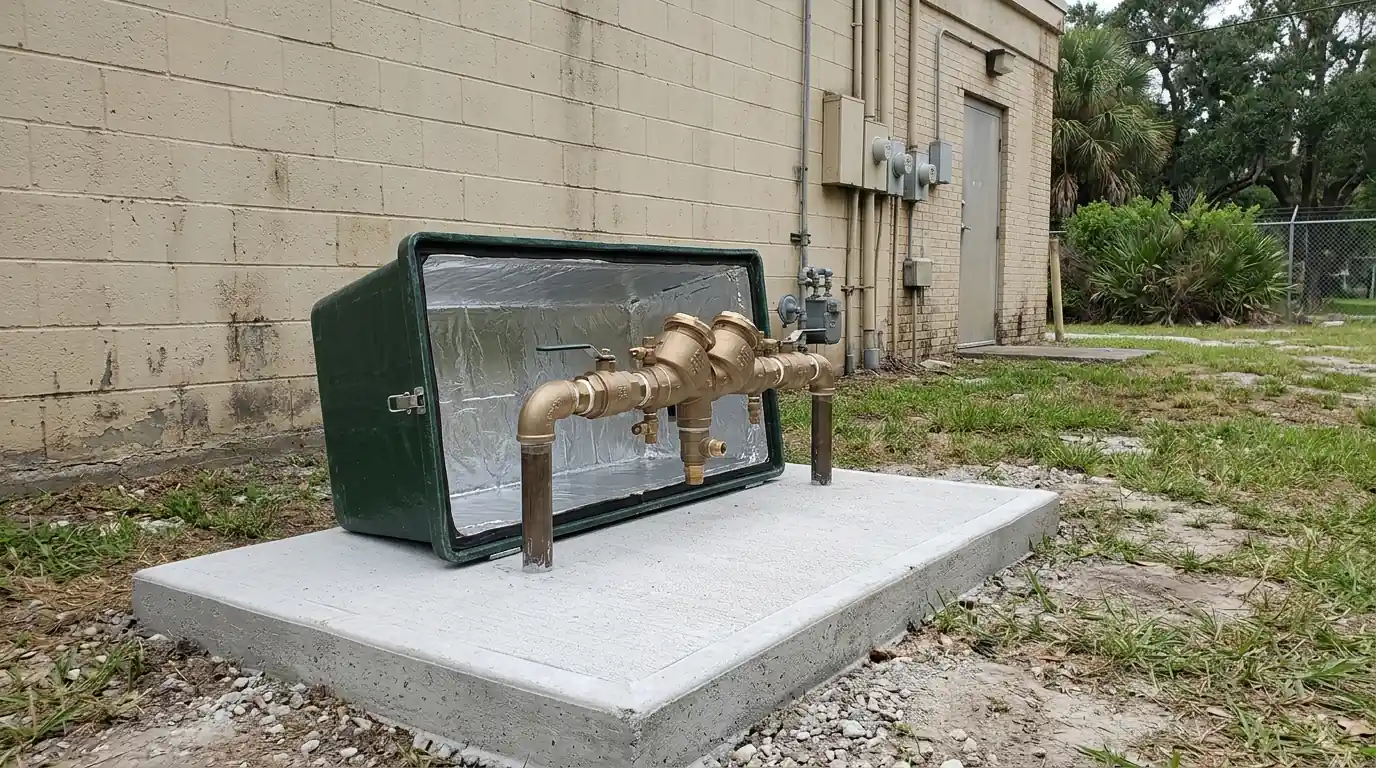
An RPZ is the heaviest-duty assembly, with two check valves and a relief valve between them that opens to the air if either check fails. It is common on domestic lines at restaurants, medical and dental offices, and anywhere chemicals or process equipment connect to water. RPZ devices must be installed above ground where relief discharge can drain, often in an insulated enclosure to protect against a freeze. We size the assembly to the line and the building flow, pipe the relief to a safe spot and test it at startup.
Replacing failed devices
Assemblies wear out. Bodies crack after a hard freeze, older models stop getting parts, and some devices were installed too low or in a spot nobody can reach. When rebuilding no longer makes sense, we remove the old assembly and install a new one, matching or upgrading the type as the hazard requires. Often we can reuse the existing shut-offs. If the old device split in a freeze, we look at insulating or relocating the new one, and check nearby hose bibs and vacuum breakers for the same damage.
Scope of the work
What a backflow installation includes
- Hazard review of the line the device protects
- New assembly sized to the pipe and flow
- Isolation valves and test cocks on the device
- Mounting at the correct height or in a ground box
- Relief drainage path for RPZ assemblies
- Initial test right after installation
- Test report with make, size and serial number
- Cover or enclosure for exposed devices when needed
Call before it gets worse
We answer 24/7 from South Belt.
Local to southeast Houston
Testing at install is part of the Houston rule
State rules and the City of Houston Plumbing Code require backflow preventer assemblies to be tested at installation, after any repair or relocation, and every year after that. So installing a new device is never only a plumbing job: it has to be tested and reported before it counts as in service. We run that first test right after installation, while the shut-offs and test cocks are already easy to reach, and hand you the results. The yearly cycle starts from that date.
Step by step
Installing a backflow device from start to first test
Identify the hazard
We look at what the line feeds and pick the assembly type that fits.
Pick the location
Height, drainage and test access set where the device goes.
Install the assembly
The line is cut, shut-offs and the device set, and joints sealed.
Test at startup
Each valve is checked with a gauge kit right after installation.
Report and protect
You get the results, and exposed devices get a cover if needed.
Brands we service and install
We install backflow assemblies from Watts and connect them with Uponor PEX or copper, alongside commercial fixtures from American Standard and Kohler.
- Rheem
- A. O. Smith
- Bradford White
- Navien
- Rinnai
- Noritz
- Kohler
- Moen
- Delta
- American Standard
- Pfister
- InSinkErator
- Uponor
- Watts
Common questions
Backflow Preventer Installation questions from Houston homeowners
Yes. Any irrigation system tied to the drinking water supply needs a backflow device where the irrigation line leaves the main, and it must be tested when installed.
Often, if the hazard on that line has not changed. If you have added fertilizer injection or changed how the property is used, the line may need a higher-rated assembly.
A small discharge from the relief port means a check valve is not sealing, often from debris or worn parts. It needs testing and repair, not a plug.
They can during a hard freeze. Exposed brass bodies split when water inside freezes. An insulated cover or enclosure helps, and draining a sprinkler device before a freeze protects it.
Yes. The code calls for a test at installation, so we run it right away and give you the report. The yearly test schedule starts from that date.
Same system, different job
Related plumbing services
- Backflow TestingAnnual testing of backflow assemblies with the paperwork the water department asks for.
- Commercial PlumbingRestrooms, kitchens and tenant spaces kept running for businesses and landlords.
- Outdoor Faucet RepairLeaking hose bibs and frozen spigots repaired or swapped for frost-free valves.
- Grease Trap Installation & RepairUnder-sink and in-ground grease traps installed, repaired and kept draining.
Planning the work?
Phone any hour and we will set a time to look at it.