A new line from house to tap
Sewer line replacement for older Houston homes
The footage shows cracks at nearly every joint, roots all the way out, or pipe that has flattened into an oval. At that point patching one spot only moves the next backup a few feet down the yard.
- We answer 24/7, nights and weekends included
- Working from South Belt, by Beltway 8 and the Gulf Freeway
- New PVC laid on a set slope, with a two-way cleanout
Updated October 2026

Short answer
Sewer line replacement in Houston swaps the whole buried pipe from the house to the city tap for new PVC when the old line has failed along most of its length. It is usually done by open trench, with the pipe bedded and sloped to drain. Where a trench would cross a driveway or big tree, bursting or lining may replace part of the dig.
The job
When a whole sewer line is due for replacement
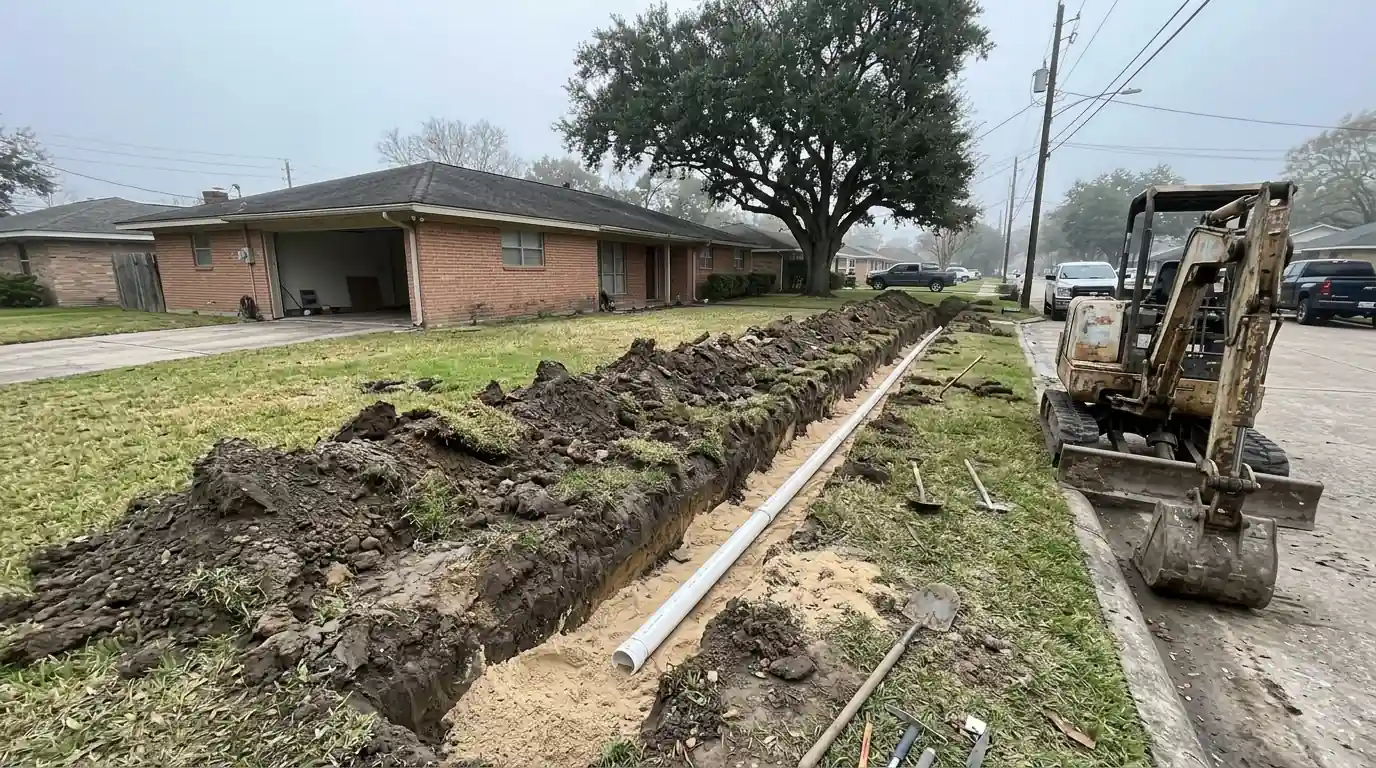
Replacement is the answer when the problem is the pipe itself, not one bad spot. Clay pipe with roots at every joint, cast iron rusted through along the bottom, or fiber pipe that has slumped out of round all fall in this group. Repairs on a line like that become a yearly habit, and each one costs about as much as the last.
A new PVC line has glued joints that roots can't get through and a smooth wall that does not hold debris. We lay it on a compacted bed with a steady fall to the tap, then add a cleanout near the house so future service is simple. If only one or two sections had failed, a section repair would be the smaller job. Where the route runs under concrete, pipe bursting can replace the pipe without cutting the driveway.
Your options
Open trench replacement or pipe bursting
| Compare | Open trench | Pipe bursting |
|---|---|---|
| How the new pipe goes in | Laid in a trench along the old route | Pulled through as a head breaks the old pipe apart |
| Yard disturbance | A trench the length of the line | Pits at each end only |
| Fixes sags and grade | Yes, the bed and slope are rebuilt | Mostly follows the old path and grade |
| Under driveways and trees | Concrete and roots in the path must come out | Passes under them |
| Depth and soil limits | Works at most depths with shoring | Needs room for pits and a line without severe sags |
Open trench is the straightforward choice in an open yard and the only one that corrects a sagging grade. Bursting earns its place when the route runs under concrete, mature trees or a finished landscape.
Pricing
What drives the cost of replacing a sewer line
Length, depth and what sits on top of the route decide most of the price. Two houses on the same street can differ a lot.
Length from house to tap
Longer runs mean more trench, more pipe and more backfill.
Depth of the line
Deeper pipe needs a wider trench and sometimes shoring for safety.
Surfaces along the route
Driveways, walks and patios add cutting and replacement.
Trench or trenchless
Bursting under concrete costs more per foot but can save on restoration.
Tap connection
Some connections are simple. Others need work closer to the city main.
Permit, inspection and cleanout
Permits and a new two-way cleanout are part of most replacements.
Typical planning range: $1,388 - $5,323 for sewer line replacement total; $50 - $250 per linear foot, per HomeAdvisor (Upda). Use it for budgeting; the real number depends on what we find on site.
The versions we see most
Full yard line replacement
A full replacement runs from the point where the drain leaves the foundation to the connection at the city tap or main. We excavate a trench along the existing route, remove the old pipe, set the new line on bedding with the right fall, and connect at both ends with proper fittings. Before backfill, the line is tested with water and usually checked by the city inspector. The trench is then filled in compacted layers. Sod and landscaping over the trench will need time to recover, and we'll tell you up front what the yard will look like when we leave.
Clay and Orangeburg pipe replacement
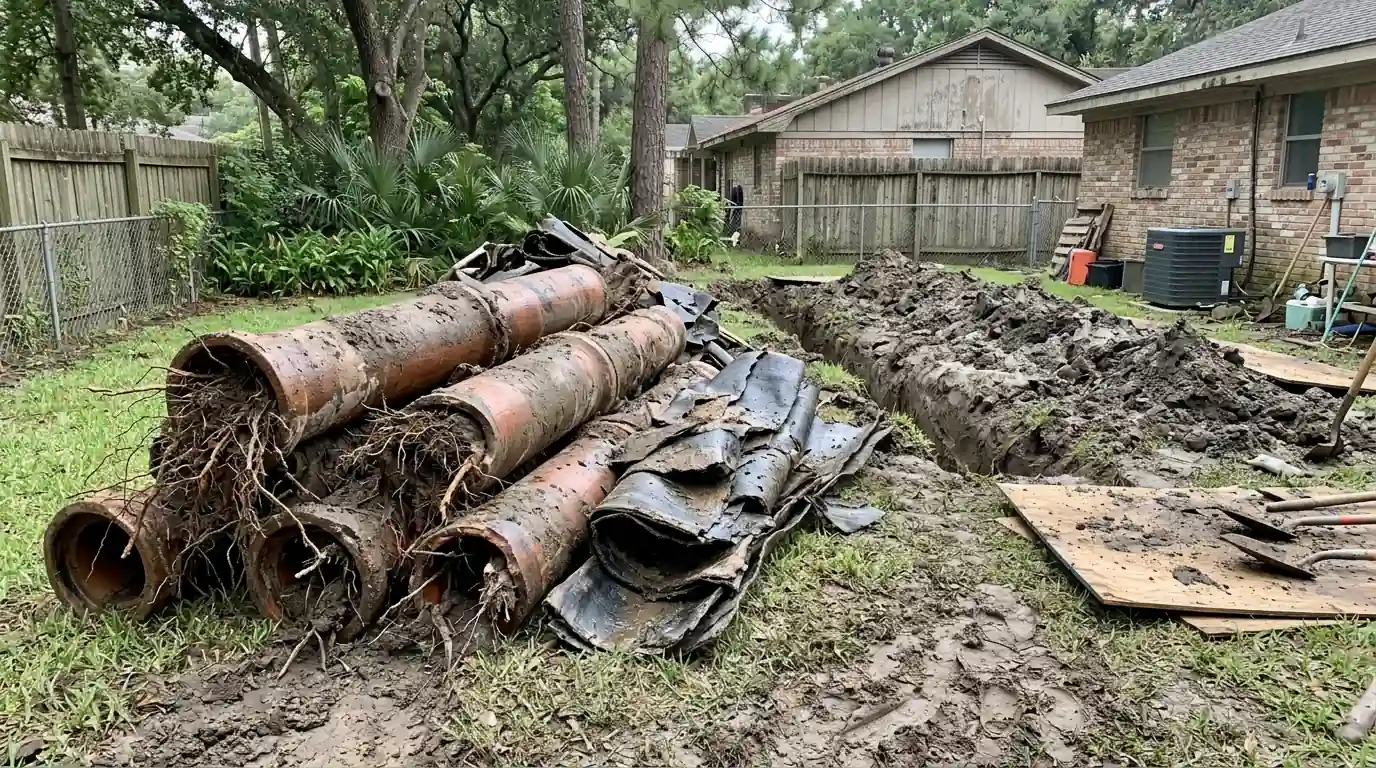
Clay sewer pipe comes in short sections with many joints, and every joint is a place roots can enter. Orangeburg, a tar-soaked fiber pipe used in some mid-century houses, softens and flattens with age until the camera shows an oval instead of a circle. Neither can be sealed well by spot repairs. Replacing them with PVC removes the joints that roots favor and gives a full round bore again. When we expose the old line, you can see the condition for yourself before it goes in the dumpster.
Replacement with a new cleanout
Many older houses either have no outdoor cleanout or have one buried under a flower bed. Without one, every future clog means pulling a toilet or going through the roof vent. Replacement is the right time to fix that. We install a two-way cleanout near the foundation so a machine or camera can go toward the house or toward the street. If you only want access added on a line that is still sound, that is a separate, smaller job: cleanout installation.
Scope of the work
What a sewer replacement includes
- Camera inspection and locating before the job is priced
- Utility locate request before any digging
- Permit and city inspection where required
- Removal of the old clay, cast iron or fiber pipe in the trench
- New PVC sewer pipe on a compacted bed with a steady fall
- Connections at the house drain and the city tap
- A two-way cleanout near the foundation
- A water test and camera check of the new line
- Compacted backfill and site cleanup
Call before it gets worse
We answer 24/7 from South Belt.
Local to southeast Houston
Older southeast Houston neighborhoods and their original sewer lines
Meadowbrook and Allendale, the oldest parts of their super neighborhood, were built before World War II, with Forest Oaks and Oak Meadows following after the war. Most Golfcrest/Reveille homes also date from post-war suburban growth. Houses from those decades went in with clay or cast iron drains, and cast iron is generally expected to last somewhere around 50 to 65 years. Many of these lines are past that range. When a camera run in one of these areas shows failure along the whole length, replacement is usually the practical choice.
Step by step
How a sewer line replacement comes together
Camera the full line
Footage shows the route, depth and condition of the whole run.
Plan the route and method
You see the trench path, any trenchless sections and the price before work starts.
Pull permits and locates
Utility lines are marked and the permit is in place before digging.
Excavate and lay new pipe
Old pipe out, new PVC bedded and sloped to the tap.
Test, inspect and restore
Water test, city inspection, compacted backfill and cleanup.
Timing
How long the house is without a sewer line
A typical yard line replacement takes one to three days on site, depending on length, depth and what sits above the route. Inspection timing can add a day between laying the pipe and backfilling it.
Drains are out of service while the old pipe is disconnected, usually for most of one working day. We plan the cut-over so you have use of the plumbing overnight whenever the job allows.
Common questions
Sewer Line Replacement questions from Houston homeowners
Camera footage. If the problems are at one or two spots in otherwise sound pipe, repair it. If cracks, roots or deformation run along most of the line, replacement usually costs less over time.
With an open trench, yes, along the route. We keep the soil neat, compact the backfill, and tell you beforehand what to expect for regrowth or new sod.
PVC sewer pipe with glued joints, laid on bedding with a set fall to the tap. It is smooth inside and roots can't get through the joints.
We pull the permit and schedule the inspection when one is required, and the pipe stays uncovered until it passes.
Standard policies often exclude wear and roots. Some offer a service line rider. Check your policy; our footage and notes can help with a claim.
Same system, different job
Related plumbing services
- Sewer Line RepairOne cracked, offset or root-broken section dug and replaced, not the whole run.
- Trenchless Sewer RepairPipe lining or bursting through small access pits instead of a long trench.
- Sewer Camera InspectionA recorded camera run that shows breaks, bellies and roots before anyone digs.
- Sewer Cleanout InstallationA two-way cleanout added so the next clog is cleared without pulling a toilet.
Ready to talk it through?
Call any hour. We look first, explain the choices, and price them before work starts.