Hot water without the wait
Hot water recirculation pumps for Houston homes
You turn on the shower in the back bathroom and stand there while cold water runs down the drain. The heater is fine; the hot water just has a long way to travel. A recirculation pump closes that gap.
- We answer 24/7, nights and weekends included
- Out of South Belt, off Beltway 8
- Pump type chosen by your pipe layout
Updated October 2026

Short answer
A hot water recirculation pump in a Houston home keeps hot water moving to the farthest fixture, so it arrives in seconds instead of a minute or more. Homes without a return pipe get a pump at the heater and a crossover valve under the far sink. Homes with a return line get a dedicated loop. Timers keep the pump from running all day.
The job
Why hot water takes so long to reach the back bathroom
In a long ranch-style house, the water heater often sits in the garage at one end and the main bathroom sits at the other. Every time you open a hot tap, the water sitting in that pipe has to drain out before hot water arrives. That cooled water goes down the drain, and you stand there waiting. The heater isn't the problem, and a bigger one won't help.
A recirculation system keeps warm water near the fixtures, either by circulating it through a dedicated return pipe or by using the cold line as a temporary return. The right setup depends on how your house was plumbed. It pairs well with a tankless heater, since many tankless units have recirculation built in or ready to add. If you're planning a repipe, that's the easiest moment to add a true return line.
Your options
Crossover valve or return line: which fits your house
| Compare | Under-sink crossover valve | Dedicated return line |
|---|---|---|
| Pipe needed | Uses the existing cold line as the return | A separate pipe from the far fixture back to the heater |
| Walls or attic opened | None, everything is at the heater and one sink | Attic or wall access if the line has to be added |
| Cold tap at the far sink | May run lukewarm briefly after the pump cycles | Stays cold |
| Good fit for | Existing homes without a return pipe | Repiped homes, new builds and two-story layouts |
| Number of fixtures served | Mainly the fixtures on that run | Every fixture on the loop |
If the house has no return line and you aren't repiping, the crossover valve gets most of the benefit with little disruption. If a return line exists or you're opening walls anyway, a true loop performs better.
Pricing
What sets the price of a recirculation system
Whether your home already has a return line drives most of the cost. The pump type and controls make up the rest.
Return line or not
A crossover valve install is simpler than running a new return pipe through the attic.
Pump and control type
Timer pumps cost less than temperature-sensing or on-demand models with wireless buttons.
Water heater type
Tankless units may need a compatible recirculation kit or a specific pump setting.
Electrical access
The pump needs an outlet near the heater; adding one may involve an electrician.
Pipe insulation
Wrapping long attic runs helps performance and adds material and time.
Typical planning range: $200 - $400 for hot water recirculating pump system, installation not priced, per Angi (Upda). That is a published range, not a quote. Your price comes after we look.
The versions we see most
Under-sink recirculation valves
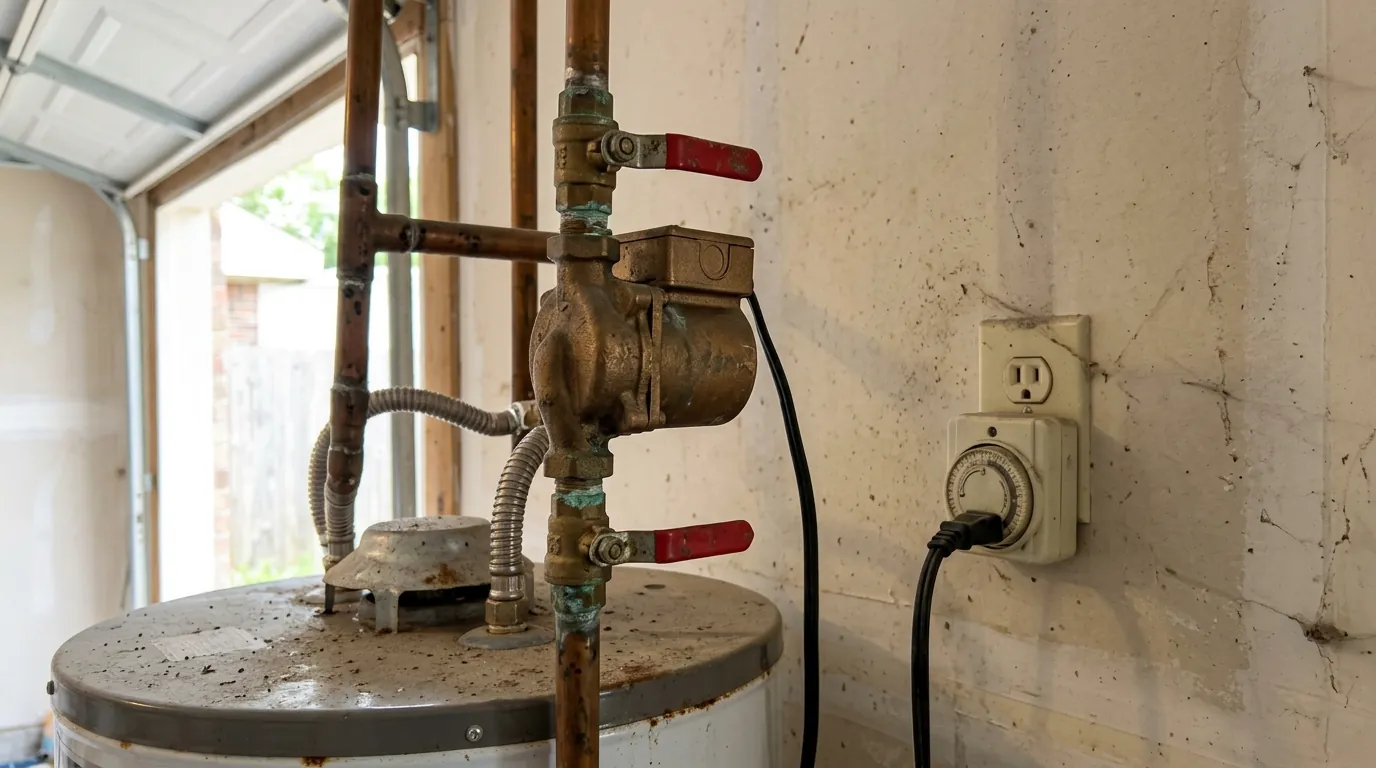
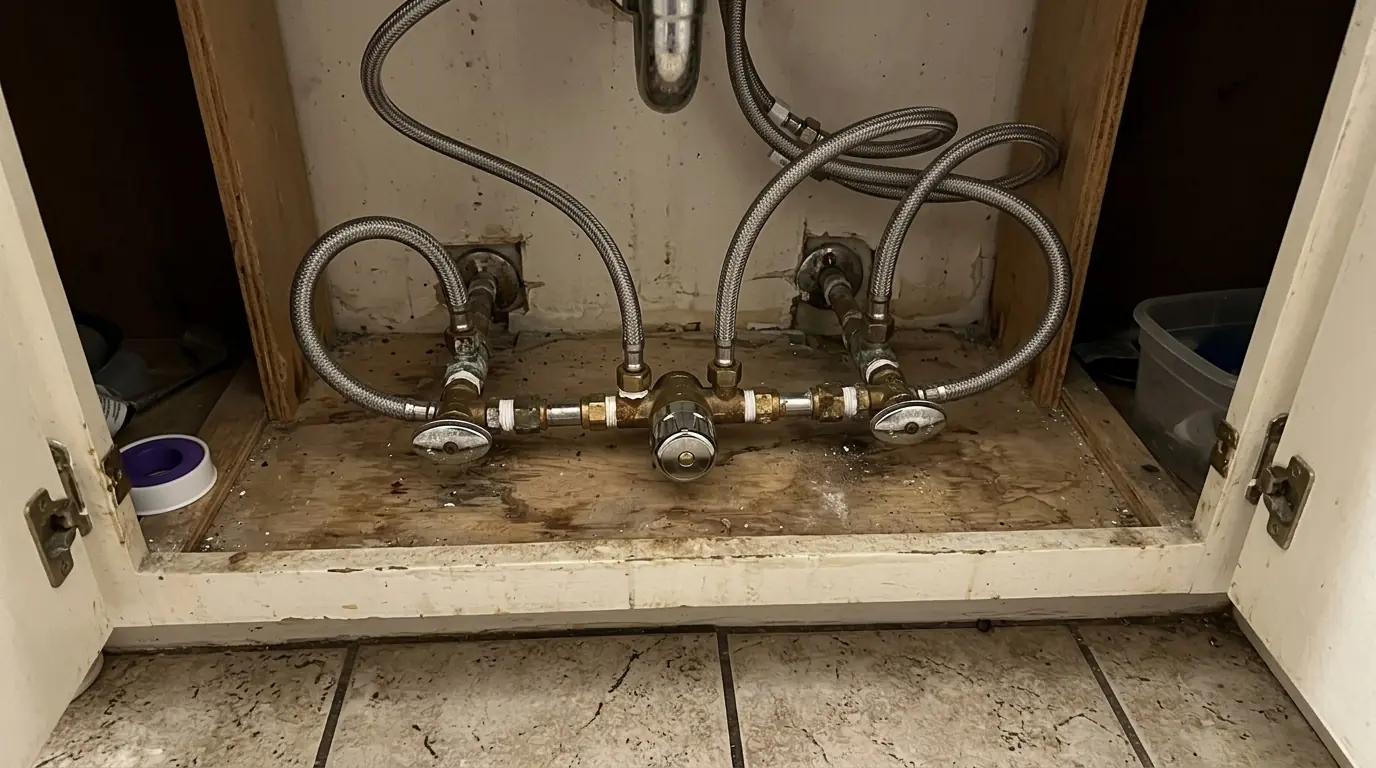
Most Houston homes weren't built with a return pipe, and this is the setup made for them. A pump mounts on the hot outlet at the water heater, and a small thermostatic crossover valve goes under the sink farthest from the heater. When the pump runs, it pushes hot water toward that sink; the crossover valve lets the cooled water flow into the cold line and back to the heater, then closes once the water reaches temperature. No walls get opened. The tradeoff: the cold tap at that sink can run lukewarm for a few seconds right after the pump cycles. We set the valve temperature to keep that short.
Dedicated return line systems
Some homes, especially newer two-story builds or houses that were repiped, have a third pipe running from the far fixtures back to the heater. With a return line, the pump circulates hot water in a true loop and the cold lines stay cold. We install the pump on the return near the heater with a check valve to stop backflow and isolation valves for service. If the house doesn't have a return line, running one through the attic is possible, but it's a bigger job. We'll weigh that against an under-sink valve with you. Insulating the hot and return lines in the attic helps keep the loop warm longer between cycles.
Timers and smart controls
A pump that runs around the clock wastes energy by keeping a loop of pipe hot all night. Controls fix that. A simple plug-in timer runs the pump during the morning and evening hours when the house is busy. Temperature-sensing pumps cycle only when the water in the line cools down. On-demand setups use a push button or motion sensor in the bathroom, so the pump runs only when you ask for hot water. Some units connect to a phone app. We match the control to how your household actually uses hot water, and if you're on a tankless unit, to what that heater's recirculation mode supports.
Scope of the work
What a recirculation pump install includes
- A walk of the hot water runs from heater to farthest fixture
- The pump mounted at the water heater
- Check valve and isolation valves for service
- A thermostatic crossover valve or return line connection
- Timer, temperature or on-demand control setup
- Settings matched to a tankless unit's recirculation mode where needed
- Leak check on every new joint
- A timed test of hot water at the far fixture
Call before it gets worse
We answer 24/7 from South Belt.
Local to southeast Houston
Long runs in South Belt ranch homes
Single-story houses with the heater at one end and the bathrooms at the other are where a recirculation pump earns its keep, and southeast Houston has a lot of them. The city counts 13,295 single-family detached units in South Belt/Ellington, and about half of its housing units were built between 1960 and 1999. Homes from those decades rarely had a return line plumbed in, which is why the under-sink crossover valve is the setup we install most often around here.
Step by step
How we set up hot water recirculation
Map the hot water runs
We find the heater, the farthest fixture and whether a return line exists.
Pick the system
Crossover valve or dedicated loop, with the control that fits your routine.
Install the pump
The pump mounts at the heater with check and isolation valves.
Fit the valve or loop
The crossover goes under the far sink, or the return line connects back.
Set and time it
We set the temperature and schedule, then time hot water at the far tap.
Brands we service and install
We install recirculation pumps and valves from Watts, along with the built-in recirculation options on Navien and Rinnai tankless units.
- Rheem
- A. O. Smith
- Bradford White
- Navien
- Rinnai
- Noritz
- Kohler
- Moen
- Delta
- American Standard
- Pfister
- InSinkErator
- Uponor
- Watts
Common questions
Hot Water Recirculation Pump questions from Houston homeowners
No. Most homes without one use a pump at the heater and a crossover valve under the farthest sink, which sends cooled water back through the cold line. A return pipe works better but isn't required.
With a crossover valve, the cold tap at that sink can run lukewarm for a few seconds after the pump cycles. A dedicated return line avoids that entirely.
It cuts the water you run down the drain while waiting for hot water. Using a timer or on-demand control keeps the pump from wasting energy keeping pipes hot all day.
Yes. Many tankless units have a built-in pump or a recirculation mode, and others work with an external pump and specific settings. We match the setup to your model.
Usually just seconds at the fixture the system serves, depending on how long it's been since the pump last ran and the type of control you choose.
Same system, different job
Related plumbing services
- Tankless Water Heater InstallationGas tankless units sized for the house, with the gas line and venting to match.
- Water Heater ReplacementA worn-out tank swapped for a new gas or electric unit, hauled away the same visit.
- Whole-House RepipingGalvanized, failing copper or patched lines replaced with new PEX or copper.
- Faucet Repair & InstallationDrips, low flow and loose handles repaired, or a new faucet set and sealed.
Want a straight answer before you decide?
Call and tell us what you are seeing. We will explain the options and what each one involves.