Fixing the bad joint
Sewer line repair for one broken section in Houston
The camera found it: one cracked joint, one sag, one spot where roots keep pushing in. The rest of the pipe looks sound. That is the case for a section repair rather than a new line.
- We answer 24/7, nights and weekends included
- Out of South Belt, minutes off Beltway 8
- Defect located on camera before the dig starts
Updated October 2026

Short answer
Sewer line repair in Houston means digging down to the one failed section the camera found, cutting it out and joining new PVC to the sound pipe on each side with shielded couplings. It suits a single break, offset or sag. If the camera shows problems along most of the line, replacing or lining the whole run is the better value.
What to watch for
Signs a sewer line has a broken section
Backups that return after every cleaning
Something in the pipe keeps catching debris.
A soft or sunken spot in the yard
Soil is washing into a crack or open joint.
Patches of grass that grow greener and faster
Sewage is leaking into the soil and feeding it.
Sewer smell outside near the line
Gas is escaping from a break between the house and the street.
Roots on camera at the same joint
That joint is open and roots are entering through it.
The job
When repairing one section beats replacing the line
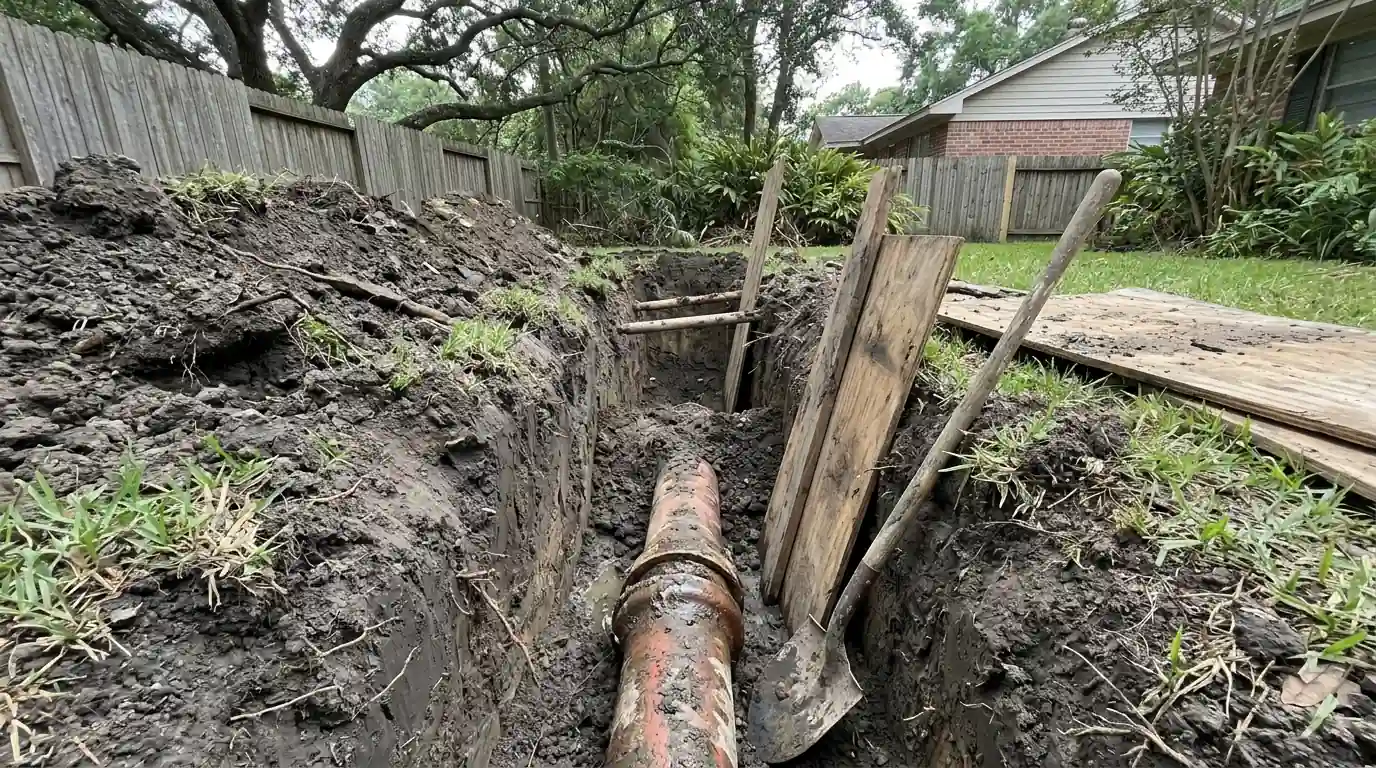
A sewer line rarely fails all at once. Usually one joint opens up, one section cracks from soil movement, or one stretch settles into a low spot. Fix that piece and the rest of the line can give years of service. A section repair keeps the dig small, often a single pit a few feet long, and leaves most of the yard alone.
The plan starts with footage. We run a camera inspection, locate the defect from the surface, and check the pipe on either side, because new pipe needs sound pipe to connect to. If the footage shows cracks at joint after joint, a repair just moves the next failure a few feet down the line. Then we'll walk you through replacing the whole line or lining it instead.
The versions we see most
Offset and separated joints
An offset is a joint where one pipe has shifted up, down or sideways against the next. On camera it looks like a step or ledge. That lip catches paper and wipes, and the gap at the joint lets roots and soil in. You notice it as a main line that clogs at the same distance every time. We dig to the joint, cut out the shifted pieces, and set new pipe on a properly bedded base with shielded couplings, so the flow line runs smooth again. Backfill is tamped in layers to keep the new section from moving.
Bellied pipe sections
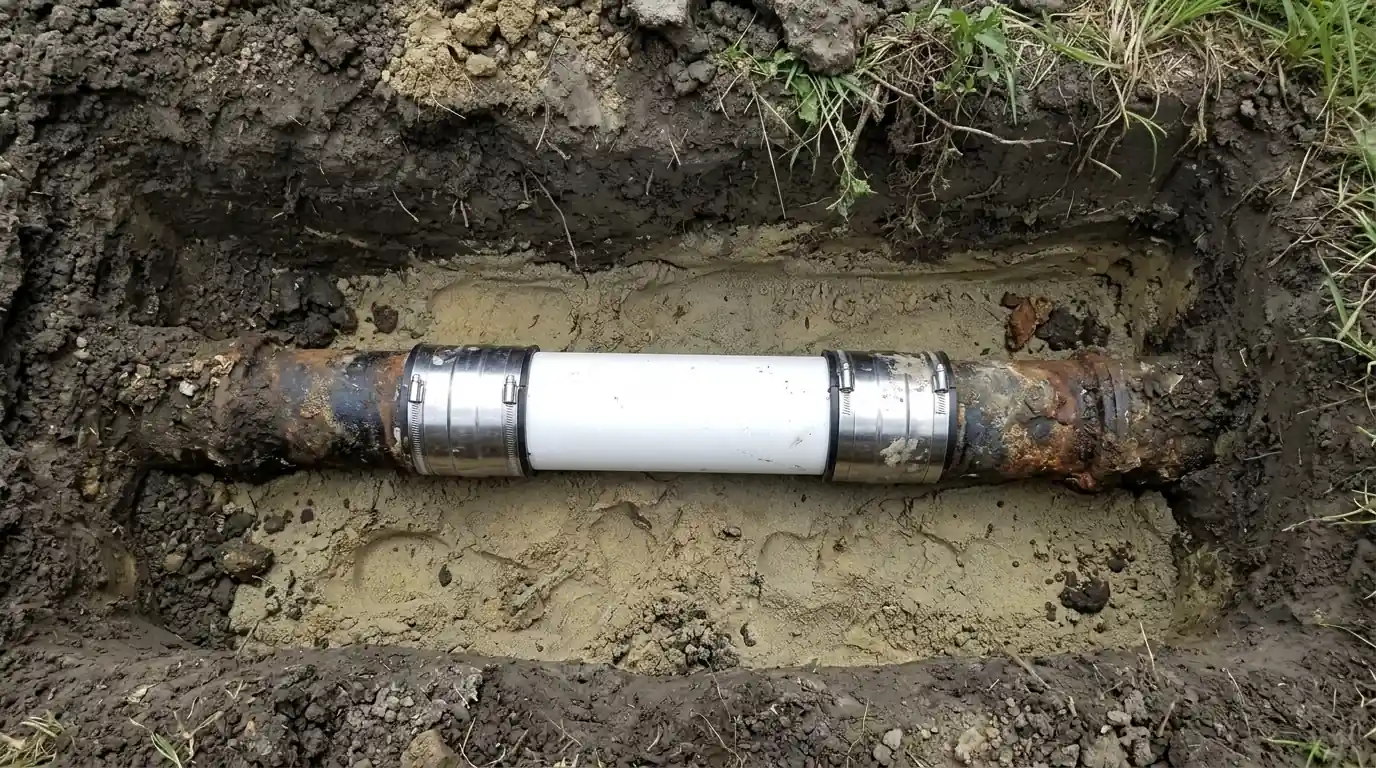
A belly is a section that has sunk lower than the pipe around it. Water and solids settle in the low point instead of flowing on, and over time that spot clogs over and over. On camera, the lens goes underwater and comes back up. Small bellies with only an inch of standing water can often be watched. Deeper ones that hold debris need to be dug out, the soil bed rebuilt and compacted, and the pipe reset to a steady fall toward the street. A liner cannot fix a belly, because it follows the sag.
Root-broken clay or cast iron
Roots enter through tiny gaps, then grow inside until they split clay joints or widen cracks in rusted cast iron. The first few years you just get backups that cleaning fixes. Eventually the pipe breaks and you get soil in the line, a sinking spot in the lawn or sewer smell outside. We remove the broken section, cut back any roots near the dig, and replace it with PVC. If the tree is close and the line is clay all the way out, we'll show you how a liner could seal every joint at once.
Step by step
How a sewer section repair is done
Find and mark the defect
Camera footage and a locator set the exact spot and depth.
Call in utility locates
Gas, water and cable lines are marked before we dig.
Excavate and expose
We dig a pit over the defect and uncover the pipe on both sides.
Replace the section
The broken pipe comes out and new PVC goes in on a firm bed.
Test, inspect and backfill
We run water, camera the repair, then backfill in compacted layers.
Local to southeast Houston
Clay soil and the joints of Houston sewer lines
The ground here moves. The USDA describes Lake Charles clay, common across Southeast Texas, as cracking half an inch to two inches wide and a foot or more deep when it dries. Local reporting notes that pretty much anyone south of Interstate 10 sits on expansive clay that shifts with drought and rain. A buried sewer line rides that movement every year, and the weak points are the joints. That is why offsets and sags show up so often on camera runs in southeast Houston, even on lines that are not especially old.
Talk to a plumber now
Any hour, any day. Tell us what you see.
Your options
Dig and replace one section, or line the run
| Compare | Section repair by excavation | Lining the whole run |
|---|---|---|
| Right choice when | One or two defects in otherwise sound pipe | Many cracked or root-filled joints along the line |
| Fixes a belly | Yes, the bed is rebuilt and the slope reset | No, the liner follows the sag |
| Yard disturbance | One pit over the defect | Small access points at each end |
| Rest of the old pipe | Stays as is and can fail later | Sealed inside the new liner |
| Under concrete or trees | Means breaking concrete or cutting roots | Usually avoids both |
If the camera shows one problem in good pipe, a section repair is the direct fix. If it shows trouble at joint after joint, lining or replacing the run avoids paying for repairs one at a time.
Pricing
What sets the price of a sewer section repair
A short repair in an open yard and a deep repair under a patio can be very different jobs. Depth and what sits above the pipe matter most.
Depth of the pipe
Deeper lines mean a larger, shored pit and more digging.
What is on top
Grass is simple. Concrete, pavers or landscaping add removal and restoration.
Length of the failed section
A single joint is less work than several feet of broken pipe.
Pipe material on each side
Joining to old clay or cast iron needs the right couplings and sometimes extra pipe.
Roots near the dig
Large roots in the way have to be cut back before the pipe can be reset.
Permit and inspection
Many sewer repairs need a city permit and an inspection before backfill.
Typical planning range: $150 - $3,800 for sewer line repairs, depending on the method, per HomeGuide (Dece). Use it for budgeting; the real number depends on what we find on site.
Common questions
Sewer Line Repair questions from Houston homeowners
The camera footage. We look at every joint from the house to the tap. If the rest of the pipe is round, smooth and free of roots, a section repair makes sense.
No. A section repair is usually one pit over the defect. How big depends on how deep the line runs and what sits above it.
Yes, but it means cutting and replacing the concrete over the pit. In that case a liner from either side is often worth comparing.
Often yes. Many cities require a permit and an inspection before the pipe is covered. We handle that as part of the job when it applies.
Not while the line is cut open. We plan the work so the drains are out of service for as short a time as possible, usually part of a day.
Same system, different job
Related plumbing services
- Sewer Camera InspectionA recorded camera run that shows breaks, bellies and roots before anyone digs.
- Sewer Line ReplacementA failed house-to-tap sewer line replaced with new PVC and a proper cleanout.
- Trenchless Sewer RepairPipe lining or bursting through small access pits instead of a long trench.
- Main Sewer Line CleaningBackups in more than one fixture cleared at the cleanout, roots included.
Something leaking right now?
Call any hour. We will help you stop the water first and get a plumber moving.