For restaurants and food service
Grease trap installation and repair in Houston kitchens
When the three-compartment sink drains slowly and the floor drain starts to smell, the grease trap is usually telling you something. Catching it early keeps the kitchen open through the dinner rush.
- We answer 24/7, so a backup during service gets a call back
- Working out of South Belt near Ellington
- Under-sink units, in-ground traps and the lines between them
Updated October 2026

Short answer
Grease trap work in Houston covers three jobs: setting or replacing under-sink interceptors, repairing in-ground traps with broken baffles or tees, and jetting the lines that carry kitchen waste to the trap. Pumping the trap empties it, but it does not fix a cracked baffle or a line packed with hardened grease. Those need a plumber.
The job
What goes wrong between your kitchen sinks and the grease trap
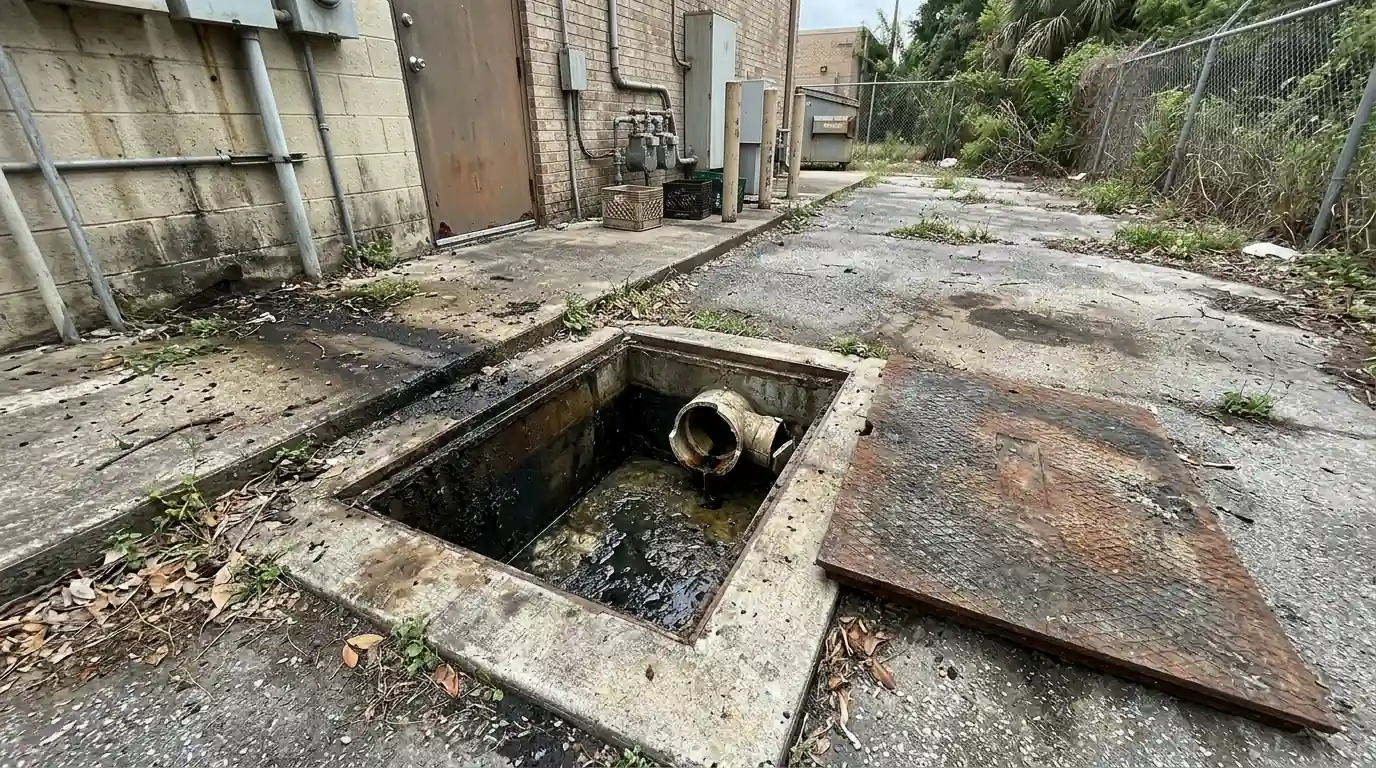
A grease trap slows kitchen wastewater down so fats, oils and grease float to the top and solids sink, while cleaner water flows out the far side to the sewer. It only works if the inlet and outlet baffles are intact, the lids seal and the pipes feeding it stay open. Most of the calls we get from restaurant owners are not about a full trap. They are about a line that has narrowed with grease, a baffle that has rusted through, or a unit that was sized for a smaller menu.
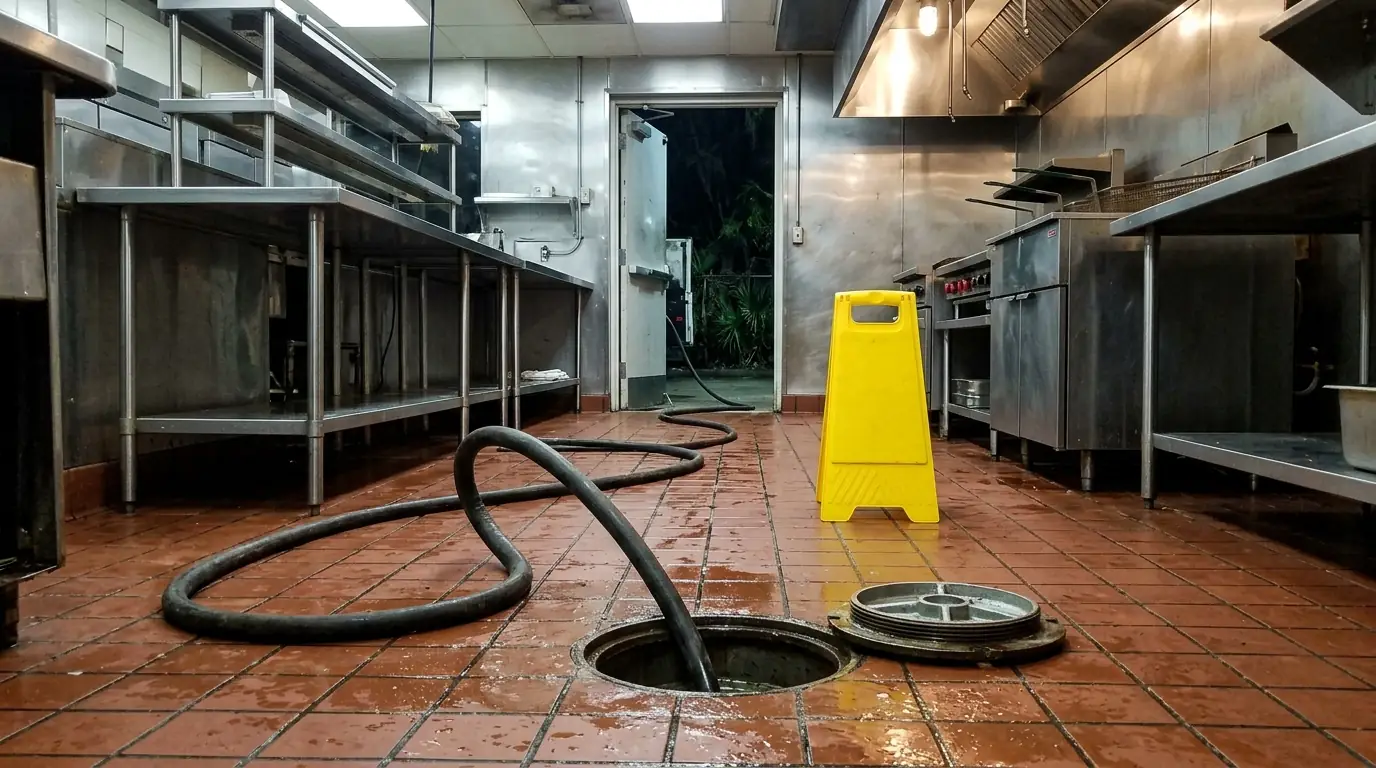
We look at the whole path: the sinks and dishwasher feeding the trap, the trap itself and the outlet line. A camera shows how much grease is packed in the pipe and whether the line has sagged. Hardened grease usually needs high-pressure jetting rather than a cable, which just punches a hole through it. If the outlet side is broken under the slab, we can also handle the sewer repair beyond the trap.
Pricing
What affects the cost of grease trap work
A gasket swap and a new in-ground tank are very different jobs. The size of the trap, where it sits and how much of the kitchen has to stop while we work all shape the price.
Trap type and size
Under-sink interceptors are small jobs; in-ground tanks involve excavation and heavy lifting.
Parts that failed
A gasket or flow control fitting costs far less than rebuilding baffles or replacing the tank.
Line condition
Lines packed with hardened grease take longer to jet and may show damage on camera.
Access and surface
Traps under parking lot concrete or inside tight kitchens add cutting and patching.
Timing
Work scheduled before opening or after close can change how the job is staged.
Typical planning range: $250 - $1,500 for indoor grease trap installation (outdoor interceptor $5,000 - $20,000 or more); Florida contractor, per Americlean Pumping (Apri). Treat it as a planning number only. We price your job after we see it.
The versions we see most
Under-sink interceptors
Smaller kitchens, coffee shops and bars often use a compact interceptor sitting on the floor or under the pot sink. The common failures are a cracked lid gasket that lets odor into the kitchen, a missing flow control fitting that lets water rush through too fast to separate grease, and a unit that fills up within days because it is too small for the volume. We replace gaskets and baffles where the body is sound, add the flow control on the inlet, and swap undersized or corroded units for a properly sized interceptor. We also check that the trap is vented and that the dishwasher connection does not overload it.
In-ground grease traps
Larger restaurants usually have a concrete or poly trap buried outside, with heavy lids in the parking lot or behind the building. The signs of trouble are slow drains across the whole kitchen, grease surfacing around the lids, or a pumper telling you a baffle or tee is gone. Concrete baffles crumble from the acids that grease produces, and plastic tees can break off. We replace inlet and outlet tees, repair or rebuild baffles, reseal risers and lids, and replace a trap when the tank walls have failed. New installs mean excavation, setting the tank level and tying in the inlet and outlet lines at the right fall.
Trap line jetting
Even with a healthy trap, the pipe from the sinks to the trap collects a grease coat that builds like cholesterol. Floor drains begin to gurgle, then back up when the dish machine dumps. A drain cable usually opens a narrow path that closes again within weeks. We use a jetter with a nozzle that scours the pipe wall clean, working from a cleanout so the kitchen stays open where possible. On lines that clog often, a camera pass afterward shows whether there is a belly or broken joint holding grease. Many kitchens put the trap line on a regular jetting schedule along with routine drain clearing for the restrooms.
Scope of the work
What a grease trap service visit includes
- A walk-through of every sink, floor drain and machine feeding the trap
- Opening the trap and checking baffles, tees and lid seals
- A camera look at the inlet and outlet lines
- Jetting packed trap lines from the nearest cleanout
- Replacing gaskets, flow control fittings, tees or baffles
- Sizing advice if the trap fills too fast for your volume
- A test run with the dish machine and sinks draining together
- Notes on what we found that you can share with your pumper
Local to southeast Houston
Running a kitchen on Houston's drain lines
Grease and hard water make a stubborn pair. Houston's main water system averaged 135.5 ppm of hardness in the 2025 report, and the USGS calls water above 121 ppm hard and notes that long-term flow of hard water through pipe can build scale. Scale on the inside of a kitchen line gives grease a rough surface to grab onto. That is part of why trap lines in older commercial buildings narrow faster than owners expect, and why a cable alone rarely keeps them open for long.
Talk to a plumber now
Any hour, any day. Tell us what you see.
Step by step
From a slow kitchen drain to a trap that keeps up
Hear the symptoms
We ask which drains back up, when it happens and when the trap was last pumped.
Inspect the trap
Lids come off and we check baffles, tees, gaskets and grease levels.
Check the lines
A camera runs the inlet and outlet pipes to see buildup, sags or breaks.
Repair or replace
We fix the failed parts, jet the line, or install a properly sized unit.
Run the kitchen
Sinks and the dish machine are run together to confirm the system keeps up.
Common questions
Grease Trap Installation & Repair questions from Houston homeowners
It depends on the trap size and how much grease your menu produces. Your pumping company and the local rules set the schedule. Our part is keeping the trap and its lines in working order between pumpings.
Often, yes. Jetting a trap line or swapping a gasket can usually be done early in the morning or after close. Bigger repairs to an in-ground trap may need a planned shutdown.
Not always. A trap that is too large for the flow can let grease go rancid and smell. It should be sized to the fixtures and volume feeding it.
Pumping empties the tank but does not clean the pipe leading to it. Grease stuck on that pipe wall stays put until the line is jetted.
Yes. We set interceptors and in-ground traps as part of a kitchen build-out and tie them into the drain system at the right slope.
Same system, different job
Related plumbing services
- Commercial PlumbingRestrooms, kitchens and tenant spaces kept running for businesses and landlords.
- Hydro JettingHigh-pressure water scours grease, scale and roots off the pipe wall.
- Drain CleaningKitchen, bathroom and laundry drains cleared with the right cable for the pipe.
- Sewer Camera InspectionA recorded camera run that shows breaks, bellies and roots before anyone digs.
Planning the work?
Phone any hour and we will set a time to look at it.