Gray poly pipe, out for good
Polybutylene pipe replacement in Houston houses
Polybutylene usually looks fine right up until a fitting lets go, often at night and often in the attic. If your house has gray or blue flexible supply pipe, replace it on your schedule instead of after a ceiling comes down.
- Phones answered 24/7, holidays included
- South Belt shop, close to Beltway 8
- Poly removed from attic, walls and the yard line
Updated October 2026

Short answer
Polybutylene replacement in Houston means taking the gray plastic supply pipe and its crimp fittings out of service and running new PEX or copper in their place. Most poly runs through the attic, so the new lines follow the same path and floors stay intact. We check the yard line from the meter too, since poly was used there as well.
The job
How to tell if the pipe in your house is polybutylene
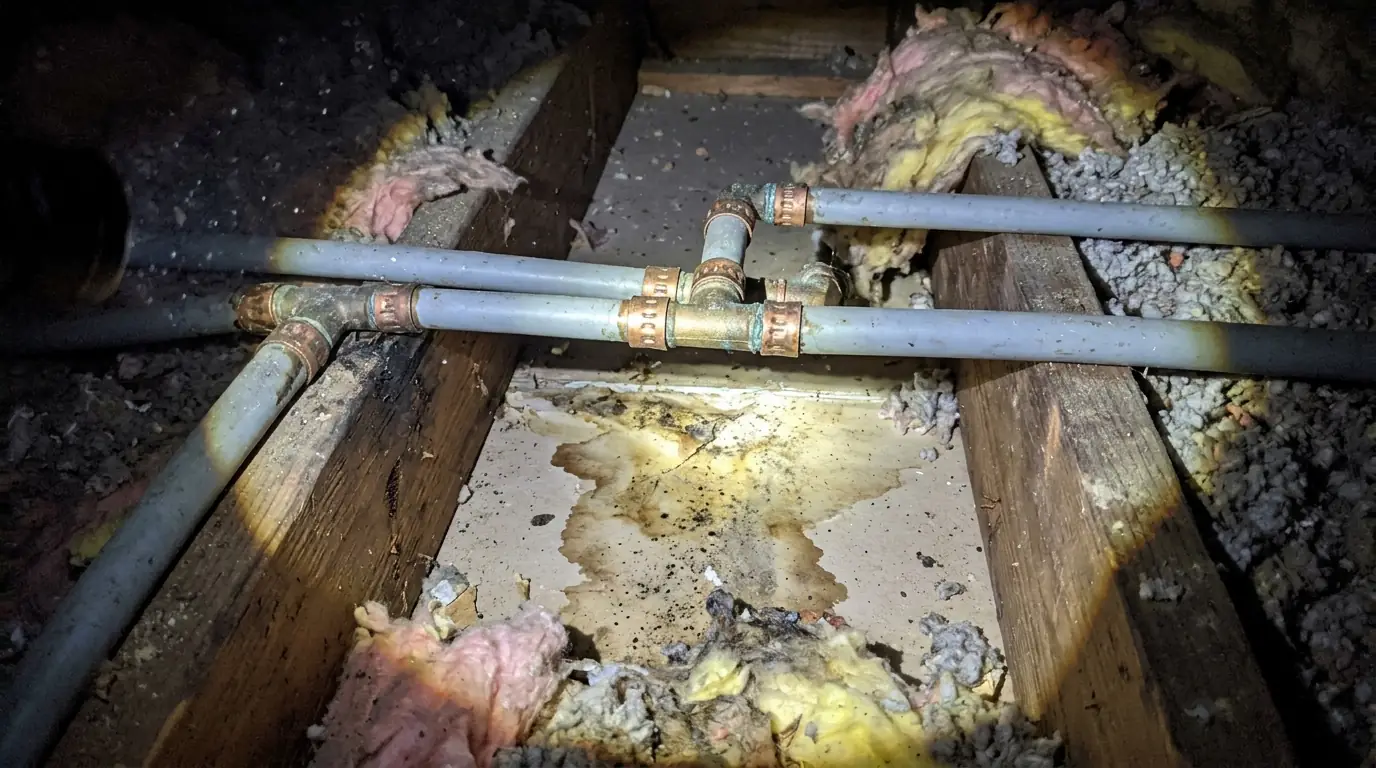
Poly is a flexible plastic supply pipe, usually gray inside the house and sometimes blue or black outside. Look where the line leaves the wall under a sink, at the water heater, or in the attic above a hallway. The pipe is often stamped PB2110, and the joints use plastic or brass fittings held with copper or aluminum crimp bands.
The pipe and its fittings break down with age and with exposure to disinfectants in treated water, so failures tend to arrive without warning. Replacement is basically a full repipe aimed at one material: every poly line comes out of service, every fixture gets a new connection, and the system is tested. If you only suspect a hidden drip somewhere, start with a leak search before anything is opened.
Pricing
What sets the cost of replacing polybutylene
Scope depends on how much poly the house has and where it runs. A one-story house with an open attic is a very different job from a two-story with a poly yard line.
Interior only or yard line too
Adding the service line means trenching or boring from the meter.
Number of fixtures
Every sink, toilet, tub and appliance is a separate connection.
Attic and wall access
Tight attics and finished ceilings take longer to work through.
New pipe material
PEX goes in faster; copper adds material and labor.
Earlier water damage
Ceilings or insulation soaked by a past leak add repairs beyond the plumbing.
Typical planning range: $1,500 - $15,000 for replacing polybutylene pipes, per HomeGuide (Marc). That is a published range, not a quote. Your price comes after we look.
The versions we see most
Polybutylene in attics
In most slab houses with poly, the branches cross the attic and drop down inside the walls to each fixture. That helps with replacement, because new lines can follow the same route without breaking a floor. It hurts with failures: a fitting that splits overhead soaks insulation and drywall before anyone sees a stain. We pull back insulation, trace every poly run, then install PEX-A or copper alongside it. Each fixture is switched over, and the old poly is cut and capped, or pulled out where it is easy to reach.
Polybutylene yard lines
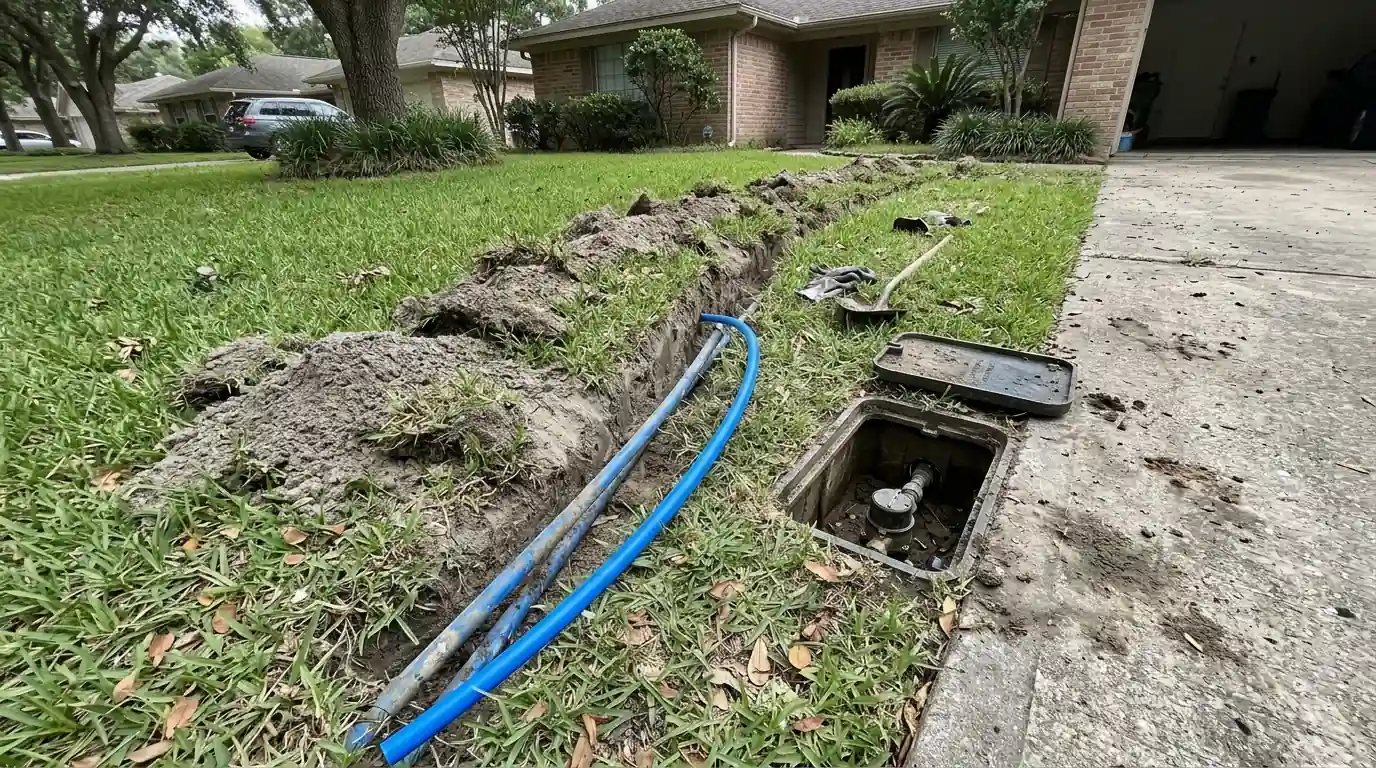
Blue or gray poly was also used for the buried service line between the meter and the house. Underground, a failure shows as a soggy strip of lawn, a meter that turns with every tap shut, or pressure that fades over a few weeks. Replacing the interior and leaving a poly yard line in place leaves the weakest link in the ground. We trench or bore a new line from the meter connection to the house, often a size larger than the original, and pressure test it before backfill. Our service line page covers that work in detail.
Fitting failures on poly lines
Many poly leaks start at a fitting, not the pipe. Older plastic fittings can crack from the inside, and crimp rings set too tight or too loose let a joint creep apart. You may see a slow drip at a water heater connector or under a sink, white crust on a fitting, or a sudden burst overhead. We can cut out a failed fitting and repair it on the same visit to get water back on. Then we talk plainly about the rest: one bad fitting usually means others of the same age are close behind.
Local to southeast Houston
The poly era and the local homes it overlaps
The national polybutylene settlement covered systems installed from January 1978 through July 1995, and plenty of local housing falls inside that window. The city's year-built tables count 5,725 South Belt/Ellington homes and 13,957 Clear Lake homes built between 1980 and 1999. Not every one of them has poly, since builders also used copper and CPVC in those years. But a house from that era is worth a look in the attic and at the water heater before you assume either way.
Step by step
Replacing poly from the attic down
Confirm the material
We check stamps and fittings at the heater, under sinks and in the attic.
Plan the new runs
Routes reuse attic paths so wall openings stay small.
Install and switch over
New lines go in beside the poly and each fixture is moved to them.
Retire the old pipe
Poly is cut and capped, or removed where it is easy to reach.
Test the system
New lines hold test pressure before drywall and insulation go back.
Talk to a plumber now
Any hour, any day. Tell us what you see.
Timing
How long poly replacement takes
Most single-story homes take two to three days for the interior lines, with water off during working hours and back on most nights. Two-story homes or houses with many fixtures take longer. A poly yard line usually adds a day, depending on how far the meter sits from the house and whether the new line has to pass under a driveway.
Common questions
Polybutylene Pipe Replacement questions from Houston homeowners
Poly already in a house can stay in service, but it is no longer installed in new homes. Home inspectors and buyers often flag it, so replacement tends to come up during a sale if not before.
Swapping fittings fixes the leak in front of you. The pipe itself is the same age, so most owners who start with fittings end up replacing the whole system after the next failure.
No. Some gray pipe is PEX or CPVC. Look for a PB2110 stamp and crimp-band fittings, or let us check at the water heater and under a sink before you decide anything.
We can, and it usually makes sense if that line is poly too. Doing both together means one round of testing, one switchover and one visit from the crew.
Small openings, yes, where the new lines connect at each fixture. Floors stay intact because poly and its replacement both run overhead in most slab homes.
Same system, different job
Related plumbing services
- Whole-House RepipingGalvanized, failing copper or patched lines replaced with new PEX or copper.
- Water Line ReplacementA new service line from the meter to the house, sized for today's fixtures.
- Leak DetectionAcoustic and pressure testing to find a hidden leak before anyone cuts drywall.
- Burst Pipe RepairSplit copper, blown PEX fittings and freeze-cracked lines cut out and replaced.
Want a straight answer before you decide?
Call and tell us what you are seeing. We will explain the options and what each one involves.