A way into your main sewer line
Sewer cleanout installation for Houston houses
If every main line clog starts with a plumber pulling a toilet or climbing onto the roof, your house is missing a usable cleanout. Adding one turns the next backup into a short visit outside.
- We answer 24/7, nights and weekends included
- Dispatched from Gulf Pointe Dr in South Belt
- Two-way fittings reach clogs toward the street or the house
Updated October 2026

Short answer
Sewer cleanout installation in Houston means digging to the main drain where it leaves the slab and cutting in a fitting with a capped riser at grade. A two-way cleanout points one opening toward the house and one toward the street, so a cable or jetter reaches a clog from either direction without pulling a fixture.
The job
What a cleanout does, and why so many older houses lack a usable one
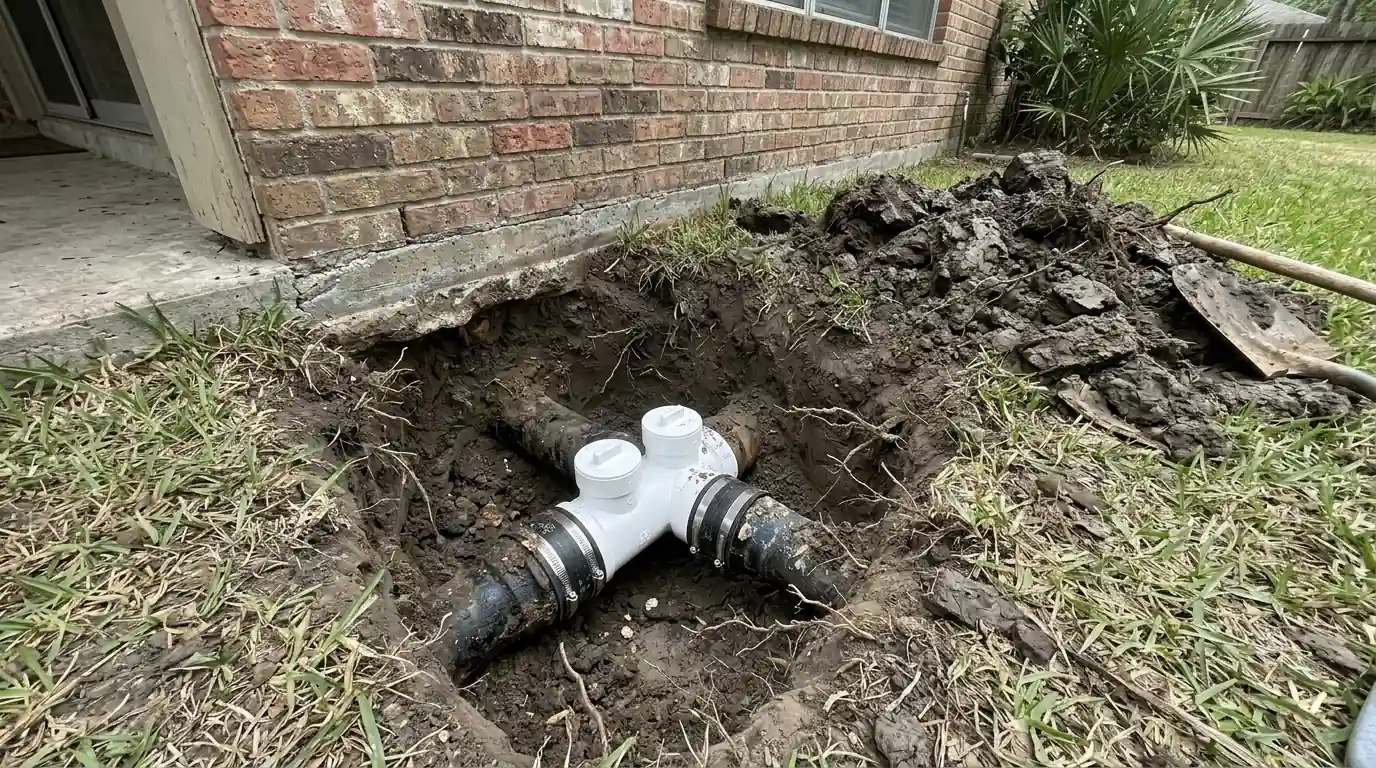
A cleanout is a capped opening on the sewer line that gives a drain machine a straight path into the pipe. Without one, the usual way in is through a toilet flange or the roof vent, and both make a clog slower and messier to clear. Plenty of houses built before the 1980s have a single cleanout buried in a flowerbed, hidden under a deck, or sealed with a brass plug nobody can turn anymore.
We locate the main where it exits the foundation, dig a small hole by hand and cut in the new fitting. On cast iron or clay pipe, we use shielded couplings sized for the change to PVC. The riser comes up to grade with a threaded cap you can open with your hand. If the line already looks rough while it is open, we can run a camera down the main before backfilling, so you know what is downstream.
Scope of the work
What comes with a cleanout installation
- Locating the main where it exits the foundation
- Marking buried utilities before we dig
- Hand excavation down to the sewer line
- A one-way or two-way cleanout fitting cut into the main
- Transition couplings for cast iron or clay pipe
- Risers set to grade with threaded caps
- A water test of the new joints
- Backfill and cleanup of the dig area
The versions we see most
Two-way yard cleanouts
Most backups we see start in the main line, somewhere between the house and the city tap. A two-way cleanout set a few feet out from the foundation lets us run a cable or jetting hose downstream toward the street, or back upstream toward the house, from one spot. That matters when the clog is roots near the property line or grease packed under the kitchen. We dig to the line, cut out a short section, install a two-way fitting with two risers and set both caps flush with the soil or inside a small box so the mower clears them. Once it is in, clearing a main line clog usually starts in the yard instead of your bathroom.
Replacing broken cleanout caps
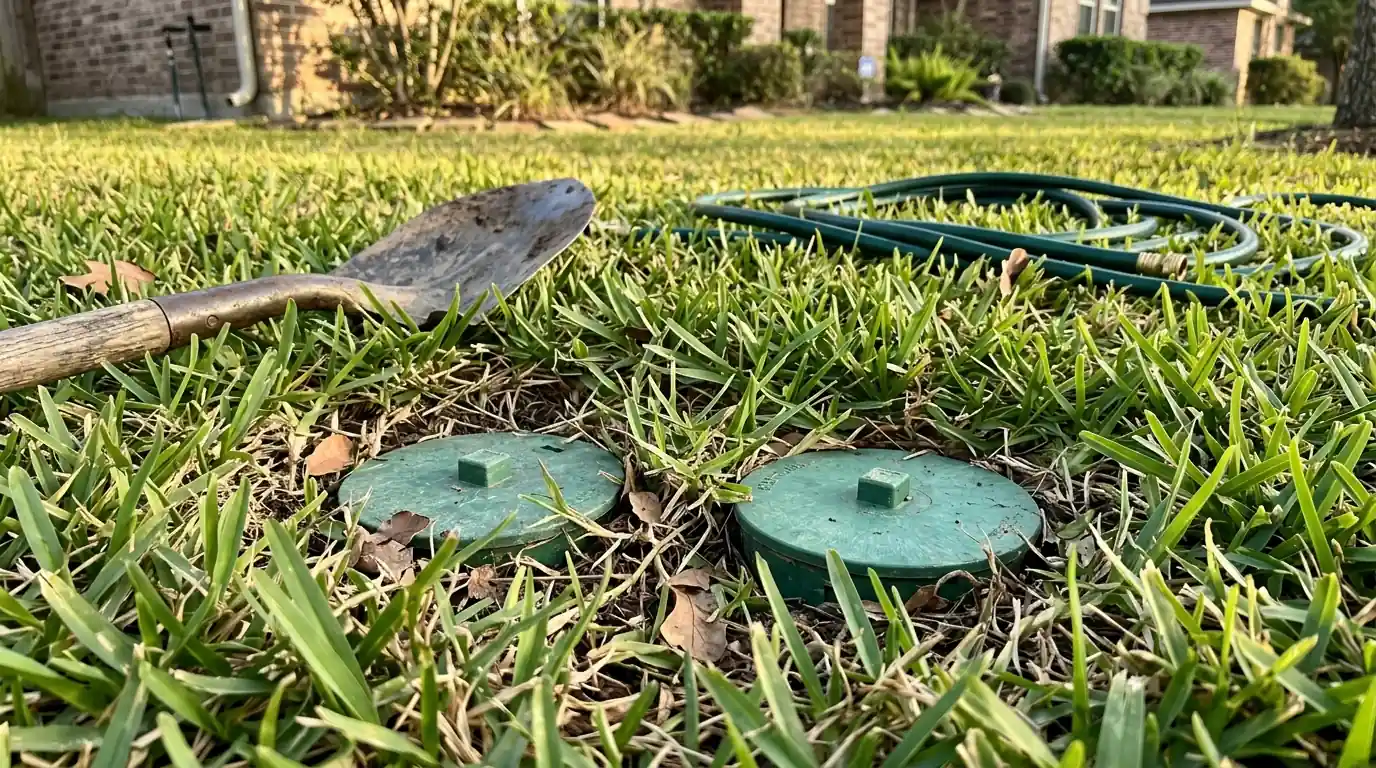
An existing cleanout only helps if the cap comes off. Brass plugs seize inside old cast iron, plastic caps crack under a mower wheel, and some risers snap off below the grass. A missing or broken cap also lets rainwater, dirt and roots into the sewer and lets sewer gas out into the yard. When the cap is the only problem, we cut the riser clean and fit a new threaded adapter and plug. If the riser has cracked down where it joins the main, we dig it out and replace the riser and fitting together, so the new cap has solid pipe to thread into.
Cleanouts at the foundation
Some lines leave no room in the yard, such as a main that runs straight under a driveway or a patio poured tight against the house. Then a cleanout right at the foundation wall is often the practical answer. It sits where the drain leaves the slab, so it also catches clogs that start inside before they reach the yard. We check the depth and fall first, because a line that exits shallow or at an odd angle may need a different fitting. If the camera shows a sag or break right at that spot, the job becomes a sewer line repair with the cleanout added as part of it.
Local to southeast Houston
Older drain lines in South Belt and why access matters
Cast iron drain pipe disappeared from new house construction by the mid-1980s, and estimates put its working life at roughly 50 to 65 years, with deterioration that can start around year 40. In South Belt/Ellington, 5,929 homes were built between 1960 and 1979. That puts a lot of original cast iron mains at the age where scale, cracks and root entry show up. When those lines clog, a working cleanout is what lets us clear them and get a camera in without opening the house.
Step by step
Steps from locating the line to capping the riser
Find the main
We trace where the sewer leaves the slab, using a locator when there is no visible clue.
Mark utilities
Gas, water and sprinkler lines are marked before any digging starts.
Dig and cut in
We expose the line, remove a section and install the cleanout fitting with proper couplings.
Test the joints
Water is run through the new fitting and every joint is checked for leaks.
Backfill and cap
Risers are cut to grade, capped, and the soil is packed back around them.
Talk to a plumber now
Any hour, any day. Tell us what you see.
Pricing
What sets the price of a new cleanout
Most of the cost sits in the digging and the pipe at the tie-in, not the fitting itself. Depth, what is on top of the line and the condition of the pipe we cut into all move the number.
How deep the main runs
A shallow line near the foundation is a short dig; a deeper one takes more excavation.
Pipe material
Cutting into PVC is simple. Cast iron and clay need transition couplings and more careful cuts.
What sits on top
Concrete walks, patios or landscaping over the line add removal and patching.
One way or two way
A two-way fitting with two risers takes a little more pipe and digging than a single riser.
Line condition
If old pipe crumbles when we cut in, a longer section has to be replaced.
Typical planning range: $1,400 - $3,500 for installing a sewer cleanout, depending on pipe size and labor, per Angi (Upda). Treat it as a planning number only. We price your job after we see it.
Before you call
What you can handle yourself, and when to call
| Situation | What you can safely do | When to call us |
|---|---|---|
| You found an old cleanout cap in the yard | Try a wrench on the plug with steady pressure, never a hammer | If it will not turn or the pipe flexes, stop before it cracks |
| The cap is missing and the pipe is open | Cover it with a bucket or board to keep dirt and rain out | Soon, since roots and debris can get into the line |
| Water is coming up out of the cleanout | Stop running water inside the house | Right away, the main is blocked downstream |
| You cannot find a cleanout anywhere | Check flowerbeds near the bathrooms and along the foundation | If there is none, we locate the line and add one |
Common questions
Sewer Cleanout Installation questions from Houston homeowners
Not urgently, but adding one before a backup is easier than adding one during it. If your only access is through a toilet or the roof, the next main line clog will take longer and cost more to clear.
Usually within a few feet of the foundation where the main exits, on a straight run of pipe. That spot lets a cable reach both the house side and the street side of the line.
We avoid that when we can. If the main runs under concrete, we usually set the cleanout at the foundation before the line reaches the drive, or cut and patch a small square of concrete.
A cleanout is an access point for clearing clogs. A backwater valve is a flap that keeps sewage from flowing back toward the house. They do different jobs, and some homes have both.
Yes, which is why we set caps flush with the soil or inside a small box. A cracked cap should be replaced, since it lets dirt, rain and roots into the sewer.
Same system, different job
Related plumbing services
- Drain CleaningKitchen, bathroom and laundry drains cleared with the right cable for the pipe.
- Sewer Camera InspectionA recorded camera run that shows breaks, bellies and roots before anyone digs.
- Sewer Line RepairOne cracked, offset or root-broken section dug and replaced, not the whole run.
- Main Sewer Line CleaningBackups in more than one fixture cleared at the cleanout, roots included.
- Hydro JettingHigh-pressure water scours grease, scale and roots off the pipe wall.
Better to catch it early
Phone us and we will check it before it becomes a repair.