Proof the piping holds
Gas line pressure testing in Houston
The utility will not turn gas back on, the inspector wants a test before signing off, or you just want to know whether 40-year-old piping is still tight. A pressure test answers that with a gauge, not a guess.
- We answer 24/7, any day of the week
- Out of South Belt, near the Gulf Freeway
- Gauge reading held for the full test period
Updated October 2026

Short answer
A gas line pressure test in Houston seals the house piping, fills it with air to a set pressure and watches a gauge for a drop over a fixed time. It is required after a red tag or outage before CenterPoint restores service, and it is the check an inspector looks for on new gas work.
The job
What the gauge tells you that a smell test cannot
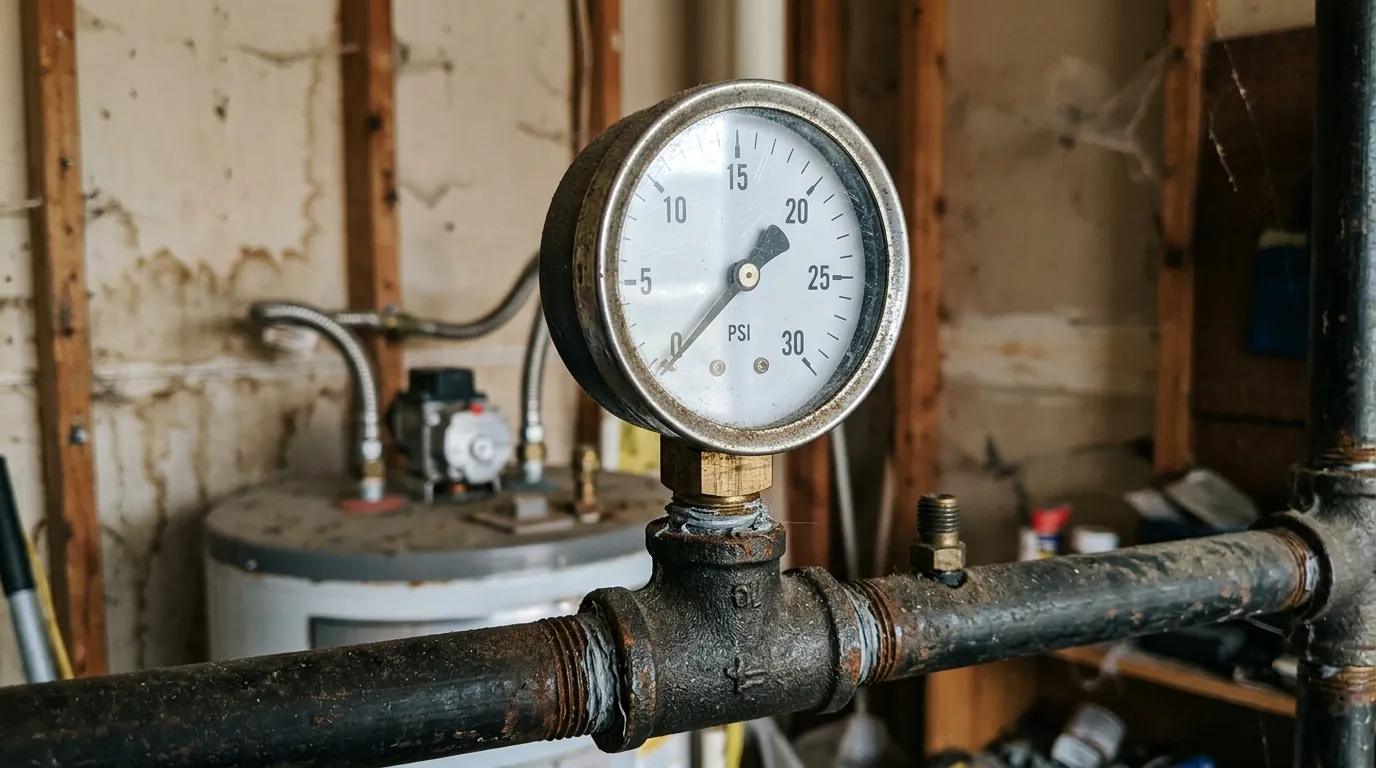
A nose catches big leaks. A gauge catches small ones. For the test, we shut the gas at the meter, cap or close every appliance branch, and connect a test gauge to the system. Air is pumped in to the test pressure, the reading is noted, and then nobody touches it for the full test period. If the needle holds, the piping is tight. If it drops, there is a leak somewhere, and we go looking with bubble solution and a sniffer until we find it.
The test covers the house piping from the meter outlet to each appliance shut-off. It does not test the burners or controls inside an appliance, which is why we also check each connector once gas is back on. When a test fails, the job turns into repairing the gas leak, and the system is tested again after the fix.
Scope of the work
What the pressure test visit covers
- Gas shut at the meter and every appliance branch isolated
- Test gauge fitted to the house piping
- System brought to test pressure and held for the full period
- Leak search with bubble solution and a sniffer if the gauge drops
- City permit filed when a red tag or new work requires it
- Notes of what was tested and the result
- Appliance connectors checked once gas is back on
- Coordination with the utility for the restore
The versions we see most
Testing after a red tag
Once the utility red-tags a meter, nobody can simply turn the gas back on. The leak or hazard noted on the tag has to be repaired, and then the whole system has to pass a pressure test under a city permit. We do the repair if needed, pull the permit, run the test and coordinate so the utility can come out and restore the meter. Keep the tag or snap a photo of it; the note on it often saves time finding what they flagged.
Test before a new appliance
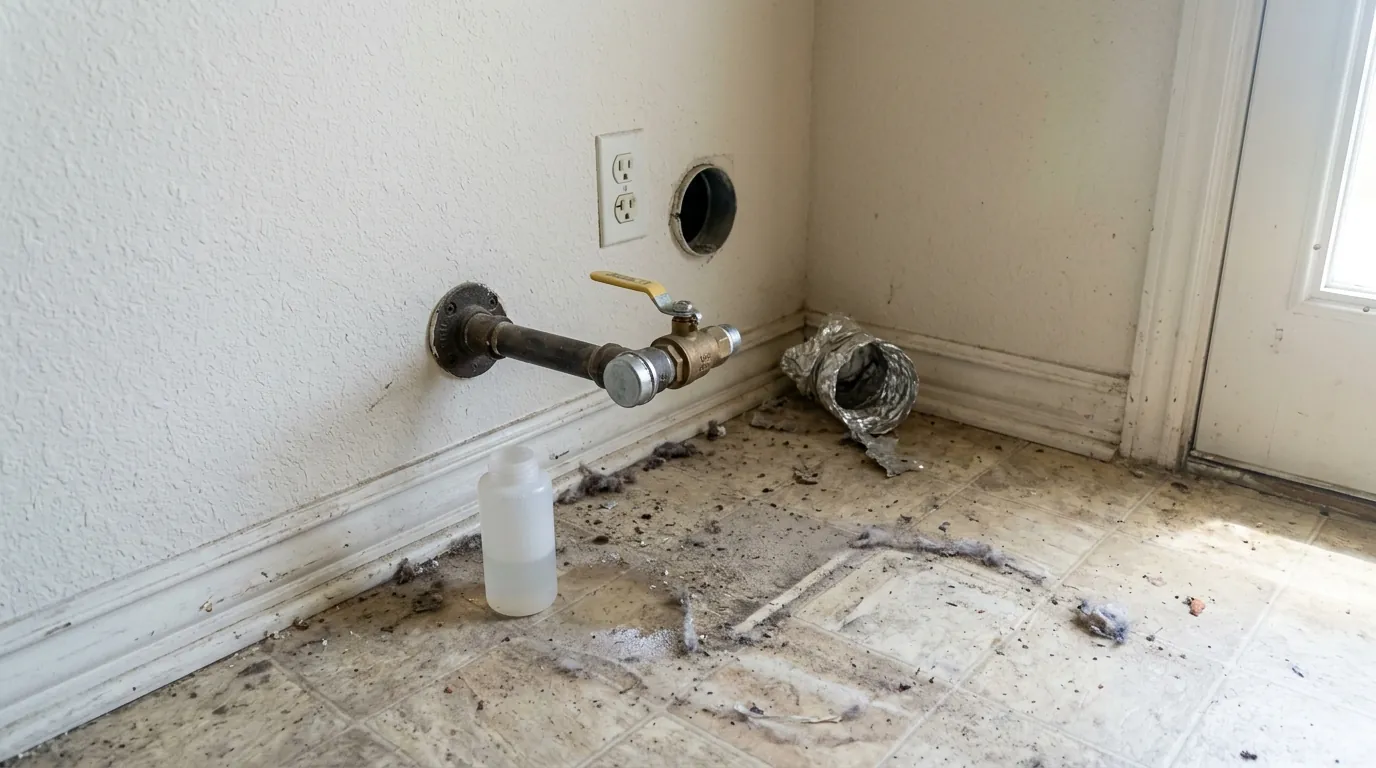
Adding a gas range, a tankless heater or a generator is a good time to confirm the existing piping is tight, because the new appliance will put more demand on it. We test the system before tying in the new branch, so an old leak does not get blamed on the new work or hide behind it. If the test passes and the pipe is large enough, the new line tees in and is tested again. If the old piping is undersized, we will say so before you are stuck with a weak burner, and plan a properly sized gas line.
Leak checks on older lines
Older houses often still run their original black iron piping, with unions and valves that have been tightened, loosened and painted over for decades. A slow leak there may never be strong enough to smell. A pressure test is a reasonable check when you buy an older home, after foundation work that may have stressed lines in the attic or walls, or when the gas bill climbs with no change in use. If the line drops pressure, we isolate sections to find the joint rather than replacing pipe on suspicion.
Local to southeast Houston
The Houston rules behind a gas restoration test
In Houston the order of operations is set by two rules. The Houston Permitting Center requires a plumbing permit for work at the point of connection to a fuel gas appliance, pulled by a master plumber registered with the City of Houston. CenterPoint Energy states that customer-owned gas piping and appliances must be inspected and repaired by the customer's plumber before it can fully restore service after an outage. A passing pressure test under that permit is what connects the two.
Step by step
How a gas pressure test is run, step by step
Shut and isolate
Gas off at the meter and each appliance branch capped or closed.
Connect the gauge
A test gauge is fitted to the house piping.
Pressurize
Air is pumped in to the test pressure and the reading recorded.
Hold
The system sits untouched for the full test period while the needle is watched.
Pass or chase
A steady gauge passes; a drop means we find, fix and retest.
Restore
Permit closed and the utility scheduled to turn gas back on.
Talk to a plumber now
Any hour, any day. Tell us what you see.
Pricing
What affects the cost of a gas pressure test
A test on a tight system is a short visit. The variables are how many branches there are and what turns up when the gauge drops.
Size of the system
More appliances and branches mean more connections to cap and check.
Permit required
Red-tag and new-work tests run under a city permit with its own fee.
Test result
A failed test adds the time to find the leak and the repair itself.
Access to piping
Lines buried in the yard or hidden in finished walls take longer to isolate.
Coordination
Scheduling the inspection and the utility's restore visit can add a return trip.
Typical planning range: $75 - $150 for standard gas line pressure test (extended 12- or 24-hour tests can reach $500), per HomeGuide (Janu). Treat it as a planning number only. We price your job after we see it.
Timing
How long a gas pressure test usually takes
A test on a typical house with three or four gas appliances usually takes one to two hours, including isolating branches, the hold period and putting everything back. If the gauge drops, finding and repairing the leak adds time that depends on where it is.
Gas to the whole house is off during the test. After a red tag, it stays off until the permit is closed and the utility visits to restore the meter, which can be later the same day or the next, depending on their schedule.
Common questions
Gas Line Pressure Test questions from Houston homeowners
After a red tag or certain outages, they need the customer's piping repaired and inspected first. That means a plumber's repair if needed, a permit and a pressure test that holds before they restore the meter.
A drop on the gauge means a leak somewhere in the piping. We isolate sections and use bubble solution and a sniffer to find the joint, repair it and run the test again until it holds.
It checks the piping up to each appliance shut-off. The appliance connectors are checked separately once gas is back on, and problems inside the appliance itself go to an appliance tech.
It is not always required, but it is a sensible check on original piping, especially if the house has had foundation work or the seller cannot tell you when the lines were last checked.
Yes. The gas is off during the test, so there is no hot water from a gas heater and no cooking on a gas range until it is restored.
Same system, different job
Related plumbing services
- Gas Leak RepairGas smell, hissing fittings or a red-tagged meter handled the right way.
- Gas Line InstallationNew gas runs for ranges, dryers, tankless heaters, generators and outdoor kitchens.
- Water Heater RepairNo hot water, pilot trouble or a leaking valve fixed on tank heaters, gas or electric.
- Plumbing InspectionA full check of supply, drains, gas and the water heater for buyers and owners.
Better to catch it early
Phone us and we will check it before it becomes a repair.