Drinking water from its own tap
Reverse osmosis drinking water for Houston kitchens
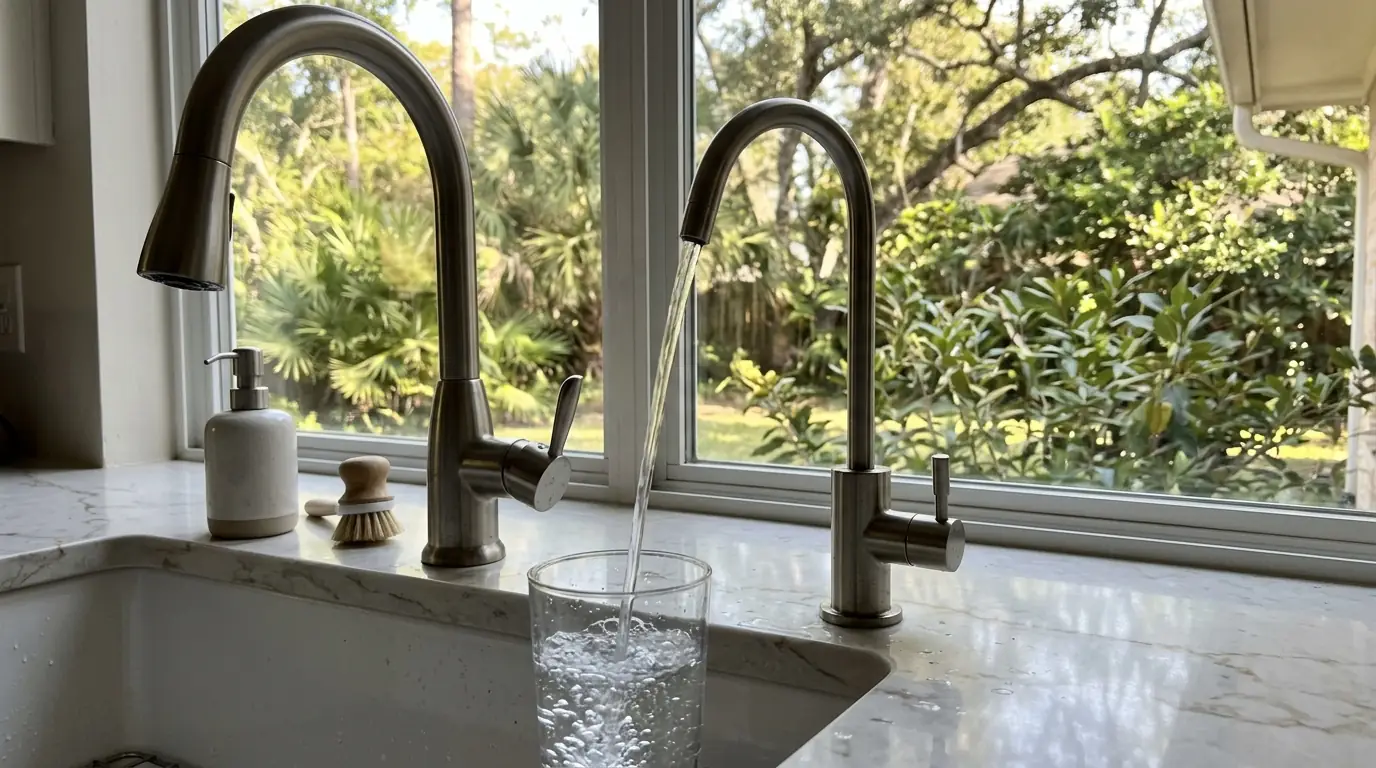
If you are buying cases of bottled water or refilling jugs at the store, an RO system under the kitchen sink gives you filtered drinking water and cleaner ice straight from a small faucet beside the main one.
- We pick up the phone 24/7
- Out of South Belt, off the Beltway
- RO faucet, drain saddle and storage tank fitted under the sink
Updated October 2026

Short answer
A reverse osmosis system in a Houston kitchen pushes tap water through a fine membrane that removes most dissolved minerals, along with carbon stages for the chloramine taste. It mounts under the sink, feeds a separate faucet and stores a few gallons in a small tank. A line to the refrigerator puts the same water into ice and the door dispenser.
The job
What an under-sink RO system does to your water
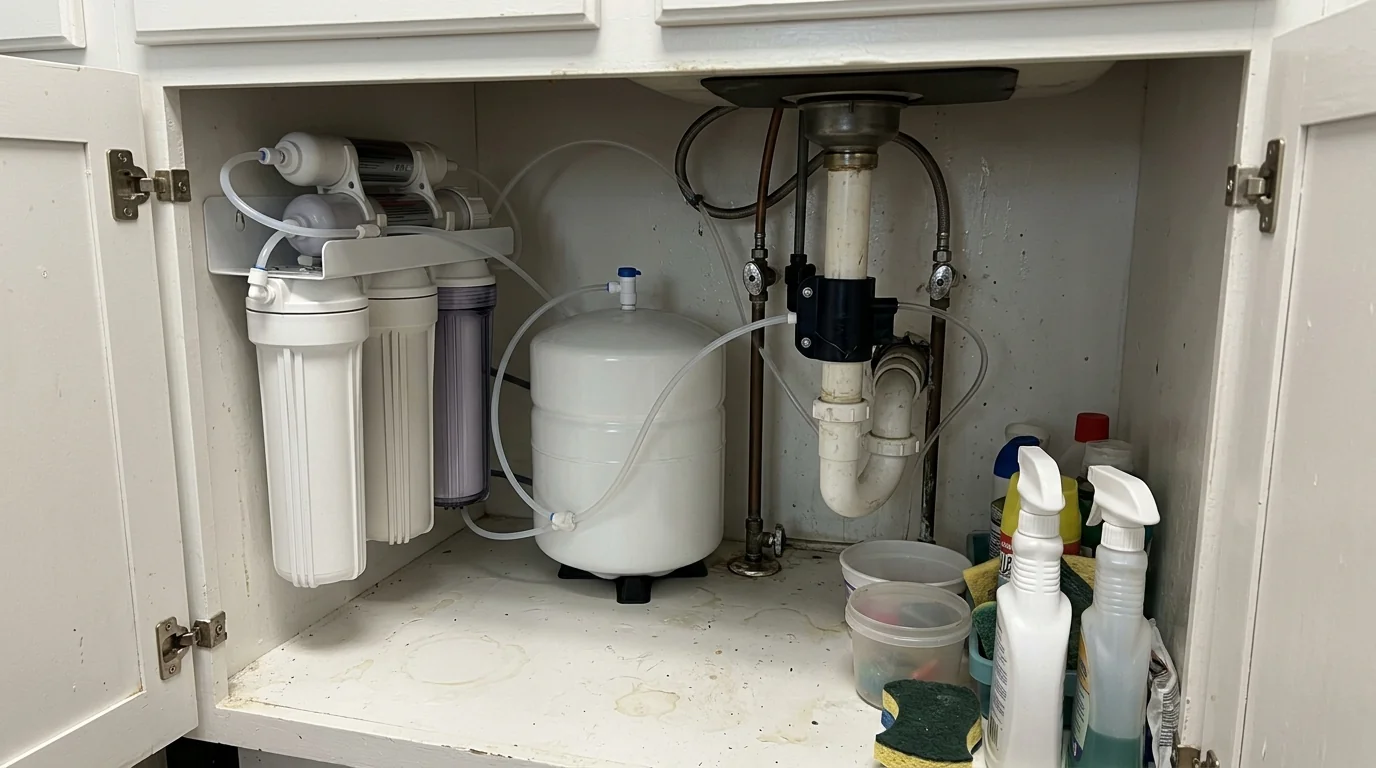
An RO unit usually has three to five stages. A sediment filter catches grit, carbon blocks take out chloramine and taste, and the membrane strips out most dissolved solids, including hardness minerals and sodium. A final carbon polish evens out the taste on the way to the faucet. Because the membrane works slowly, filtered water collects in a small pressure tank so a glass fills quickly.
The tradeoff is waste water. Some water rinses the membrane and goes down the drain, which is why RO is sized for drinking and cooking, not the whole house. For showers and appliances, filtration at the main or a water softener is the better tool. RO works well alongside either one, and a softener ahead of it helps the membrane last longer.
Pricing
What changes the price of an RO install
Most of the difference comes from the system you pick and what the cabinet and countertop allow. The rest is about where the water needs to go.
Number of stages
Extra stages such as remineralizing add filters and housings.
Tank or tankless
Tankless units save space but need an outlet and cost more.
Countertop material
Drilling stone or quartz for the faucet takes more time and tooling.
Fridge line
A run to the refrigerator adds tubing, a valve and sometimes a booster.
Cabinet layout
A crowded sink base with a disposal may need parts moved.
Typical planning range: $300 - $950 for under-sink reverse osmosis system installed (whole-house RO $4,800 - $8,000), per HomeGuide (July). A guide figure, not our price; your quote follows the inspection.
The versions we see most
Under-sink RO units
The unit hangs on the cabinet wall with the storage tank beside it. We tee off the cold supply with its own valve, drill a hole in the sink deck or countertop for the RO faucet, and fit a drain saddle on the sink tailpiece above the trap. If the cabinet already holds a disposal, a trash pull-out and cleaning supplies, we measure first; tankless RO models need less space but usually want an outlet. Granite and quartz counters need a proper bit and a careful hand, and we bring both.
RO to the refrigerator
Running RO water to the fridge gives you filtered ice and door water without relying on the fridge cartridge alone. We run a small tube from the RO tank side to the refrigerator, through the cabinet and behind the base, usually with a shut-off valve you can reach. Distance matters because the tank pressure drops along a long run, so a fridge across the kitchen may need a small booster. If you are also moving or adding a fridge line, our appliance hookup work covers that connection.
Filter changes and repair
An RO system gets slower and worse-tasting when its filters are overdue. Common signs include a faucet that only trickles, a tank that never seems full, a drain line that runs all the time, or water that tastes off again. We change pre-filters and post-filters, test the membrane with a TDS meter, check the tank's air charge and the auto shut-off valve, and fix leaks at the faucet or fittings. Often a filter change and a recharged tank get a slow unit working like new.
Scope of the work
What an RO installation includes
- Under-sink RO unit with sediment, carbon and membrane stages
- Pressurized storage tank, or a tankless unit if chosen
- Dedicated drinking water faucet, drilled and sealed
- Cold-water supply tee with its own shut-off
- Drain saddle above the trap with an air gap where needed
- First tank flushed to rinse new media
- TDS test at the RO faucet
- Optional line to the refrigerator with a valve
Before you call
RO issues you can check yourself
| Situation | What you can safely do | When to call us |
|---|---|---|
| Faucet only trickles | Check the date on the filters and that the supply valve is fully open. | If new filters do not bring the flow back. |
| Water tastes off again | Run and dump a full tank of water. | If the taste comes back within a day or two. |
| Drain line runs constantly | Make sure the RO faucet is fully closed. | If it keeps running with the faucet off, the shut-off valve may be stuck. |
| Small drip under the sink | Close the RO supply valve and dry the cabinet. | Any leak at the tank, housings or faucet base. |
Call before it gets worse
We answer 24/7 from South Belt.
Local to southeast Houston
Why Houston water makes RO worth considering
The city's 2025 water quality report lists chloramines as the disinfectant on the Main system and puts total hardness between 43.5 and 229 ppm, averaging 135.5. Most of that supply is surface water from the San Jacinto and Trinity rivers. For drinking water, those three facts point the same way. Carbon stages take out the chloramine taste and smell, and the membrane removes the hardness minerals that leave white rings in a kettle and cloudy cubes in an ice tray.
Step by step
Setting up RO under your sink
Check the cabinet
We measure space for the unit and tank and pick the faucet location.
Tap the supply and drain
A cold-water tee and valve, plus a drain saddle above the trap.
Mount and drill
The unit is hung, the tank set, the faucet hole drilled and sealed.
Flush the system
The tank fills and is drained once to rinse the new carbon and membrane.
Test and connect
A TDS reading confirms the membrane, and the fridge line goes on if wanted.
Brands we service and install
We install RO faucets and systems alongside kitchen fixtures from Moen, Delta and Kohler, with valves and fittings from Watts.
- Rheem
- A. O. Smith
- Bradford White
- Navien
- Rinnai
- Noritz
- Kohler
- Moen
- Delta
- American Standard
- Pfister
- InSinkErator
- Uponor
- Watts
Common questions
Reverse Osmosis System questions from Houston homeowners
Pre-filters and post-filters usually every 6 to 12 months, and the membrane every two to three years. Harder water and heavier use shorten those intervals.
Some water goes down the drain to rinse the membrane. Newer units waste less than older designs, and a permeate pump or tankless model can cut the waste further.
Yes. A tube from the RO system to the refrigerator gives filtered ice and door water. Long runs may need a booster to keep pressure up at the fridge.
It removes most minerals along with everything else. If you prefer the taste of some mineral content, a remineralizing stage adds a little calcium and magnesium back.
No. RO only treats water at the kitchen faucet and fridge. For the shower, a whole-house carbon filter on the main is the fix.
Same system, different job
Related plumbing services
- Whole-House Water FiltrationCarbon filtration at the main to take the chloramine taste out of every tap.
- Water Softener InstallationA softener plumbed with a bypass and drain so hard water stops scaling fixtures.
- Appliance Plumbing HookupsDishwashers, ice makers and washing machines connected without a slow leak.
- Faucet Repair & InstallationDrips, low flow and loose handles repaired, or a new faucet set and sealed.
Weighing your options?
Call and ask. A plumber will walk you through the choices before any price is set.