A valve that closes on its own
Smart water shut-off valves installed in Houston homes
Most leak damage happens while nobody is watching: overnight, at work, on vacation. A smart shut-off closes the main the moment sensors find water or the flow pattern looks wrong, then tells your phone why.
- We answer 24/7, nights and weekends
- Heading out from South Belt, off Beltway 8
- Valve on the main, sensors placed and tested
Updated October 2026

Short answer
Smart water shut-off installation in Houston puts a motorized valve on the main line, usually where it enters the garage or rises beside the house, and links it to leak sensors and a phone app. When a sensor gets wet or flow runs too long, the valve closes the whole house until you reopen it.
The job
Where the valve goes, and what makes it close
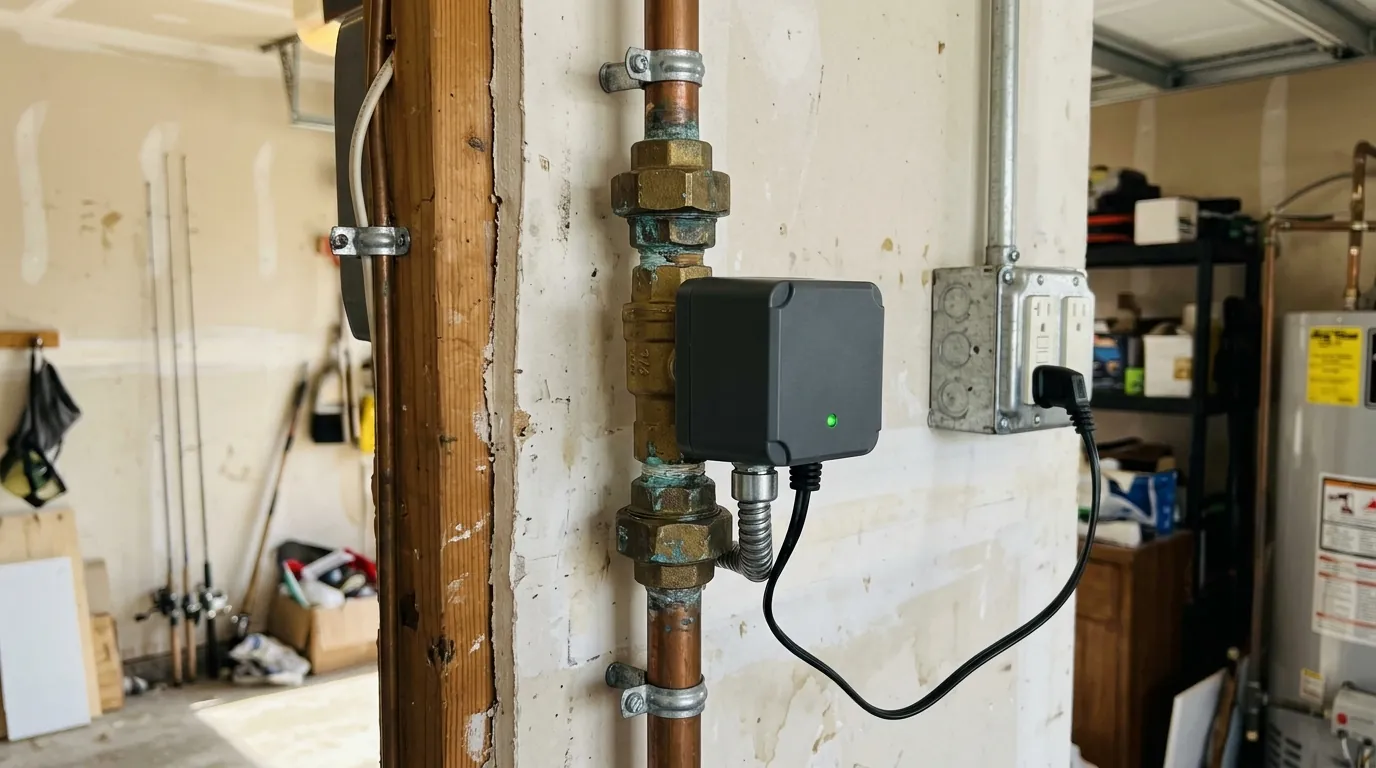
The valve is cut into the main line after your house shut-off and before the first branch, so it can stop water to everything. In slab homes that is usually where the line rises out of the ground near the front hose bib or comes into the garage wall. It needs a power outlet nearby or a battery model, and a decent Wi-Fi signal at that spot. If the old house valve is a seized gate valve, we replace it at the same time with a new main shut-off valve so you still have a manual way to turn water off.
There are two kinds of protection. Sensor-based systems close the valve when a puck under the water heater or washer gets wet. Flow-based systems watch the water passing through the valve and close it when a tap runs far longer than normal, or when a small, steady flow never stops. Many systems do both.
Scope of the work
What the installation includes
- Site check for valve location, power and Wi-Fi signal
- Motorized valve cut into the main with service unions
- Pipe supports on both sides of the valve
- Leak sensors placed at the water heater, washer, sinks and toilets
- Wi-Fi setup and app installed on your phone
- Alert and away-mode settings walked through with you
- Every sensor and the valve tested before we leave
- Manual open and close shown at the valve
The versions we see most
Whole-house shut-off valves
The core of the system is a motorized ball valve on the main. We shut the water, cut in the valve body with unions so it can be serviced later, and support the pipe on both sides so the actuator's weight does not stress the joints. Copper, PEX and CPVC mains all take the same valve with the right adapters. After it is in, we cycle it closed and open several times and run a fixture to confirm the app sees the flow. If your incoming pressure is high, a pressure reducing valve belongs on the same stretch of pipe.
Leak sensors under appliances
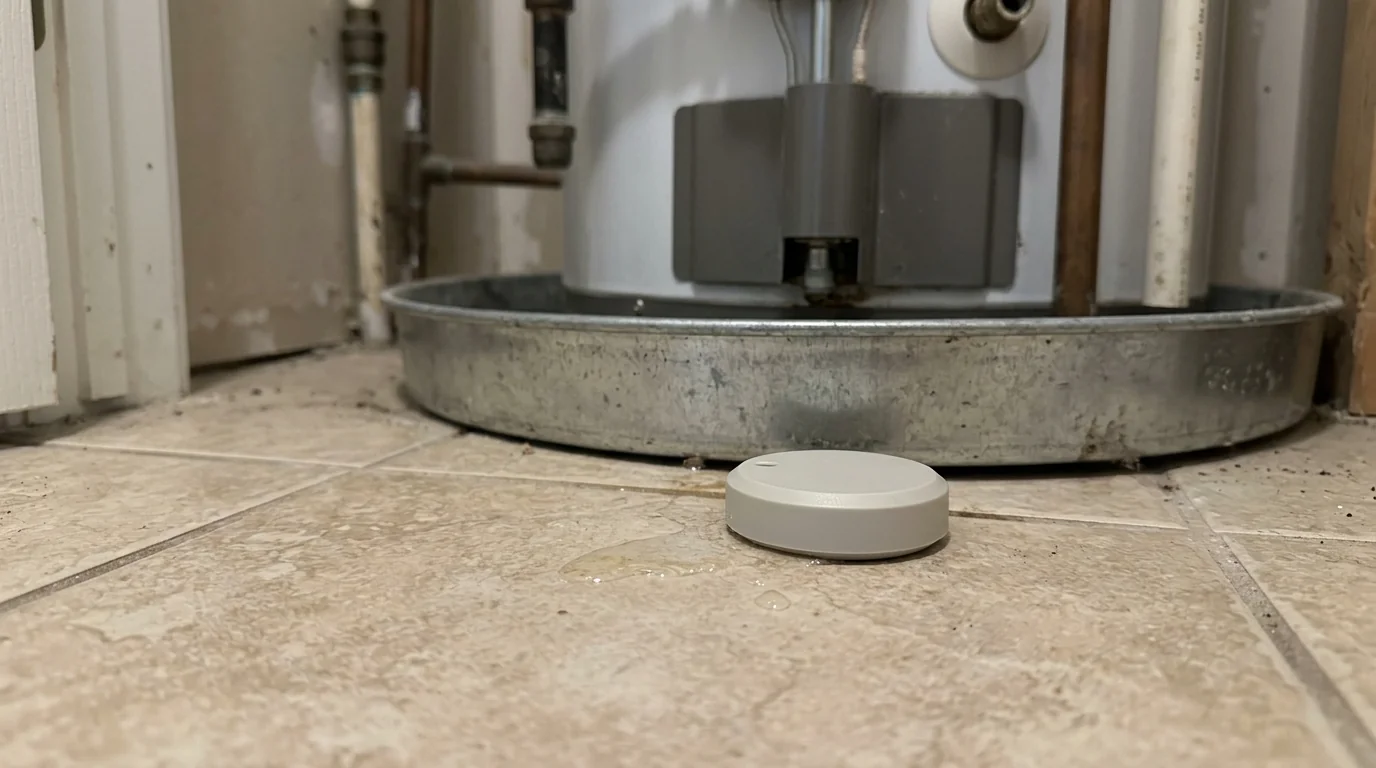
Sensors go where leaks usually start: beside the water heater pan, behind the washing machine, under the kitchen sink and dishwasher, behind toilets, and next to the ice maker line. Each one is a small battery puck that talks to the valve. When it gets wet, it sounds an alarm and tells the valve to close. We place them at the low point where water would pool first, not just where they fit, and test each one with a wet cloth. A sensor matters most next to an old water heater that is close to its end.
Phone alerts and app setup
The valve only helps if the alerts reach you. We connect it to your Wi-Fi, set up the app on your phone and on a second household phone if you want, and walk through the settings: away mode, how long a single flow may run before the valve closes, and quiet hours. Many systems run a short daily pressure test with the valve closed to catch slow drips. We show you how to open the valve from the app and by hand, so a dead phone never leaves you without water.
Local to southeast Houston
Why an automatic shut-off earns its keep in Houston
Two kinds of nights cause the worst water damage here. In the February 2021 storm, Bush Intercontinental fell to 13 degrees, Houston's 311 line took about 5,000 calls in a week about busted pipes, and many breaks started while families were asleep or staying elsewhere because the power was out. Hurricane season, June 1 through November 30, also means evacuations and stretches away from home. A valve that closes on its own covers both.
Step by step
How we install and test the whole system
Pick the spot
On the main before the first branch, with power and Wi-Fi in reach.
Install the valve
Water off, valve cut in with unions and the pipe supported.
Place sensors
At the low point beside each likely leak source.
Connect the app
Valve and sensors linked to Wi-Fi and your phone.
Test everything
Each sensor tripped, the valve cycled and the flow alert confirmed.
Call before it gets worse
We answer 24/7 from South Belt.
Pricing
What sets the price of a smart shut-off install
The valve itself is the largest part of the cost. Pipe size, the location of the main and how many sensors you want account for the rest.
Valve model
Flow-sensing valves with daily self-tests cost more than sensor-only valves.
Main line size
A one-inch main needs a larger valve body than a three-quarter-inch line.
Location and power
An outdoor riser may need a weather cover and an outlet run by an electrician.
Number of sensors
Each extra sensor adds a small cost; most homes use four to eight.
Old valve condition
Replacing a seized house valve at the same visit adds parts and time.
Typical planning range: $150 - $500+ before installation for smart / automatic shut-off valve unit only, per HomeGuide (Octo). Treat it as a planning number only. We price your job after we see it.
Your options
Sensor-only or flow-sensing valve: which fits your house
| Compare | Sensor-only valve | Flow-sensing valve |
|---|---|---|
| What triggers it | Water touching one of the floor sensors | Unusual flow through the main, plus any sensors you add |
| Catches leaks inside walls | Only once water reaches a sensor | Yes, from the flow pattern, even with no puddle |
| Catches slow drips | No | Often, through a daily pressure check |
| Setup | Simpler, fewer settings | Needs a few days to learn your water use |
| Right choice when | Most risk sits at a few appliances | You travel often or have pipes in the attic and walls |
If most of your plumbing runs through the attic, a flow-sensing valve catches the leaks you cannot put a sensor under. For a newer home with appliances in one area, sensors alone often do the job.
Brands we service and install
We install and service automatic shut-off valves and the fittings around them from Moen, Watts and Uponor, matched to the size and material of your main.
- Rheem
- A. O. Smith
- Bradford White
- Navien
- Rinnai
- Noritz
- Kohler
- Moen
- Delta
- American Standard
- Pfister
- InSinkErator
- Uponor
- Watts
Common questions
Smart Water Shut-Off Installation questions from Houston homeowners
It depends on the model. Many valves stay in their last position and have a manual lever, and some carry battery backup for the sensors. We show you how to work the valve by hand either way.
If the irrigation tees off before the valve, no. If it is downstream, long sprinkler cycles can look like a leak, so we either set an exception in the app or place the valve accordingly.
For phone alerts and remote control, yes. Without a signal the valve still closes when a sensor is triggered, but you will not hear about it until you get home.
Some models are rated for outdoor use with a cover. Many slab homes have the main rise outside, so we check the rating before choosing a model.
No. We keep a manual shut-off upstream so you can stop the water even if the smart valve needs service or replacement.
Same system, different job
Related plumbing services
- Main Shut-Off Valve ReplacementA seized or leaking main valve replaced so the water actually turns off.
- Water Pressure RepairLow or banging-high pressure fixed at the regulator, the main or the fixture.
- Leak DetectionAcoustic and pressure testing to find a hidden leak before anyone cuts drywall.
- Water Heater ReplacementA worn-out tank swapped for a new gas or electric unit, hauled away the same visit.
Better to catch it early
Phone us and we will check it before it becomes a repair.