Leaks under the foundation
Slab leak repair for Houston homes on clay
A hot spot on the kitchen tile, the sound of water with every tap closed, or a meter that will not sit still. Those are slab leak signs, and the sooner the line is found, the less floor comes up.
- We answer 24/7, nights and weekends included
- Out of South Belt, a few minutes off Beltway 8
- Leak located before the slab or a wall is opened
Updated October 2026

Short answer
Slab leak repair in Houston starts with finding the exact spot: we pressure test the hot and cold lines, then use acoustic and thermal tools to mark the leak to within a few feet. From there you choose a spot repair through the floor or a reroute that abandons the old line.
What to watch for
Signs that point to a leak under the slab
A warm spot on the floor
Usually the hot water line leaking directly below.
The meter moves with every tap off
Water is leaving the pipes somewhere you cannot see.
A water bill that jumped
A steady cold side leak often shows up here before anywhere else.
Sound of running water
A faint hiss or trickle near a wall or floor when nothing is on.
Damp carpet or lifting floors
Water wicking up through the concrete into flooring or baseboards.
The job
How we find a slab leak without breaking up the whole floor
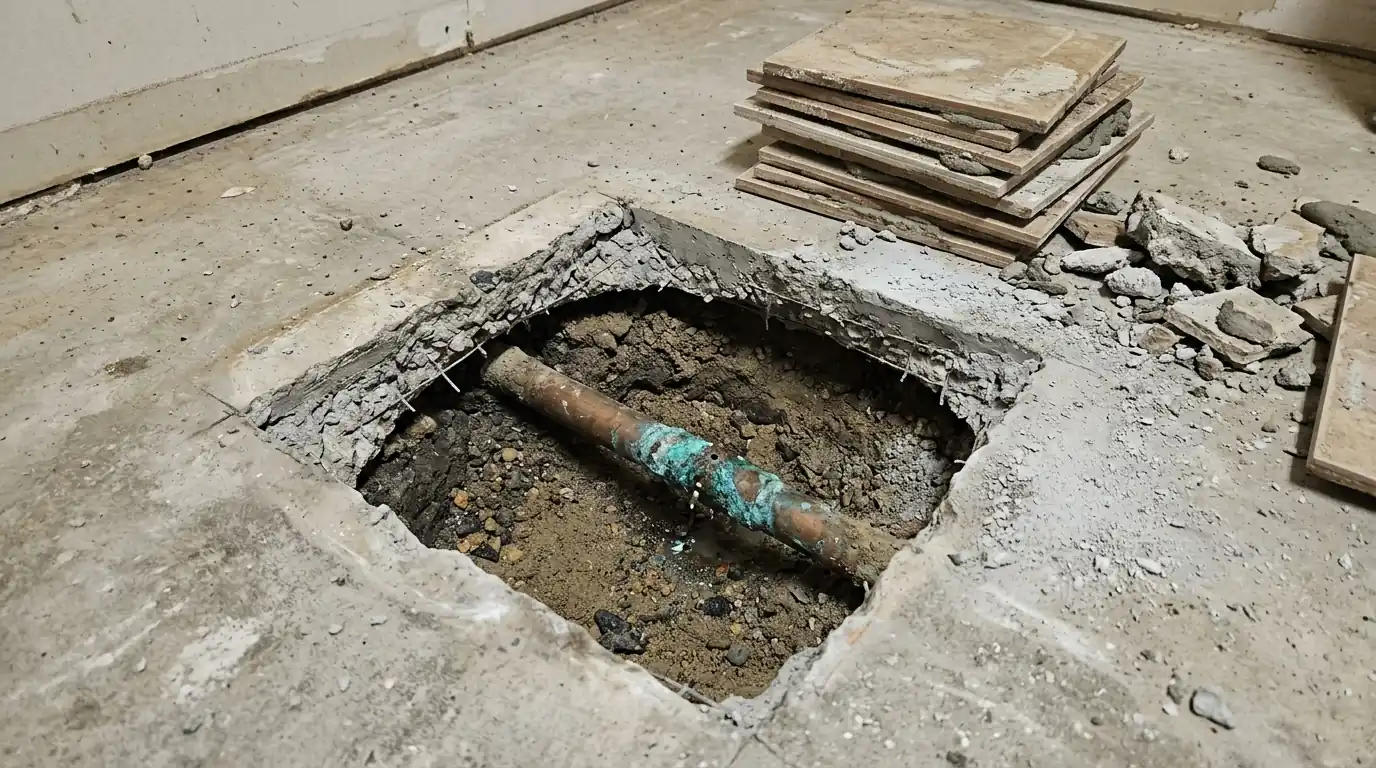
A slab leak is a break in a water line that runs under the concrete. Most Houston houses built on slab have their copper or PEX supply lines buried there, and when one of them splits, the water has nowhere to go but into the soil and up through the floor. The first job is never the jackhammer. It is confirming the leak with the meter, isolating hot from cold, and pressure testing each side.
Once we know which line is losing water, the acoustic sensor and thermal camera narrow it down. Hot side leaks usually show as a warm streak on tile or a warm patch on carpet. Cold side leaks are quieter and often show up first as a water bill nobody can explain. Either way, you see the reading before anyone cuts. If the leak turns out to be in a wall instead, the job becomes a standard leak repair, which is a much smaller fix.
The versions we see most
Hot water slab leaks
Hot side leaks are the ones people notice first. The tile over the break gets warm enough to feel through socks, the water heater runs more than it should, and sometimes you hear a faint hiss near a wall. Because the water heater is feeding the leak around the clock, the gas or power bill climbs along with the water bill. We shut the hot side at the heater, watch the meter, and if it stops moving the leak is confirmed on that side. Repair usually means reaching the break or bypassing that branch, then checking the water heater for damage from running nonstop.
Spot repair through the slab
When the leak sits in an open area, such as a hallway or under a single tile run, a spot repair is often the quickest answer. We cut a small opening in the concrete over the marked spot, dig down to the line, cut out the damaged section and join new pipe with proper fittings. The line is pressure tested before the hole is backfilled and the concrete patched. The tradeoff is the floor covering: tile, wood or carpet over the opening has to be lifted and replaced, and matching old tile is not always possible.
Reroute instead of breaking the floor
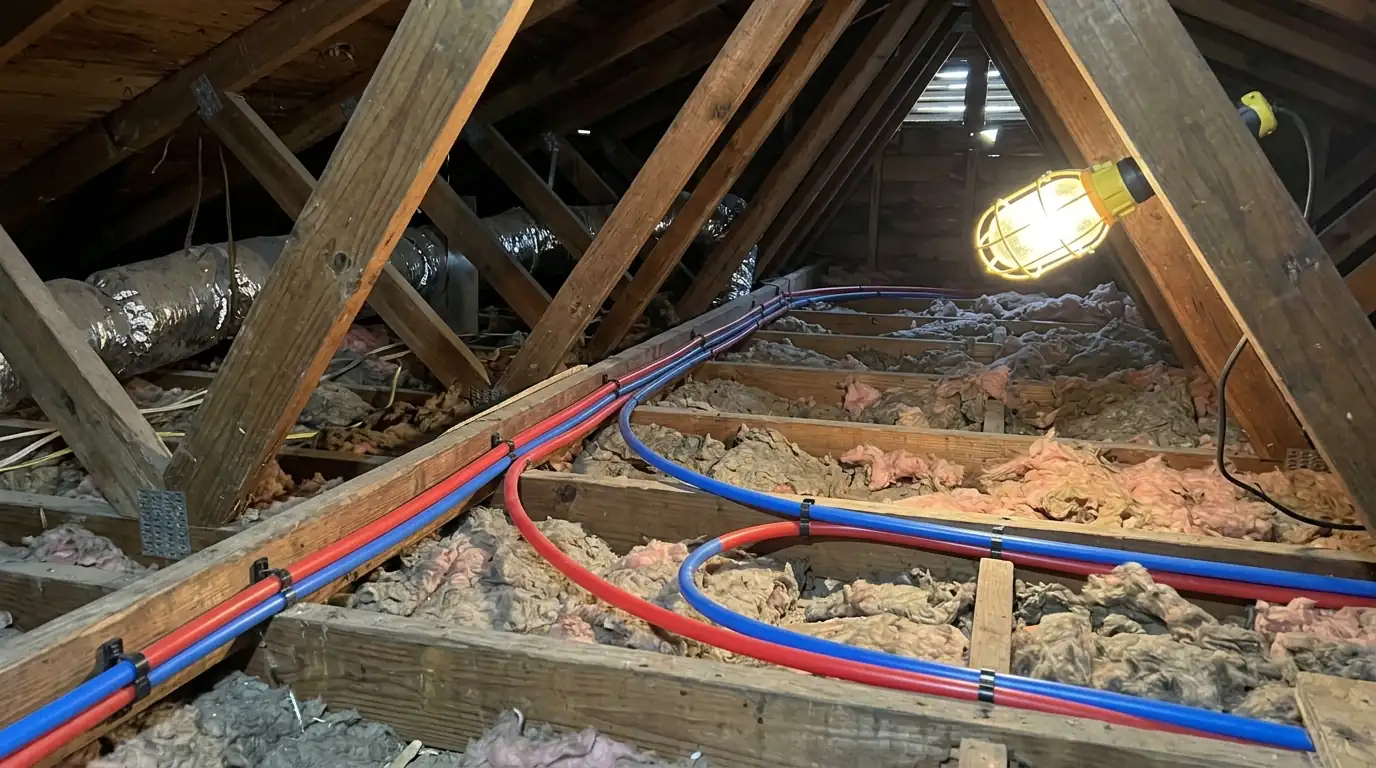
Sometimes the smarter fix is to leave the broken line under the slab and run a new one above it, through the attic and down inside the walls to the fixture. This makes sense when the leak sits under cabinets or expensive flooring, when the old pipe has already leaked more than once, or when several lines are getting old together. Drywall gets small access holes instead of concrete getting broken. If more than one or two branches are failing, we will talk with you about repiping the house rather than chasing leaks one at a time.
Timing
How long a slab leak repair takes
Finding the leak usually takes a couple of hours. A spot repair through the slab often runs most of a day once the concrete is open, and the patch needs time to cure before flooring goes back down. A reroute through the attic can take a day or two depending on the distance to the fixture. Water to that branch is off while we work; the rest of the house can usually stay on.
Step by step
From the first call to a dry, tested line
Confirm the leak
We read the meter with everything off and test hot and cold sides separately.
Pinpoint the spot
Acoustic listening and thermal imaging mark the leak on the floor.
Agree on the route
You see the options, spot repair or reroute, and the price for each, before work starts.
Make the repair
The damaged section is cut out or bypassed with new pipe and proper fittings.
Test and close up
The line is pressure tested, then the opening is backfilled or the drywall access is closed.
Call before it gets worse
We answer 24/7 from South Belt.
Local to southeast Houston
Why slab leaks come up so often on this side of Houston
The ground does a lot of the damage. Southeast Texas sits on Lake Charles clay, which swells when wet and cracks when it dries, and local reporting puts basically anyone south of Interstate 10 on that kind of expansive soil. A slab that shifts with the seasons puts stress on the lines buried under it. In South Belt/Ellington, thousands of homes were built in the 1960s and 1970s, so many of those buried lines have decades of movement behind them.
Your options
Spot repair or reroute: how the two fixes compare
| Compare | Spot repair through the slab | Reroute above the slab |
|---|---|---|
| What gets opened | A small section of concrete and the flooring over it | Small drywall access holes along the new route |
| Makes sense when | The leak is in open floor and the rest of the line is sound | The leak is under cabinets or costly flooring, or the line has leaked before |
| Old pipe | Stays in use after the repair | Abandoned in place under the slab |
| Mess and dust | Concrete cutting and patching | Mostly drywall dust in the attic and walls |
| Future leaks on that branch | Still possible on other sections | That branch no longer runs under the floor |
If the pipe we expose looks thin or corroded, a reroute usually saves you the next repair. If it looks sound and the floor is easy to reach, a spot repair is often the simpler choice.
Pricing
What changes the price of a slab leak repair
Two slab leaks in the same neighborhood can cost very different amounts. Access, flooring and the route the new pipe has to take matter more than the leak itself.
Where the leak sits
Open floor is simpler than under cabinets, a tub or a load-bearing area.
Spot repair or reroute
A reroute avoids concrete work but needs a longer run of new pipe through the attic and walls.
Flooring over the leak
Tile, wood and carpet each need different handling, and patching them is separate from the plumbing.
Pipe material and condition
Old, thin copper may need more than one section replaced once it is exposed.
Water damage already done
Wet subfloor, baseboards or drywall add drying and repair beyond the plumbing itself.
Typical planning range: $630 - $4,400 or more for slab leak repair overall (slab leak detection $150 - $600), per This Old House (Upda). Treat it as a planning number only. We price your job after we see it.
Common questions
Slab Leak Repair questions from Houston homeowners
Many policies cover some of the water damage and the cost to access the leak, while the pipe repair itself is often excluded. Check your policy and call your carrier; we can document what we find so the adjuster sees the location and cause.
For a short time, yes, but the leak keeps running whenever that line has pressure. If it is on the hot side, shutting the water heater's cold supply valve stops most of the loss until the repair.
Water under a slab can soften the clay beneath it and add to movement over time. That is one reason not to let a confirmed leak run for months.
We mark the spot with acoustic and thermal readings before any concrete is opened, so the opening is small and placed over the leak rather than guessed.
If this is the second or third leak, or the copper we expose is thin, a reroute or a repipe usually costs less than repeated slab repairs.
Same system, different job
Related plumbing services
- Leak DetectionAcoustic and pressure testing to find a hidden leak before anyone cuts drywall.
- Water Line RepairLeaking service line between the meter and the house dug, repaired and tested.
- Burst Pipe RepairSplit copper, blown PEX fittings and freeze-cracked lines cut out and replaced.
- Whole-House RepipingGalvanized, failing copper or patched lines replaced with new PEX or copper.
Need a plumber tonight?
The phone is answered 24/7. Tell us what you see.