Plumbing Library
How to protect Houston pipes before a hard freeze
Most winters bring a cold night or two and nothing breaks. Then a storm parks over the city for days. These are the steps that keep a house on slab with attic plumbing from flooding when it thaws.
By Greta Wilburn, Plumbing Library EditorUpdated October 2026
Short answer
To protect Houston pipes from freezing, focus on the lines in the attic, in exterior walls and at hose bibs, since those freeze first in houses built for heat. Insulate and cover them before the cold arrives, drip the faucets on outside walls, open sink cabinets, and find your main shut-off now so you can stop a burst fast.
What February 2021 taught Houston about freezing pipes
During the February 2021 storm, the National Weather Service recorded 13 F at Bush Intercontinental and 15 F at Hobby on February 16. Those numbers came with days of cold and long power outages, which is the combination that splits pipes. A single overnight dip rarely does it; hour after hour below freezing in an unheated house does.
The damage showed up everywhere at once. The city issued a boil water notice on February 17 and lifted it on February 21, and it reported a big increase in water main breaks across the system. Local reporting put calls to 311 about busted pipes at roughly 5,000 in one week. Many of the breaks didn't leak until the thaw, when ice in a split line melted and water started running inside walls and ceilings.
Is freeze season really over by spring?
Hard freezes are rare here, but the window is longer than many people assume. Based on records back to 1889, Houston's last freeze comes around February 15 on average. At Hobby, the 30-year average last freeze is January 26. An average is just the middle of the spread, so a freeze in late February is not unusual.
The practical takeaway: do the simple prep in late fall, leave hose bib covers on until March, and do not pull pipe insulation out of the attic after the first warm week of January.
Which pipes freeze first in a Houston house
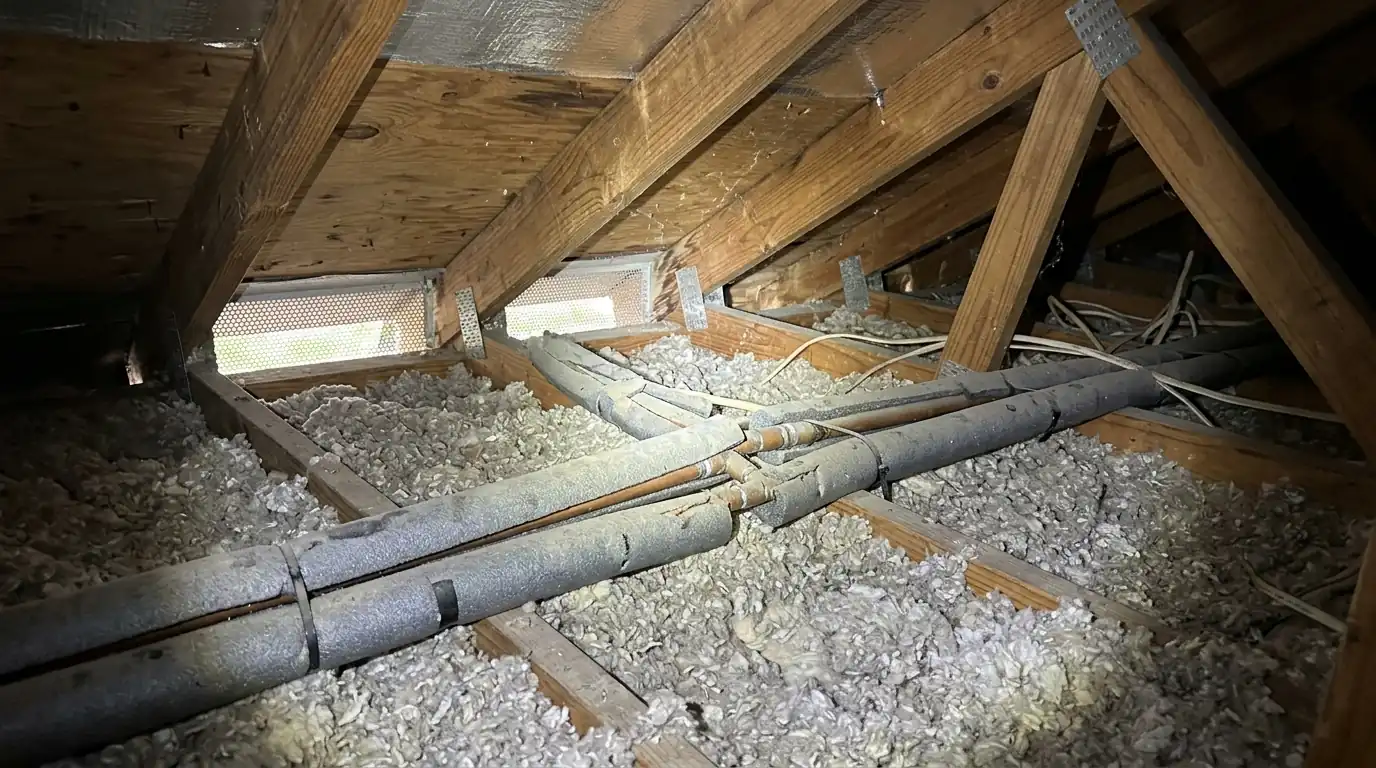
Homes here are designed to shed heat, not hold it. Water lines run where they are easy to install, which is often where they are hardest to keep warm. On most slab homes, the supply lines leave the slab and climb into the attic, then drop down to fixtures. The attic can sit close to outside temperature on a still, cold night.
Check these spots first:
- Attic runs, especially near soffits and gable vents where cold air blows in
- Hose bibs and the short pipe behind them in the exterior wall
- Kitchen and bath lines on outside walls, inside closed cabinets
- Pipes in an unheated garage, including the water heater supply
- The line from the meter or a well where it rises above ground
- Irrigation backflow assemblies and exposed sprinkler piping
Before the freeze: insulation, covers and a dripping faucet
Foam pipe sleeves from a hardware store are the easiest fix for exposed lines in the attic and garage. Slip them on, tape the seams, and cover elbows and valves, which freeze at gaps. Push attic insulation over pipes that sit on top of the ceiling, so heat from the rooms below reaches them.
Outdoors, disconnect garden hoses. A hose left on traps water in the hose bib, and that is a common split. Put a foam dome cover over each bib. If an outdoor faucet already drips or will not shut fully, get it fixed before winter; our hose bib repair work often includes swapping in a frost-free sillcock, which shuts the water off inside the wall.
When a hard freeze is forecast, open the cabinet doors under sinks on outside walls and let those faucets drip, hot and cold both if it's a single-handle faucet set to the middle. Moving water is harder to freeze, and a drip relieves pressure if ice does form. Keep the thermostat steady overnight rather than turning it down.
Not a do-it-yourself job?
Call any hour. A plumber can test it and show you the result.
Find your shut-off before you need it
The single most useful thing you can do before a freeze is find out how to stop all the water to the house. Many Houston homes have a valve where the main line enters, often near the front hose bib or in the garage. There is also a valve at the meter box by the street, which usually needs a meter key.
Try your house valve now. Old gate valves with round handles often seize after years without moving, and some break when forced in an emergency. If yours won't turn, or turns but does not stop the water, a new main shut-off valve with a quarter-turn ball valve is a small job that makes every future leak less damaging. Keep a meter key in the garage and show everyone in the house where both valves are.
If a pipe bursts: the first hour
Ice expands and splits the pipe, but the leak often waits for the thaw. When you hear water running or see a ceiling stain spread, act in this order:
- Close the main shut-off or the meter valve to stop the flow
- Turn off power to the water heater, or set a gas heater to pilot, once the water is off
- Open a faucet at the lowest point of the house to drain the lines
- Shut off power to any room where water reaches outlets or fixtures
- Photograph the damage before you start mopping, for your insurer
- Pull wet insulation and soaked items away from the leak area
Getting the water back on safely
Once the line is cut out and replaced, the system needs to be pressure tested before the walls close, because one burst often means a second crack nearby that has not leaked yet. That is the core of a burst pipe repair: find every damaged section on that run, not just the one that sprayed.
If it happens at night or during the storm itself, call an emergency plumber right away even if the water is off. We answer 24/7 and can walk you through finding a stuck valve by phone. If the freeze took out several lines in an older house, it may be time to read about repiping a Houston home instead of patching one break at a time.
Questions
Follow-up questions readers ask
Drip both on faucets along outside walls, since hot and cold lines can freeze. A slow, steady drip is enough. On a single-handle faucet, set the handle to the middle so both sides move.
If the house could lose power or heat while you are away, yes. Shut off the main, turn off the water heater, open the faucets at the lowest point and flush the toilets once. That leaves little water in the pipes to freeze.
PEX freezes like any pipe, but it stretches more than copper and often survives a freeze that would split copper. The brass or plastic fittings on PEX lines are still weak points.
Leave the faucet open, open the cabinet below, and warm the room or the exposed pipe with a hair dryer or space heater kept well away from anything flammable. Never use an open flame. Watch for leaks as it thaws.
You can, but check under them in spring. A dripping faucet hidden under a cover wastes water and can soak the wall. Take them off once freeze risk has passed and put them back in late fall.
When you need the work done
Services this guide covers
- Burst Pipe RepairSplit copper, blown PEX fittings and freeze-cracked lines cut out and replaced.
- Outdoor Faucet RepairLeaking hose bibs and frozen spigots repaired or swapped for frost-free valves.
- Main Shut-Off Valve ReplacementA seized or leaking main valve replaced so the water actually turns off.
- Emergency PlumberBurst lines, sewage backups and no water at 2 a.m. get a call back fast.
Keep reading
More from the Plumbing Library
- Sewer backing up? What to do firstDirty water rising in the shower when someone flushes is one of the worst things a house can do.
- Repiping a Houston home: what to expectA third leak in two years, rusty water in the morning, or gray plastic pipe in the attic.
- Gas leak or red tag: getting gas back onMaybe you smelled gas and the utility shut it off, or a tag showed up on the meter after an outage.
Still not sure?
Call and describe what you see. A person answers 24/7.