Plumbing Library
Repiping a Houston home, from first signs to final test
A third leak in two years, rusty water in the morning, or gray plastic pipe in the attic. At some point patching stops making sense. This is how a whole-house repipe actually goes, start to finish.
By Greta Wilburn, Plumbing Library EditorUpdated October 2026
Short answer
Repiping a Houston home means replacing every water supply line, usually by running new PEX or copper through the attic and down inside the walls rather than breaking up the slab. Most single-story homes take a few days. The water is off during work hours and back on most nights, and the walls end up with small patched openings rather than torn-out drywall.
Signs a repair has turned into a repipe
One leak is a repair. A pattern of leaks is the pipe telling you it has reached the end. These are the signs we look at when someone asks whether it is time:
- Two or more leaks in different spots within a few years, especially pinholes in copper
- Any polybutylene pipe still in the house (gray plastic, often stamped PB2110)
- Galvanized steel lines that give rusty or brown water after sitting overnight
- Pressure that has dropped across the whole house, not just one fixture
- A slab leak repair already done, with the other buried lines the same age
- Green or white crust on copper fittings in the attic or under sinks
Why so many houses here are due
Age and material do most of the work. Polybutylene went into millions of American homes starting in the late 1970s, and the national replacement settlement covered systems installed from January 1, 1978 through July 31, 1995. Its fittings are the usual failure point, and a house still on poly is living on borrowed time. Our guide to polybutylene pipe in Houston homes covers how to spot it.
Hard water adds wear too. The USGS notes that hard water moving through pipe for years leaves scale, which narrows old galvanized lines until pressure falls. In South Belt/Ellington alone, the city counts 5,929 homes built from 1960 to 1979 and 5,725 built from 1980 to 1999. That is a lot of original pipe, much of it copper, galvanized or poly, in houses that are now decades old.
PEX or copper for the new lines
Both are solid choices, and either beats what most older houses have now. The decision usually comes down to budget, how the pipe gets routed and personal preference.
- PEX is flexible plastic tubing that bends around framing, so it needs fewer fittings and fewer wall openings. PEX-A can be expanded at the joints and handles a freeze better than rigid pipe. It cannot sit in direct sunlight and must stay clear of hot flue pipes.
- Copper is rigid, takes more fittings and more labor, and costs more in material. It handles heat well and many buyers like seeing it. On hard water, it can still develop pinholes over decades, which is the very problem many people are repiping to fix.
- Some homes mix them: copper stub-outs at the fixtures for a clean look under sinks, PEX for the long runs through the attic.
How the work moves through the house
On a slab home, the old lines usually run under the floor. A repipe almost never digs them up. Instead the new system goes overhead: the main comes into the house, rises into the attic, and branches run across the joists and drop down through the walls to each fixture. The old buried pipe is capped and left in place, so a future break under the slab no longer matters.
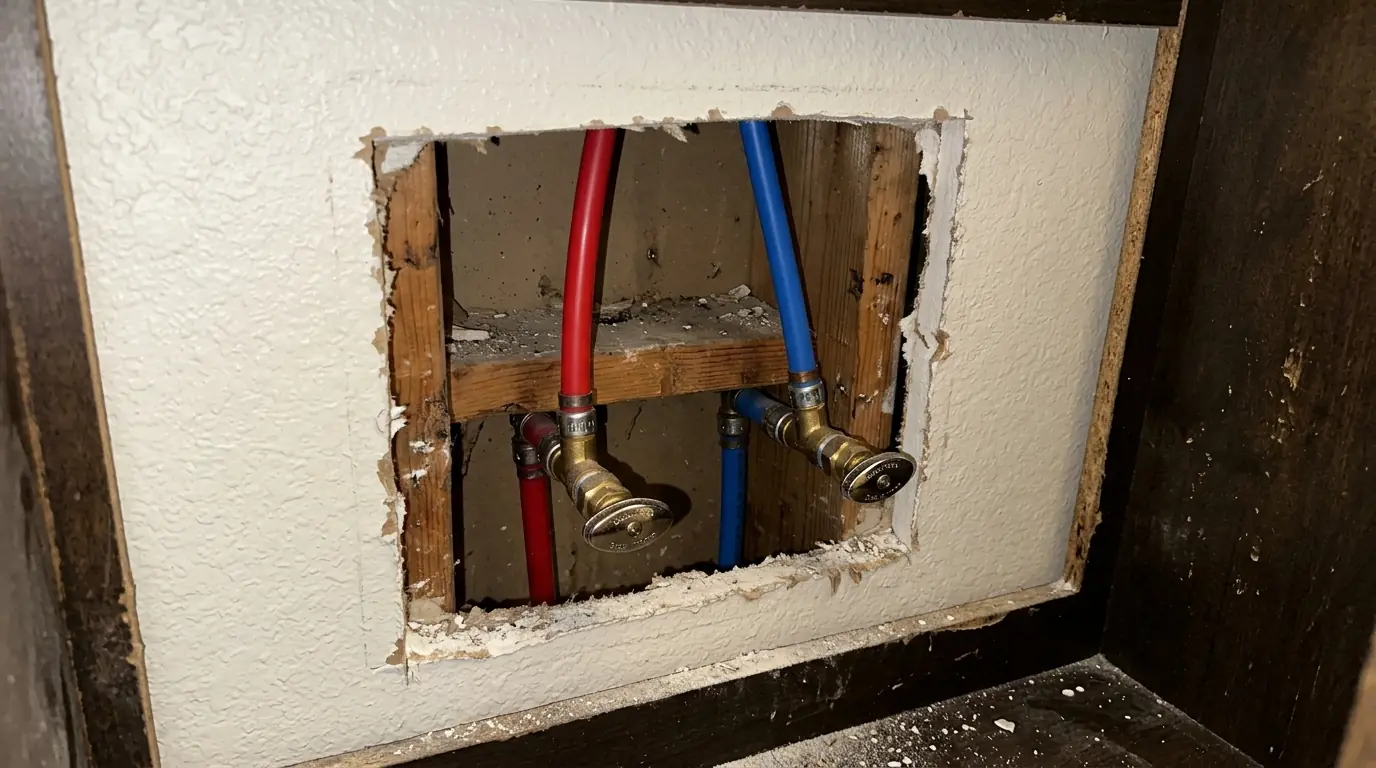
We work room by room. Floors and furniture near each opening get covered first. Then we cut small, neat openings in the drywall behind sinks, toilets and tub valves, pull the new line down to that spot, and connect the fixture. Kitchen and baths get new shut-off valves under the sinks as part of the job. Each section is pressure tested before any wall is closed.
It's a good time to fix related things too. If the water pressure is too high coming in, a pressure regulator goes on with the new main; if it is too low, the new pipe often solves it, and a water pressure repair covers what is left.
Rather have a plumber look at it?
Call any hour from anywhere in southeast Houston. We will tell you what we find before any work starts.
Drywall patches, permits and living at home during the job
Most people stay in the house during a repipe. Water is off while we are working on a section and back on in the evening, so showers and dinner still happen. Expect noise, some dust in the attic access area, and people in and out of each room for part of a day.
The openings get patched once testing is done. Whether patching includes texture and paint, or stops at closed and taped drywall, varies by job, so ask before work starts so nobody is surprised. Tile around a tub valve is the trickiest spot; often we work through the back of the wall from a closet to avoid touching tile.
Ask whether the job needs a permit and inspection where you live and who is responsible for pulling it. Rules vary between Houston and the surrounding cities, and an inspection may mean an extra day before walls close.
How long a repipe takes
A typical single-story house with two baths is often done in two to four working days, from first cut to final test. Two-story homes, more bathrooms, long attic runs and tile work push that out. Patching and touch-up can run a day or so after the plumbing is finished.
If you are dealing with an active slab leak while deciding, a slab leak repair or a single-line reroute can keep the house running until the full repipe starts. That way you are not rushed into a whole-house decision by a warm spot on the floor.
Getting a repipe quote that means something
A useful quote is built after someone has been in your attic and under your sinks. Look for these things spelled out: the pipe material and type, how many fixtures are included, whether new fixture shut-offs and a new main valve are part of it, how many wall openings to expect, who patches them and to what finish, and whether the water heater connections are redone. Fixture count and access drive most of the difference between houses.
We walk the house, check the attic route, and lay out what a whole-house repipe would cover, including any poly in the yard line that might call for polybutylene replacement at the same time.
Questions
Follow-up questions readers ask
Almost never. The new lines run through the attic and walls, and the old buried pipe is capped and abandoned. Concrete only gets cut if a drain, not a water line, needs work.
Usually yes. Water is off during working hours and restored most evenings. You will have people in each room for part of a day, so plan around that for pets and work from home.
PEX is widely used for drinking water lines in homes and is made for that use. Some people notice a slight plastic taste in a brand new system that fades after the lines have been flushed and used for a while.
Not always. A whole-house repipe usually covers everything inside, and the yard service line is quoted separately. If that line is polybutylene or galvanized, it makes sense to replace it at the same time.
It often does when the cause is scaled galvanized pipe or undersized old lines. If the low pressure comes from the yard line or a failing pressure regulator, those get checked and fixed along with the repipe.
Lines under the slab and inside closed walls are usually capped and left in place. Exposed sections in the attic and under sinks are removed where we can reach them.
When you need the work done
Services this guide covers
- Whole-House RepipingGalvanized, failing copper or patched lines replaced with new PEX or copper.
- Polybutylene Pipe ReplacementGray plastic supply pipe from the 1980s and early 1990s removed and replaced.
- Slab Leak RepairHot spots in the floor and a meter that never stops, located and repaired.
- Water Pressure RepairLow or banging-high pressure fixed at the regulator, the main or the fixture.
Keep reading
More from the Plumbing Library
- Gas leak or red tag: getting gas back onMaybe you smelled gas and the utility shut it off, or a tag showed up on the meter after an outage.
- Slab leak signs in a Houston house: what to checkMost slab leaks announce themselves quietly: a patch of floor that feels warm, a bill that makes no sense, a faint hiss at night.
- Repair or replace a water heater in Houston?A cold shower does not automatically mean a new heater.
Need the work done?
Phone us day or night and we will take it from here.