Plumbing Library
Slab leak signs in a Houston house and how to check them
Most slab leaks announce themselves quietly: a patch of floor that feels warm, a bill that makes no sense, a faint hiss at night. Here is how to read those clues before anyone cuts concrete.
By Greta Wilburn, Plumbing Library EditorUpdated October 2026
Short answer
A slab leak in a Houston house usually shows up as a warm spot on the floor, a water meter that moves with every tap closed, or a water bill that climbs for no reason. The meter test takes ten minutes and tells you whether water is leaving the pipes. Finding exactly where it is leaving takes pressure testing and listening equipment.
Clues you can notice without any tools
A leak under the slab rarely floods a room. The water goes down into the soil first and only shows itself once the ground below is saturated or the line is losing enough to matter. Walk the house barefoot and listen when everything is off. Most people find the problem by putting two or three of these together:
- A warm or hot patch on tile, usually in a kitchen, hallway or bathroom, which points to the hot water line
- A water bill that jumped with no change in how the household uses water
- The sound of running water or a faint hiss near a wall when no fixture is on
- Carpet that feels damp along one strip, or baseboards that swell and stain
- A musty smell or mildew where the floor meets the wall
- New cracks in floor tile, or a water heater that seems to run constantly
The ten-minute water meter test
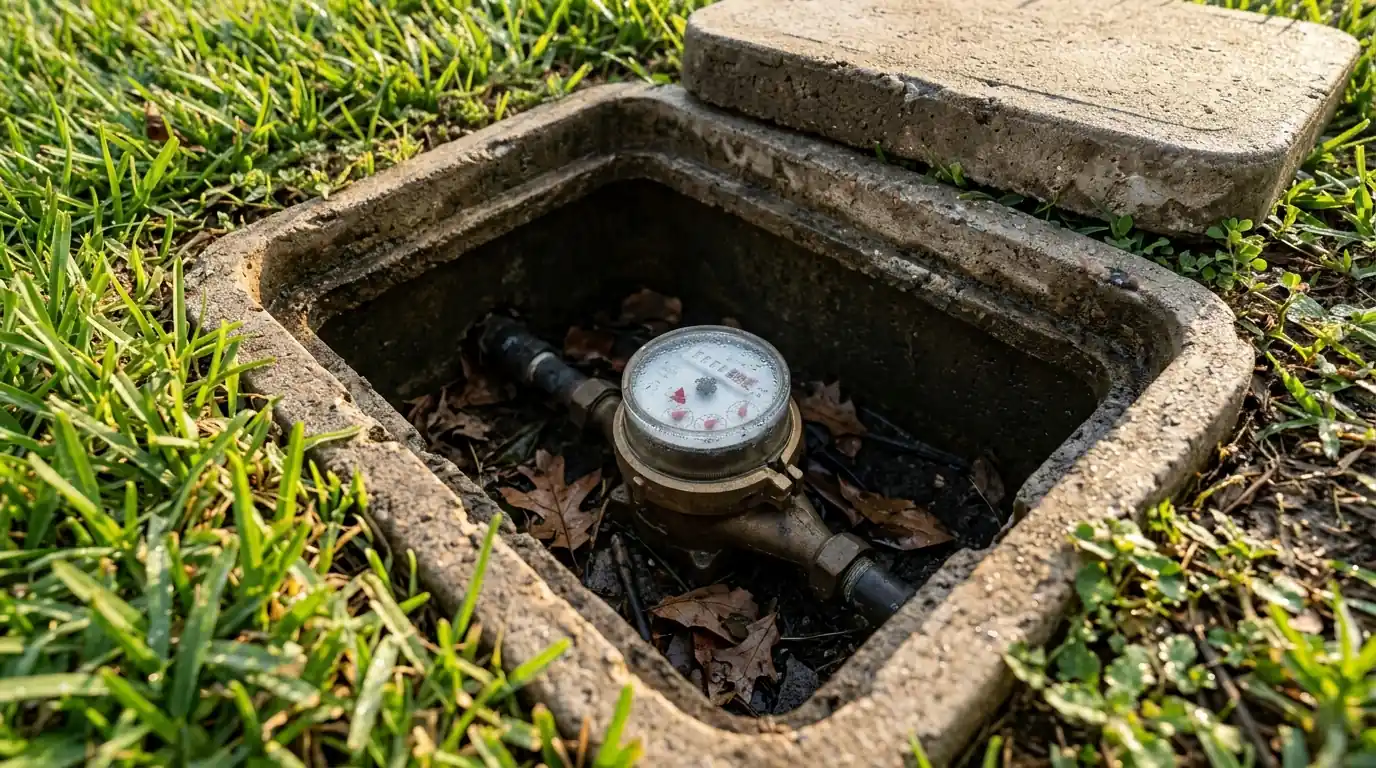
Before you call anyone, find out whether you are losing water at all. The meter box is usually near the street, under a concrete or plastic lid. Most residential meters have a small triangle or star dial called the leak indicator, and it spins at even a slow drip.
If the indicator moves with everything off, water is leaving the system somewhere. That does not prove the slab yet, but it narrows things down a lot. If it stays still for the full ten minutes, a slab supply leak is unlikely, and a high bill may be coming from irrigation timing or a meter read issue instead.
- Turn off every faucet, the ice maker, the washer and any sprinkler timer
- Make sure no toilet is refilling; wait a minute after the last flush
- Lift the meter lid and note the position of the leak indicator and the main dial
- Wait ten minutes without using any water, then look again
Why slab houses on Houston clay leak below the floor
Most houses on this side of town sit on a concrete slab, with the copper or plastic water lines buried in the soil underneath. That soil is the problem. Southeast Texas sits largely on Lake Charles clay, which the USDA describes as cracking 1/2 to 2 inches wide and a foot or more deep when it dries out. Texas clays of this type swell and shrink sharply as moisture changes.
Local reporting has quoted specialists saying anyone south of Interstate 10 is on expansive clay and should watch for drought-related foundation movement. Every wet season and dry season shifts the slab a little, and the pipes under it ride along. Over decades, that movement wears copper where it rubs against concrete or gravel, stresses fittings and opens pinholes. Older lines simply have more seasons of movement behind them.
Things that look like a slab leak but are not
A moving meter has more than one explanation, and ruling out the easy ones saves money. A toilet with a worn flapper can leak quietly into the bowl all day. A few drops of food coloring in the tank will show up in the bowl within twenty minutes if the flapper leaks. An irrigation valve that does not close fully will keep the meter turning too, as will a dripping hose bib or a relief valve on the water heater that weeps into a drain line.
There is also the line between the meter and the house. A break there can make a soggy strip in the yard and spin the meter while the floor stays dry. If the house checks out but the meter still moves, that service line is the next suspect. In either case, proper electronic leak detection separates these possibilities before anyone talks about breaking concrete.
Want it checked instead?
Ring us 24/7 and we will get someone out to look.
What a plumber does first when you suspect a slab leak
The first visit is about confirming and isolating, not digging. We start at the meter, then close the valve that feeds the water heater. If the meter stops, the leak is on the hot side. If it keeps moving, we test the cold side next. Each side gets pressurized separately so a gauge can show which line is losing pressure.
Once the line is known, an acoustic listening device picks up the sound of water escaping through the concrete, and a thermal camera shows the heat trail a hot side leak leaves under tile. The goal is a mark on the floor within a few feet of the break. Drain lines are a separate question. A cracked drain under the slab does not move the meter at all, so if the signs point to sewer odor or slow drains instead, a hydrostatic test of the drain system is the right check. Our guide on what a hydrostatic test shows covers that side.
Spot repair, reroute or repipe: how the fix gets chosen
There are three ways to deal with a confirmed leak, and the right one depends on where the break is and what shape the rest of the pipe is in. Choose only after the leak is located and you have seen the options side by side.
- Spot repair: a small opening is cut in the slab over the mark, the bad section is replaced and pressure tested, and the concrete is patched. Good for open floor and otherwise sound pipe.
- Reroute: the broken branch is abandoned under the slab and new pipe runs through the attic and down a wall to the fixture. Good when the leak sits under cabinets, a tub or costly flooring.
- Repipe: when the house has leaked more than once or the exposed copper is thin, replacing the supply system above the slab stops the cycle of repairs.
What to do while you wait for the repair
If the leak is on the hot side, close the cold supply valve on top of the water heater and turn the heater to vacation or pilot so it is not firing on an empty demand. That stops most of the loss until the line is fixed. For a cold side leak, you can close the main shut-off between uses, opening it only when you need water. Pull back damp carpet and run a fan so the pad does not sour. Photograph stains, warped baseboards or cracked tile. Our slab leak repair page explains the work itself, and whole-house repiping covers the case where the house has had enough leaks to justify new lines. We answer the phone 24/7 if the meter is spinning fast or water is showing on the floor.
Questions
Follow-up questions readers ask
Yes. A slow creep still adds up over a month, and a slab leak tends to grow as water erodes the soil around the pipe. Rule out toilets and irrigation first, then have the lines tested before damage spreads into flooring.
Not always. Hot water can travel along the pipe trench before it warms the surface, so the warmest tile may sit a few feet from the actual break. That is why the spot is confirmed with acoustic and thermal readings before any concrete is opened.
It could. A broken drain under the slab does not show on the water meter. It shows up as sewer odor, slow drains, or damp floors near bathrooms. A hydrostatic test checks the drain side, while a pressure test checks supply lines.
Yes. Water under a slab softens the clay and can affect how a foundation moves, so most foundation contractors want plumbing leaks found and fixed before or during their work.
Very rarely. A pinhole can seem to slow down when mineral scale partly seals it, but the pipe is still weakened at that spot and usually opens up again. A confirmed leak should be repaired, not watched.
Usually yes for a short time, especially if you shut off the affected side between uses. Watch for mold, soft flooring or electrical outlets near wet areas, and schedule the repair rather than letting it run for weeks.
When you need the work done
Services this guide covers
- Slab Leak RepairHot spots in the floor and a meter that never stops, located and repaired.
- Leak DetectionAcoustic and pressure testing to find a hidden leak before anyone cuts drywall.
- Whole-House RepipingGalvanized, failing copper or patched lines replaced with new PEX or copper.
- Hydrostatic Plumbing TestUnder-slab drain testing for foundation repair, home sales and suspected drain leaks.
Keep reading
More from the Plumbing Library
- Repair or replace a water heater in Houston?A cold shower does not automatically mean a new heater.
- Tankless vs tank water heaters in Houston homesTankless heaters get a lot of attention, and for some homes they are the right call.
- What a hydrostatic plumbing test tells youFoundation repair estimates and home purchase contracts often call for a hydrostatic test.
Still not sure?
Call and describe what you see. A person answers 24/7.