Plumbing Library
Should you repair or replace your water heater?
A cold shower does not automatically mean a new heater. Many failures are a single part. Others mean the tank itself is done. Here is how to tell which one you are looking at.
By Greta Wilburn, Plumbing Library EditorUpdated October 2026
Short answer
Repair a water heater in Houston when the problem is a part: a thermocouple, igniter, gas valve, element, thermostat or relief valve. Replace it when the tank itself leaks, or when an aging unit needs a costly part. Age, where the water is coming from and how much scale the tank holds decide most cases.
Start with the label: how old is the heater?
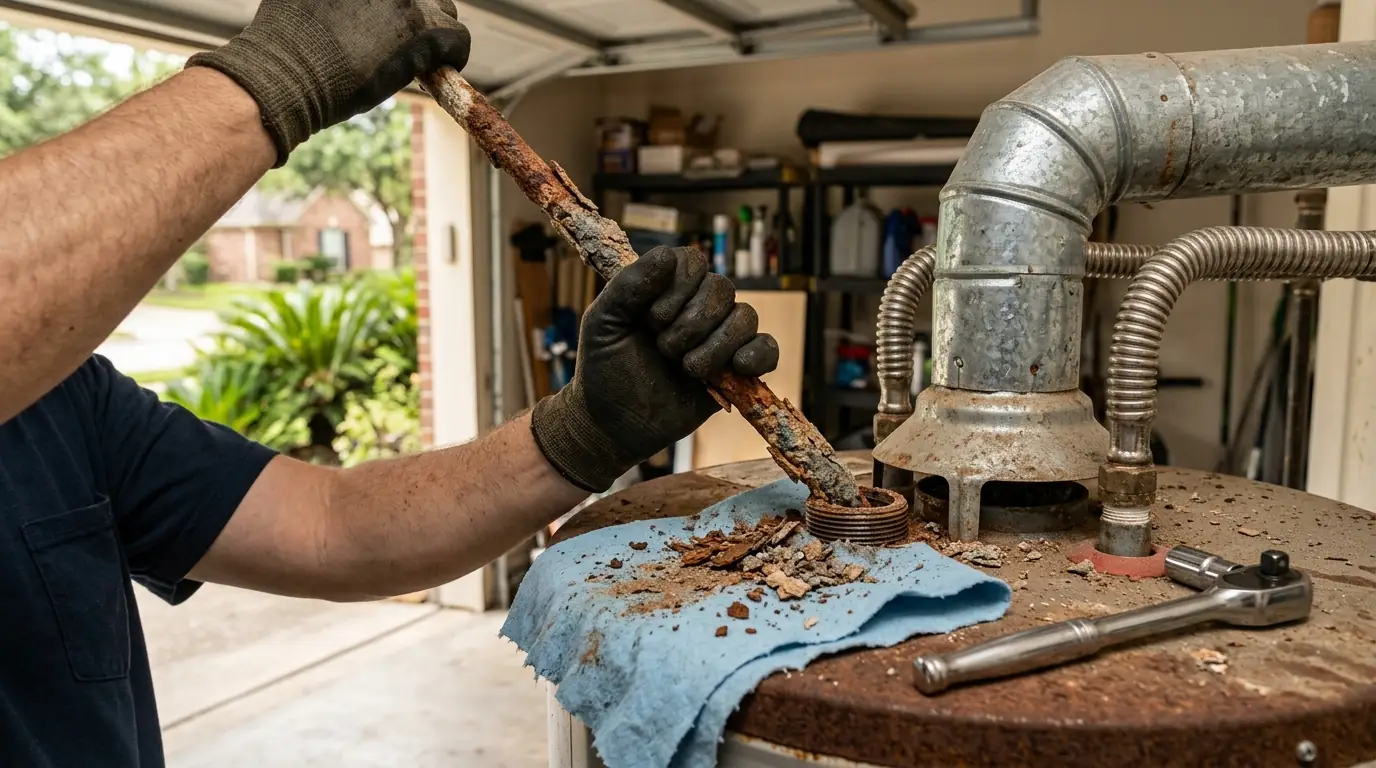
Every tank has a rating plate with a serial number, and most brands code the manufacture date into it. A quick search of the brand plus 'serial number date' usually decodes it. Age matters because a tank wears from the inside out. The steel shell is protected by a glass lining and a sacrificial anode rod, and once the rod is used up, the water starts working on the steel.
A young heater with a failed part is almost always worth repairing. A heater well into its second decade is a different conversation, because even a successful repair leaves you with an old tank that can start leaking next month. In between, the decision rests on what failed and what the repair costs compared with the remaining life of the tank.
Where is the water coming from?
A puddle under the heater is the most common reason people call, and the source tells you almost everything. Dry the floor, put down a paper towel, and look carefully at the fittings above and around the tank before deciding it is finished.
- Drips from the cold or hot connections on top: a loose fitting or a worn flex connector. Repairable.
- Water from the relief valve discharge pipe: the valve is worn, or pressure or temperature is too high. Repairable, and worth checking the pressure.
- A wet drain valve near the bottom: often a worn valve or sediment holding it open. Repairable.
- Water running down from under the jacket, or rust and seepage at the tank seams: the tank itself has failed. Replace.
- Condensation on a newly filled tank or in humid weather: usually harmless, and it stops once the water is hot.
How Houston's hard water ages a tank
Houston's main water system averaged 135.5 ppm of hardness in the city's 2025 report, with readings as high as 229 ppm. The USGS classes 121 to 180 as hard and anything above 180 as very hard, and notes that hard water moving through pipe over time builds scale. A water heater is where that shows first, because heating water drives the minerals out of solution and they settle on the tank floor.
That sediment layer causes the popping or rumbling sound many older heaters make, because water trapped under the scale flashes to steam as the burner fires. It also insulates the water from the flame, so a gas heater runs longer for the same shower, and on electric heaters it can bury the lower element until it burns out. The city also uses chloramine as its disinfectant, which is another reason to look at the anode rod during any service. Regular flushing and anode checks slow all of this down.
Not a do-it-yourself job?
Call any hour. A plumber can test it and show you the result.
Repairs that are usually worth doing
Most no-heat calls come down to one component, and swapping it brings a sound tank back to normal. If the tank is dry and not too old, these parts are reasonable to fix through a water heater repair visit:
- Thermocouple or flame sensor on a gas heater that lights and then goes out
- Igniter or pilot assembly that will not light
- Gas control valve that no longer opens or regulates properly
- Heating element or thermostat on an electric heater with only lukewarm water
- Temperature and pressure relief valve that drips or has stuck
- Anode rod that is down to bare wire, replaced before the tank starts to rust
- Drain valve that will not seal, and a flush to clear the sediment behind it
When replacing makes more sense
A leak from the tank body cannot be patched. Once steel is rusting through, the only fix is a new heater, and the sooner it happens the less your garage, closet or attic floor suffers. Replacement also wins when an older heater needs one of the pricier parts, such as a gas control valve, because you would be putting new money into a tank near the end of its life.
Other signals point the same way: rusty hot water from the tank side only, a burner area showing scorch marks or soot, repeated relief valve discharges after the pressure has been checked, or a heater that has already had two or three repairs in a short span. Heaters in attics deserve extra caution, since a failure there brings water through a ceiling. If you are replacing, read our page on water heater replacement for what the swap involves, including drain pan, venting and code updates.
Gas or electric, and the other options at replacement time
The simplest replacement is like for like: same fuel, same size, same spot. That keeps the gas line, venting and wiring as they are. But a replacement is also the one moment when changing types is practical, so it is worth a quick look at the choices.
- Gas tank: recovers quickly, works through power outages on standing pilot models, and needs proper venting and combustion air.
- Electric tank: no venting or gas line, slower recovery, and needs a dedicated 240-volt circuit.
- Tankless gas: heats on demand and frees up floor space, but usually needs a larger gas line and new venting. See tankless installation and our tankless vs tank comparison.
- Heat pump: an electric tank that pulls heat from surrounding air, using much less power than a standard element. It needs room around it, a condensate drain, and it cools the space it sits in, which a Houston garage rarely minds. Our heat pump water heater page covers placement.
Questions
Follow-up questions readers ask
You can open the drain valve with a hose attached, but on a tank that has never been flushed the valve often clogs or will not reseal. If yours is well along in years, a heavy flush can also expose a weak spot. Have someone ready to replace the valve.
Not urgently, but the noise means sediment is building up on the tank floor. Flushing it, and checking the anode at the same time, can slow the wear. Left alone, the tank works harder and wears faster.
If cold water runs clear and hot water looks brown, the rust is most likely coming from inside the tank, often because the anode rod is spent. That is a sign the tank lining is under attack.
On a tank that is still dry and in its first half of life, yes. On a heater that is already rusting at the bottom or seams, a new rod will not reverse the damage.
Usually the same capacity, unless the household has grown, added a large soaking tub, or keeps running out of hot water. A tankless unit is sized by flow rate rather than gallons stored.
Switching fuel types changes what gets inspected. Gas work involves the gas connection and venting, while electric work involves the circuit. Ask your plumber what your city requires before the job is scheduled.
When you need the work done
Services this guide covers
- Water Heater RepairNo hot water, pilot trouble or a leaking valve fixed on tank heaters, gas or electric.
- Water Heater ReplacementA worn-out tank swapped for a new gas or electric unit, hauled away the same visit.
- Tankless Water Heater InstallationGas tankless units sized for the house, with the gas line and venting to match.
- Heat Pump Water Heater InstallationHybrid electric units that pull heat from the air, installed with a proper drain.
Keep reading
More from the Plumbing Library
- Tankless vs tank water heaters in Houston homesTankless heaters get a lot of attention, and for some homes they are the right call.
- What a hydrostatic plumbing test tells youFoundation repair estimates and home purchase contracts often call for a hydrostatic test.
- Polybutylene pipe in Houston homes: how to spot itIf your house was built in the late 1970s through the mid-1990s, there is a fair chance some of its water lines are polybutylene.
Need the work done?
Phone us day or night and we will take it from here.