Plumbing Library
Polybutylene pipe in Houston homes: finding it and replacing it
If your house was built in the late 1970s through the mid-1990s, there is a fair chance some of its water lines are polybutylene. Here is how to check, what to watch, and what the replacement choices look like.
By Greta Wilburn, Plumbing Library EditorUpdated October 2026
Short answer
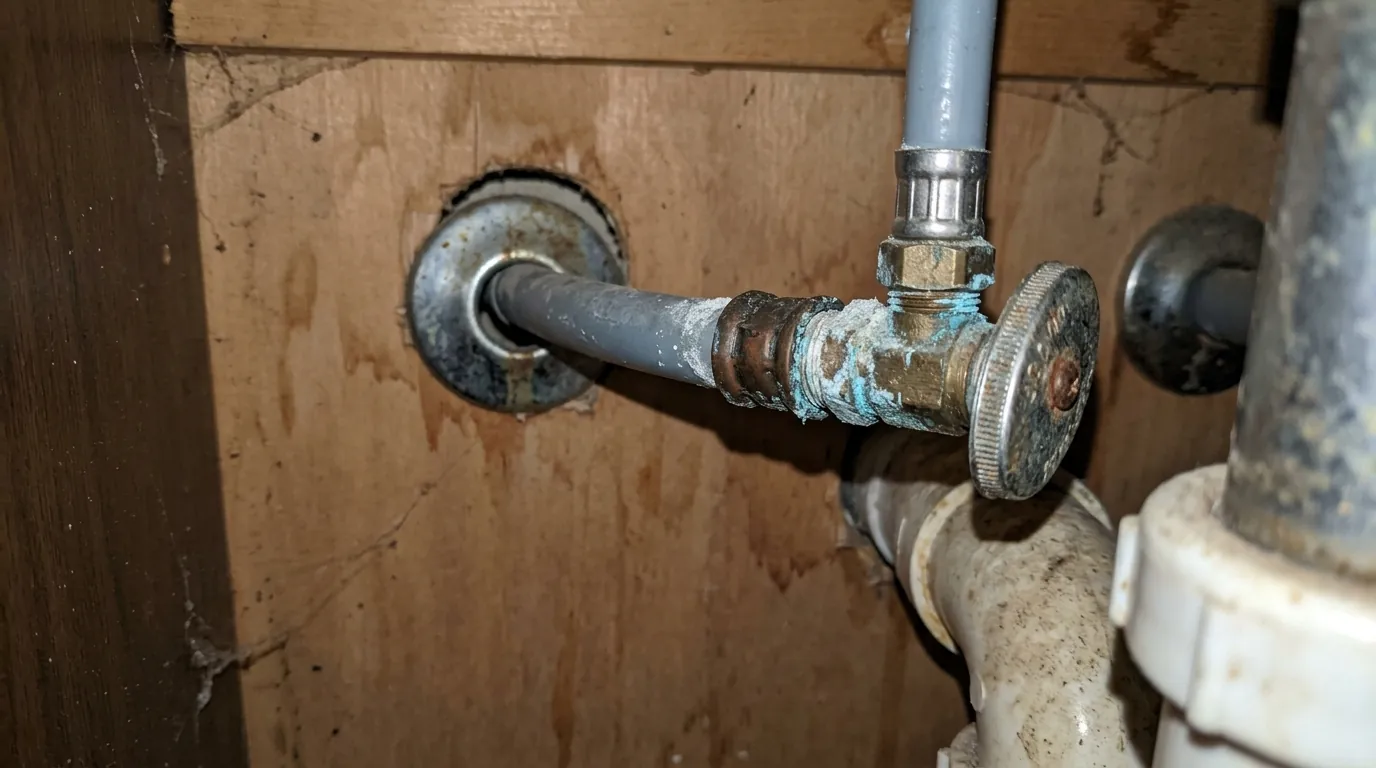
Polybutylene pipe in Houston homes is usually gray, flexible plastic supply line marked PB2110, installed roughly between 1978 and 1995. It tends to fail at fittings and where it meets disinfected water over time, often without warning. Check at the water heater, under sinks, in the attic and where the line enters from the meter.
How to recognize polybutylene
Polybutylene, often shortened to PB or poly, is a flexible plastic pipe that was used for water supply lines. It is easy to mix up with newer plastics, so look for several of these clues together rather than relying on color alone:
- Gray is the most common indoor color; some was white, and outdoor service lines were often blue or black.
- Printed codes on the pipe such as PB2110 or the letters PB on the side.
- Flexible tubing about the diameter of a finger for branch lines, slightly larger for the main.
- Gray or white plastic fittings, or copper or aluminum crimp rings at joints rather than solder or the expansion rings used on PEX.
- Stub-outs under sinks and toilets coming out of the wall as gray plastic, or connecting to the water heater with gray plastic.
- PEX, by contrast, is usually red, blue, white or orange and printed with the word PEX.
The years it went in, and what that means for this side of town
Polybutylene was installed in millions of American homes beginning in the late 1970s. The national class action settlement that funded replacements covered systems installed between January 1, 1978 and July 31, 1995, which is a useful rough window for when to suspect it. Not every house from those years has it, since many builders used copper, but enough did that a quick check is worth doing.
That window overlaps with a lot of southeast Houston housing. In South Belt/Ellington, the city's 2024 year-built table counts 5,725 homes built between 1980 and 1999. In Clear Lake, the same table shows 13,957 built in that span. If your house was built in that era and has never been repiped, look before assuming you have copper.
Why polybutylene fails
The pipe does not usually wear out evenly. It fails at weak points, and often with little warning. Over years of contact with disinfected water, the plastic can turn brittle from the inside, with small cracks forming on the inner wall that you cannot see from outside. Houston uses chloramine as the disinfectant in its main water system, so this is not a theoretical concern here.
The fittings are the other weak spot. Early plastic fittings were prone to cracking, and crimp ring joints can loosen or split if they were over or under crimped when installed. Heat makes everything worse, which is why lines running through a summer attic or near the water heater tend to fail first. When a poly line does let go, it is often a split or a blown fitting rather than a slow drip, and that can mean a lot of water in a short time.
Want it checked instead?
Ring us 24/7 and we will get someone out to look.
Where polybutylene hides in a house
In many Houston homes, supply lines run overhead through the attic and drop down inside walls to each fixture. That means most of the poly in a house is out of sight. Check these spots with a flashlight:
- The attic, along the joists above hallways and bathrooms, especially near the access hatch.
- The water heater connections, where gray pipe may meet the inlet or outlet.
- Under kitchen and bath sinks and behind toilets, where the stub-out leaves the wall.
- The main shut-off area where the line enters the house, often near the garage or an exterior wall.
- The yard line from the meter to the house, which may be blue or gray poly buried a foot or so down.
- In some homes, lines under the slab, which you cannot see but which a plumber can identify at the point they rise into a wall.
Living with it until you replace it
If you find polybutylene and cannot replace it right away, a few habits reduce the risk. Know where your main shut-off valve is and make sure it turns. Keep water pressure moderate; if a pressure gauge on a hose bib reads high, a pressure reducing valve check is worth it. Look over visible fittings in the attic and under sinks every few months for white mineral crust or dampness, both early signs a joint is weeping. Leave the house shut off at the main if you travel for more than a few days.
Some owners add an automatic shut-off device that closes the main when it detects a leak or unusual flow. It does not fix the pipe, but it limits damage if a fitting lets go while nobody is home. Some home insurers ask about polybutylene, so check how your policy treats it.
Repipe choices: PEX or copper, and partial or whole house
Replacing polybutylene means running new supply lines, usually through the attic and down the same wall cavities, with small drywall openings at each fixture. Most homes are done with PEX-A, which is flexible, tolerates freeze expansion better than rigid pipe, and needs fewer joints. Copper is the other option, more rigid and more labor to run, and some owners prefer it for exposed areas.
Partial replacement, swapping only the lines you can see, is tempting but rarely saves trouble. The remaining poly in walls keeps the same age and the same weak fittings. Our polybutylene pipe replacement page covers the work in detail, and whole-house repiping explains how a full repipe moves room by room. If the yard line from the meter is poly too, water line replacement covers that run. For a deeper walkthrough of timing and drywall repair, see our guide to repiping a Houston home.
Questions
Follow-up questions readers ask
No. Some CPVC is gray, and a few PEX brands come in gray too. Check the printed markings on the pipe; polybutylene usually reads PB2110, while PEX and CPVC say so on the side.
Most do, because many insurers and buyers treat it as a known risk. If you are selling, having it replaced beforehand removes a common negotiation point.
Swapping plastic fittings for metal ones was a common stopgap, but the pipe itself can still crack from the inside. It may buy time, but it does not fix the underlying material problem.
It might be. Blue poly was often used for service lines from the meter. Look for PB markings where it enters the house or at the meter box. A break there usually shows up as a soggy strip of lawn.
Look for white crust at fittings, water stains on ceilings below attic lines, and a water meter that moves when everything is off. Hidden leaks can be pinned down with electronic leak detection before walls are opened.
When you need the work done
Services this guide covers
- Polybutylene Pipe ReplacementGray plastic supply pipe from the 1980s and early 1990s removed and replaced.
- Whole-House RepipingGalvanized, failing copper or patched lines replaced with new PEX or copper.
- Water Line ReplacementA new service line from the meter to the house, sized for today's fixtures.
- Leak DetectionAcoustic and pressure testing to find a hidden leak before anyone cuts drywall.
Keep reading
More from the Plumbing Library
- Hard water and chloramine in southeast HoustonWhite crust on the shower head, a water heater that pops and rumbles, a faint pool smell from the tap.
- Protecting Houston pipes from a hard freezeMost winters bring a cold night or two and nothing breaks.
- Sewer backing up? What to do firstDirty water rising in the shower when someone flushes is one of the worst things a house can do.
Need the work done?
Phone us day or night and we will take it from here.